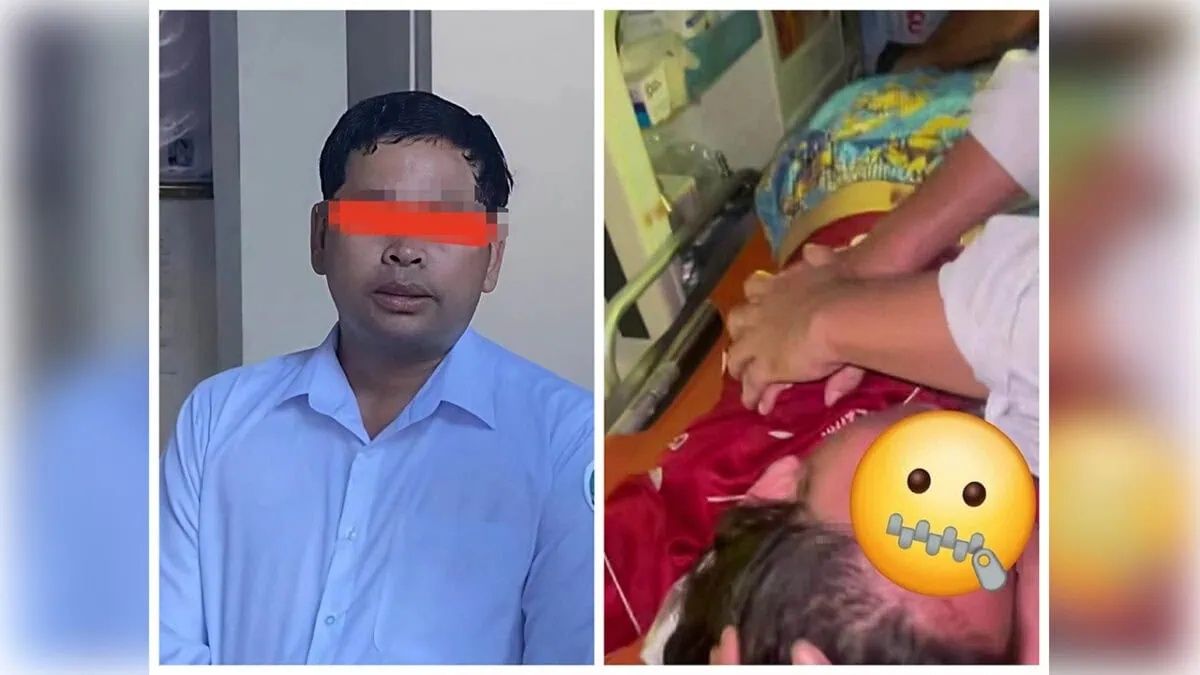
The head of a rural health facility in Cambodia's Kandal province has been stripped of his leadership position after a video documenting his emergency medical intervention circulated widely online, provoking public fury and allegations that his conduct breached professional boundaries. Governor Kuoch Chamroeun formalised the removal of Chhun Phally through an administrative directive issued on Tuesday, August 4, transferring him to an alternative health position under provincial oversight. The swift action reflects the intensity of social media pressure that accumulated within 24 hours of the footage spreading across digital platforms.
The sequence of events began when a 17-year-old patient was transported to Setbo Health Centre experiencing convulsions and respiratory distress. A family member at the facility recorded video documentation of Phally's resuscitation efforts, ostensibly to keep absent relatives informed of the medical situation. That recording, however, soon escaped the confines of family communication channels and proliferated across social networks, where it attracted scrutiny from thousands of observers who questioned both the clinical appropriateness and the dignity implications of what transpired. Public commentary fractured into competing narratives: some critics characterised the handling of the patient as constituting harassment and a violation of personal dignity, whilst others raised more technical concerns about whether the resuscitation sequence adhered to established medical protocols.
The provincial administration has not publicly articulated the specific grounds justifying Phally's reassignment, allowing speculation to flourish regarding whether the decision targeted alleged impropriety, procedural failures, or some combination thereof. This opacity mirrors a broader pattern in Southeast Asian governance where administrative action often precedes transparency, leaving affected parties and the public to infer rationales from circumstantial evidence. The absence of explicit justification nonetheless signals that authorities recognised the reputational and institutional damage the incident had inflicted.
A formal investigation has been initiated under the auspices of the Kandal provincial health department, charged with establishing whether the emergency procedures conformed to professional standards and identifying any misconduct. Kiem Piseth, acting director of the provincial health authority, articulated the investigation's dual focus: technical compliance with medical best practice and potential violations of professional ethics. His statement carried particular weight through its explicit acknowledgment that findings of sexual harassment or inappropriate conduct would trigger consequences extending beyond administrative reassignment to encompass criminal prosecution. This escalatory framework signalled seriousness whilst also highlighting institutional anxiety about the case's reputational fallout.
Phally responded to the controversy through a public statement emphasising his clinical intentions and expressing regret for any misunderstanding his actions generated. His apology distinguished between the medical objective—preserving the patient's life during an acute emergency—and the unintended perception damage his intervention may have caused. The formulation of his defence, whilst conventional in crisis communication, did not directly address the specific allegations regarding dignity violations or procedural irregularities. This rhetorical gap left unresolved the central question animating public concern: whether emergency medical circumstances fully justify the manner in which treatment was executed.
The incident arrives amid heightened consciousness across Southeast Asia regarding healthcare ethics, patient autonomy, and the power asymmetries inherent in clinical relationships. Cambodia's health sector, like counterparts throughout the region, operates within resource constraints that sometimes compromise training depth and professional oversight capacity. Rural health facilities in particular frequently operate with minimal supervisory infrastructure, creating conditions where individual practitioner judgment exercises outsized influence. The viral nature of this controversy—enabled by smartphone documentation and social media circulation—means that disputes previously confined to community-level conversations now attract provincial and potentially national attention.
The case demonstrates how digital platforms have fundamentally altered accountability mechanisms in developing healthcare systems. Video evidence circulates instantaneously and escapes institutional control, forcing rapid official response to preserve legitimacy. Authorities can no longer manage such incidents through delayed deliberation or confidential resolution. The 24-hour timeline between the video's emergence and administrative action reflects this compressed decision-making environment, where political leaders must be seen responding decisively to preserve public confidence. The calculation balances protection of healthcare workers against institutional responsibility to patients and public perception of ethical standards.
Underlying this specific dispute are deeper questions about professional boundaries in emergency medicine, particularly when treatment involves patients of different genders or minors. Emergency protocols occasionally require physical contact that might appear inappropriate in non-urgent contexts. The challenge for health systems involves establishing clear guidelines distinguishing clinically necessary intervention from unprofessional conduct, ensuring that practitioners understand these distinctions, and that the public recognises legitimate emergency medicine. Without adequate public education and institutional clarity, routine emergency procedures risk being misinterpreted through lenses of suspicion.
The Kandal case also reflects broader vulnerabilities of rural healthcare providers in Cambodia. Practitioners working in peripheral facilities often lack regular continuing education, standardised protocols, and peer oversight available in urban tertiary centres. This structural isolation can mean that individually well-intentioned clinicians inadvertently depart from contemporary best practice simply through absence of exposure to evolving standards. Comprehensive systemic response would therefore encompass not merely disciplinary measures against individuals but investment in professional development infrastructure and clinical governance systems across provincial networks.
For Malaysian and regional observers, the incident offers perspective on healthcare governance challenges that transcend national borders. Smaller health facilities throughout Southeast Asia operate under comparable resource and supervisory constraints. The case underscores the importance of establishing transparent clinical protocols, ensuring practitioners receive training in both technical procedures and professional ethics, and developing mechanisms that protect patient dignity without creating defensive medicine that compromises emergency care. The investigation's eventual findings will likely influence how other provincial authorities across Cambodia approach similar incidents, potentially establishing precedent regarding acceptable standards in remote clinical settings.

