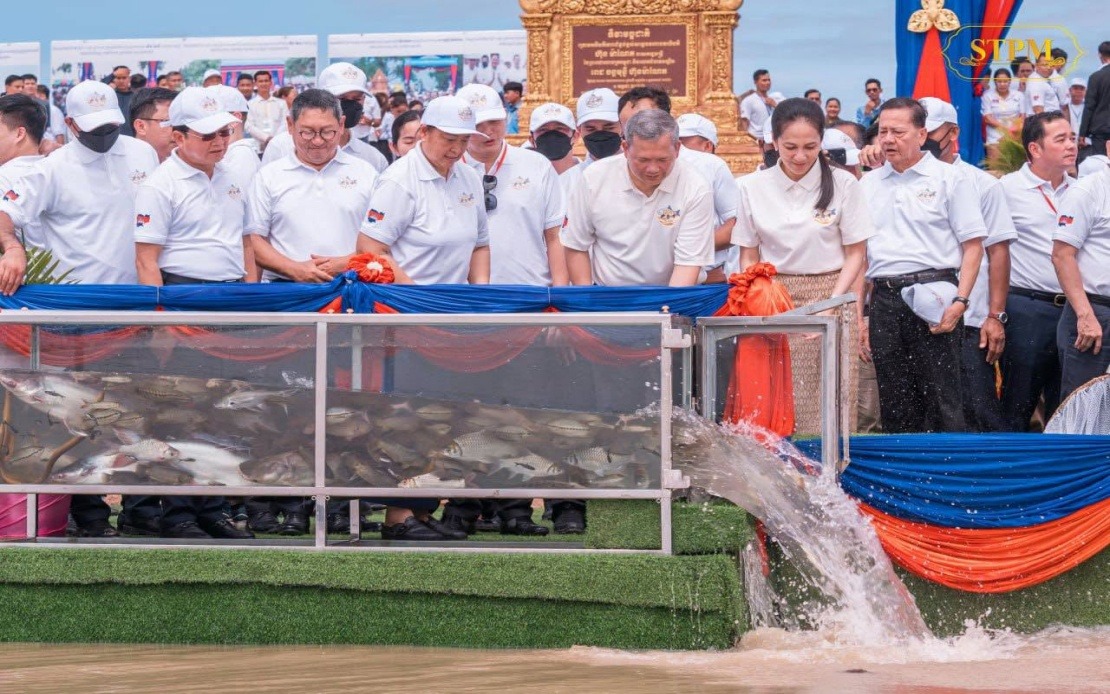
Cambodia's Prime Minister Hun Manet has launched a decisive campaign against illegal fishing, declaring during National Fish Day celebrations in Svay Rieng Province that protecting marine resources is essential to the kingdom's food security and economic stability. The directive represents a significant escalation in enforcement efforts, with Hun Manet explicitly instructing military units positioned around Tonle Sap lake to intensify operations against resource-related crimes affecting both terrestrial and aquatic environments.
The timing of this announcement reflects growing concerns across Southeast Asia about the sustainability of shared waterways and regional fisheries. Cambodia's freshwater and marine ecosystems face mounting pressure from increasingly sophisticated illegal operations, including destructive practices such as large-scale clam dredging that decimates habitats and threatens traditional fishing communities. By targeting these practices during critical breeding seasons, Hun Manet's government aims to restore fish populations and secure the biological foundations upon which thousands of Cambodian families depend.
Hun Manet's remarks reveal a strategic pivot in how Phnom Penh approaches resource management. For years, Cambodia has relied heavily on military personnel to combat natural resource crimes due to insufficient specialized law enforcement infrastructure. This dependency has proven costly and inefficient, prompting the government to seek a more sustainable model. Hun Manet acknowledged that while the military has been instrumental over the past two years, the ultimate goal is to transition toward civilian-led enforcement mechanisms and reduce the burden on armed forces already tasked with border security and territorial defence.
The agricultural and fisheries sectors occupy central positions in Cambodia's national development strategy and food security framework. Hun Manet's characterization of agriculture as "the nation's stomach" and fisheries as its "source of protein" underscores how deeply these industries are woven into Cambodia's identity and survival. Any degradation of marine and freshwater resources threatens not only rural incomes but also the protein supply chains that feed Cambodia's growing urban population. This integrated understanding of food security positions fisheries protection as a governmental priority rather than a peripheral environmental concern.
Illegal fishing operations in the region operate with sophisticated networks that exploit weak enforcement, jurisdictional gaps, and corruption. These activities extend beyond simple poaching; they involve organized use of destructive equipment and methods that permanently alter aquatic ecosystems. The prohibition on large-scale clam dredging signals Hun Manet's willingness to confront economically powerful actors engaged in these practices, a move that could face resistance from entrenched interests but demonstrates political commitment to enforcement.
The deployment of military units around Tonle Sap lake, Southeast Asia's largest freshwater body, carries significant implications for regional resource governance. Tonle Sap serves not only Cambodia but also Vietnam through transboundary water arrangements and fish migration patterns. Enhanced Cambodian enforcement could establish precedents for stronger bilateral cooperation on shared resource protection, potentially influencing how neighboring countries approach their own illegal fishing challenges. Malaysia and other ASEAN members facing similar maritime pressures may view Cambodia's military-supported enforcement model with interest.
Institutional capacity-building remains crucial to Cambodia's transition toward independent enforcement. The shortage of specialized law enforcement officers that necessitated military involvement reflects broader challenges in developing technical expertise and establishing professional standards. Hun Manet's acknowledgment of this gap suggests a longer-term vision of creating dedicated fisheries enforcement agencies staffed with trained personnel who understand both the biological and legal dimensions of resource management. Such institutional development requires sustained investment and technical cooperation, potentially involving regional partners and international organizations.
The release of 1.5 million fish and aquatic species into the Vai Ko River during National Fish Day celebrations serves both symbolic and practical purposes. Stock replenishment programs aim to compensate for population losses caused by illegal extraction and environmental degradation. However, such initiatives prove effective only when supported by genuine enforcement that prevents continued illegal harvesting. Hun Manet's combination of enforcement orders with fish release demonstrates an integrated approach that pairs restrictive measures with restorative action.
For Southeast Asian observers, Cambodia's campaign offers lessons about resource governance in an era of increasing competition for natural assets. The region's shared waterways and migratory fish stocks transcend national boundaries, creating interdependencies that require coordinated action. Cambodia's emphasis on military-supported enforcement may serve as a interim measure while civilian institutions develop capacity, but the longer-term sustainability of regional fisheries depends on harmonized policies, information-sharing among enforcement agencies, and recognition that protection of spawning grounds benefits all nations sharing these resources.
The success of Hun Manet's directive will ultimately depend on implementation consistency and the political will to maintain pressure against powerful actors benefiting from illegal activities. Initial announcements often precede more challenging enforcement phases where competing interests and resource constraints surface. Cambodia's fisheries future hinges not on eloquent policy statements but on sustained, visible action demonstrating that illegal fishing carries genuine consequences and that resource protection serves national priorities.

