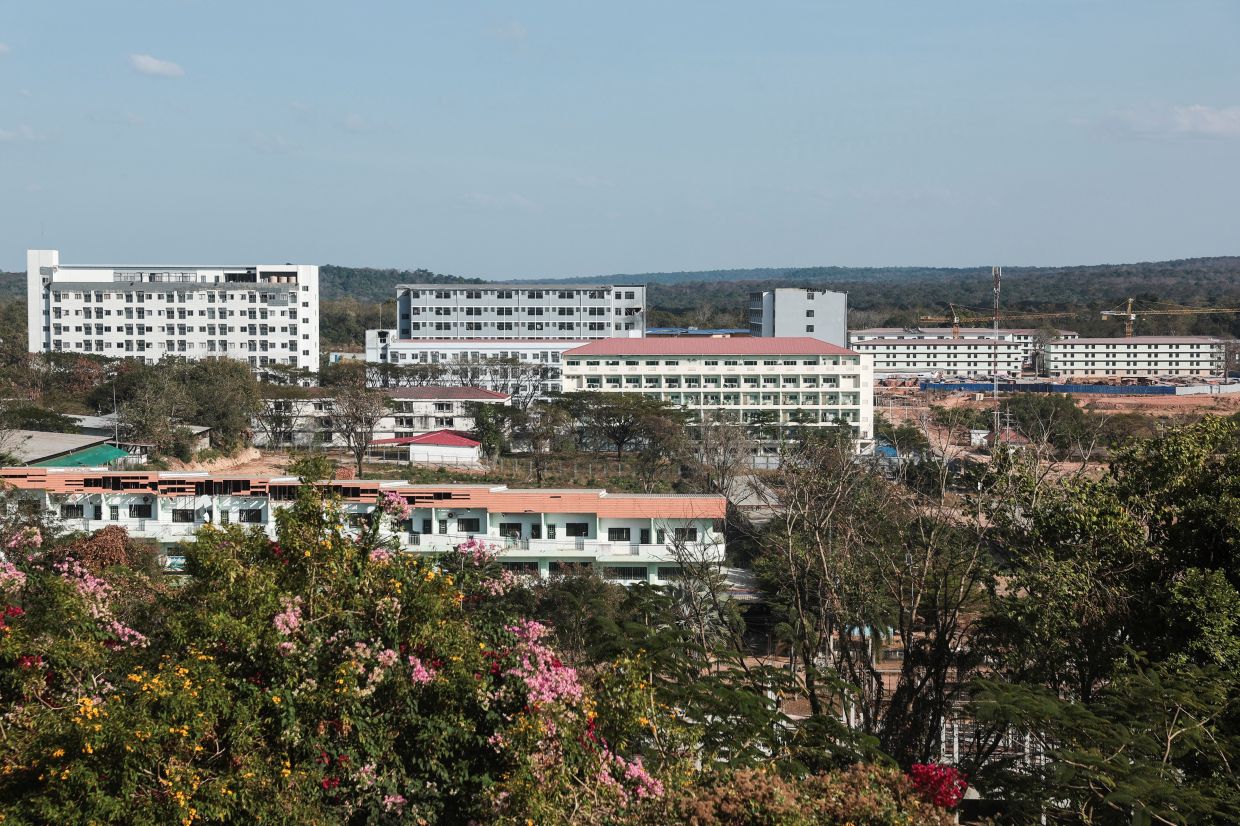
A sweeping Reuters investigation has uncovered that a major Cambodian gambling operation controlled by politically connected tycoon Lim Heng served as landlord to buildings housing large-scale scamming and human trafficking rings on the Thai-Cambodian border. The discovery reveals troubling links between Cambodia's casino industry and transnational organized crime, with implications for regional security and the fate of thousands of trafficking victims held across Southeast Asia.
The compound in question, anchored by the Royal Hill casino in O'Smach, Cambodia, leased out structures at significantly inflated rates according to a March 2024 rental agreement examined by the news agency. Those buildings had been specially modified with fake police station and bank office facades designed to fool victims from around the world into believing they were speaking with law enforcement or financial institutions. The setup was part of a sophisticated operation moving tens of millions of dollars through romance scams and police impersonation fraud schemes targeting vulnerable people globally.
The rental contract shows Royal Hill agreed to lease three buildings to a Chinese national for US$200,000 monthly over two years—an extraordinarily high price for structures in a remote border town. For context, comparable commercial real estate in Phnom Penh's upscale districts rented for around US$25,000 monthly at the same period. This dramatic price differential suggests either extraordinary commercial value or exploitation of criminal operations seeking secrecy and isolation from scrutiny.
Though Reuters found no direct evidence that Lim Heng Group itself orchestrated the frauds or trafficking, legal experts note that Cambodian landlords can face prosecution if they knowingly permit criminal activities on their property. Established facts show Royal Hill management was certainly aware of the operations—a September 2024 court complaint filed by the group targeted publishers who had reported foreign nationals being confined at the casino compound, effectively acknowledging awareness of trafficking allegations while attempting to suppress reporting through litigation.
Lim Heng's profile in Cambodian business and political circles amplifies concerns about governance and accountability. The tycoon holds a royal title equivalent to duke status, has been photographed at official gatherings with senior military generals, and donated US$20,000 to Cambodia's armed forces last year according to business records. Such connections typically translate to protection and preferential treatment in Cambodia's opaque political economy, raising questions about whether law enforcement would seriously investigate or prosecute someone so deeply embedded in the country's power structure.
The Royal Hill situation reflects a broader Southeast Asian crisis. The region has become home to what law enforcement describes as "fraud factories," industrial complexes where criminal gangs—predominantly Chinese-led—imprison trafficking victims and coerce them into perpetrating scams remotely. American losses alone reached US$10 billion in 2024, according to US government estimates. Cambodian casinos feature prominently in this infrastructure: an Amnesty International report documented that casino owners controlled at least a dozen such scam centres based on gambling regulator records and witness testimony.
Cambodia's casino industry remains deeply intertwined with political influence and military interests. Scholars studying the kingdom's political economy note that major casino operators invariably maintain close relationships with powerful generals and government officials. This nexus creates perverse incentives: casino owners benefit from their premises hosting criminal enterprises because the illicit profits get laundered through legitimate gambling operations, while political patrons protect those casino owners from prosecution in exchange for financial contributions and business opportunities.
The Cambodian government has made public commitments to eliminating scam centers, even extraditing alleged kingpin Chen Zhi to China and passing new anti-scamming legislation. Yet the government has consistently mischaracterized Royal Hill as merely a hotel establishment, despite worldwide media coverage of fake police stations and bank offices discovered at the site. This disconnect between stated policy and practical tolerance of criminal infrastructure suggests deeper institutional resistance to genuine enforcement.
Thai forces seized and occupied the Royal Hill compound following a December border clash, providing the first serious law enforcement scrutiny of the operation. General Thatchai Pitaneelaboot of the Royal Thai Police confirmed that Chinese criminals had perpetrated scams at the site, though he offered no specifics about their identities or organizational structure. The Thai occupation enabled Reuters investigators to view the lease agreement and interview workers who had been trafficked into the compound, corroborating accounts of the sophisticated fake government offices constructed within the buildings.
Cambodia's response to this exposure has been revealing. Rather than launching genuine investigations into Lim Heng Group's knowledge and facilitation of the operations, government officials have requested that Thailand return custody of the seized facilities to Cambodian authorities—a move that would almost certainly terminate serious inquiry into the compound's criminal history. Senior minister Chhay Sinarith acknowledged ongoing investigations into fraud operations around Royal Hill but emphasized the need for Thai forces to withdraw, suggesting priorities may lie elsewhere than accountability.
For Southeast Asia writ large, the Royal Hill case encapsulates a critical governance failure. Scamming operations thrive where political elites derive financial benefit from criminal enterprises, where legal protections shield connected businesspeople from prosecution, and where international trafficking victims remain invisible to enforcement mechanisms. Until Cambodia's government demonstrates willingness to prosecute prominent figures like Lim Heng regardless of their political connections, the region will continue serving as a base for global fraud networks that devastate victims thousands of miles away.
The trafficking dimension adds particular urgency. Workers at Royal Hill, including a Thai woman identified as Pornpen Aimhun, described conditions of captivity and coercion. These individuals represent thousands held across Cambodia, Laos, and Myanmar in similar compounds, generating billions in illicit proceeds. Disrupting these networks requires attacking their financial infrastructure—the casinos that launder their earnings—but such action demands political courage that Cambodia's interconnected elites have thus far lacked.

