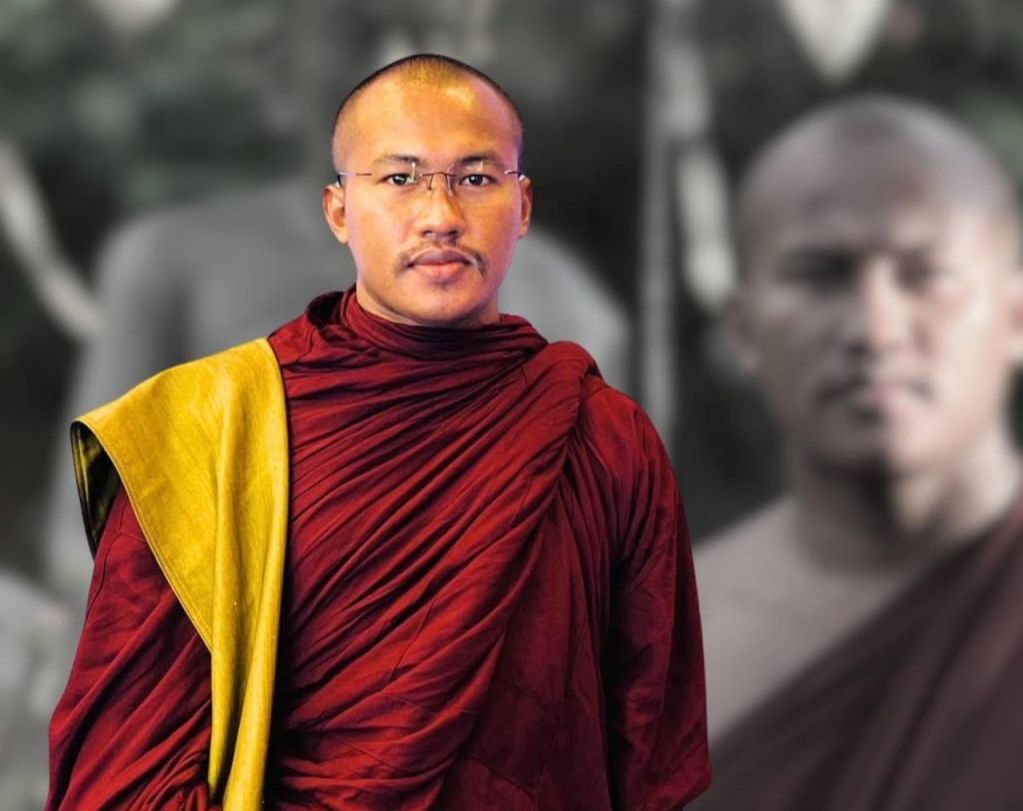
A coalition of fifty civil society organisations, labour unions and grassroots groups across Cambodia has issued a forceful call for the immediate release of Chea Vuthy, a 27-year-old citizen journalist and former Buddhist monk, following his conviction on incitement charges related to private online communications. The unified statement, released on August 20 through the Cambodian League for the Promotion and Defense of Human Rights (LICADHO), signals mounting concern among the country's human rights sector over what the groups describe as a disproportionate criminal response to protected speech in intimate digital spaces.
Vuthy's conviction arrived on August 19 from the Phnom Penh Municipal Court, which found him guilty under Articles 494 and 495 of Cambodia's Criminal Code and imposed an 18-month prison sentence alongside a fine of two million riel—approximately $500 in US currency. The prosecution centred on a single comment Vuthy made in August 2025 within a private Messenger group comprising roughly twenty members, where he addressed conditions affecting displaced persons in the context of ongoing Cambodia-Thailand border tensions. Notably, Vuthy acknowledged authoring the remark but consistently denied publishing it beyond the confines of that small, closed group.
The seventy-character nature of the exchange—a brief observation shared among close associates rather than broadcast to the public—forms the crux of the civil society argument. The signatory organisations contend that prosecuting someone for a comment visible to fewer than twenty people, when no evidence demonstrates public circulation or intent to incite mass action, fundamentally misaligns with established international norms governing freedom of expression restrictions. They emphasise that the Messenger comment constituted the sole evidentiary pillar supporting the incitement charge, a factual foundation they argue cannot justify criminal imprisonment.
Cambodia's obligations under the International Covenant on Civil and Political Rights (ICCPR), ratified by the kingdom, permit restrictions on expression only when they satisfy three cumulative tests: the restriction must be prescribed by law, it must serve a legitimate aim such as national security or public order, and crucially, it must prove both necessary and proportionate to the harm it seeks to prevent. The coalition argues that Vuthy's 18-month sentence fails this proportionality requirement entirely, particularly given the limited reach and minimal demonstrable impact of a remark confined to a private group chat. The organisations further reference Cambodia's recent fourth Universal Periodic Review at the UN Human Rights Council and the government's own constitutional guarantees of freedom of expression, invoking these commitments to frame Vuthy's conviction as fundamentally at odds with Cambodia's stated human rights standards.
Vuthy's journey from monastic life to detention illustrates the broader precariousness facing independent voices in Cambodia. He was ordained as a Buddhist monk at Wat Por Veal pagoda in Battambang province, where he maintained his residence, while simultaneously working as a citizen journalist who regularly documented and critiqued environmental destruction, forest depletion and human rights abuses. Plainclothes provincial police arrested him at the pagoda in April, and authorities proceeded to forcibly defrock him before placing him in pretrial detention. He currently languishes in Phnom Penh's Police Judicial Prison (PJ), where he awaits his appeal as his lawyer, Em Chantha, prepares to challenge the conviction on grounds of insufficient evidence and misapplication of incitement law.
The Phnom Penh Appeal Court previously rejected Vuthy's bail request in June, effectively sealing his confinement during the preliminary proceedings. His lawyer has signalled serious doubt about whether private Messenger remarks can legally constitute incitement under Cambodian law, raising technical questions about judicial interpretation that may provide grounds for appellate relief. However, the extended period already spent in custody—from April arrest through August conviction—compounds concerns about the case's chilling effect on journalistic and civic expression throughout Cambodia.
Vuthy's prosecution sits within a troubling pattern of criminal enforcement against Cambodians who have publicly commented on the Cambodia-Thailand border dispute. LICADHO has documented multiple convictions arising from social media posts discussing the border conflict, including a chef sentenced to eighteen months in May and a deputy school director sentenced to two years in June, both on comparable incitement charges. These cumulative cases suggest a prosecutorial strategy targeting any expression—whether public or private—that engages with the sensitive border issue, effectively establishing an undisclosed red zone for civil discourse.
The breadth of the August 20 joint statement underscores the depth of concern across Cambodia's civil society ecosystem. Beyond LICADHO, endorsers include the Cambodian Center for Human Rights (CCHR), the Cambodian Human Rights and Development Association (ADHOC), the Cambodian Center for Independent Media (CCIM), the Cambodian Journalists Alliance Association (CamboJA), the Overseas Press Club of Cambodia (OPCC), the Center for Alliance of Labor and Human Rights (CENTRAL), the Committee for Free and Fair Elections in Cambodia (COMFREL), Equitable Cambodia and the Prey Lang Community Network, among dozens of others. This constellation of groups—spanning media, labour, elections monitoring and grassroots constituencies—reflects consensus that the Vuthy conviction represents a violation of internationally protected rights requiring immediate corrective action.
The government's response has remained detached and procedurally formal. Ministry of Information spokesperson Tep Asnarith stated that the executive branch does not interfere with judicial proceedings, asserting that Cambodia's courts possess independent decision-making authority. He acknowledged that Vuthy retains the right to legal representation and appeal, while inviting civil society organisations to assess the case with what he characterised as balance and accuracy—a framing that implicitly suggests the rights groups may have reached conclusions prematurely or without full factual foundation. This rhetorical posture, however, sidesteps the substantive concerns about proportionality and the chilling effect of criminalising private speech.
For Malaysian and Southeast Asian observers, the Vuthy case illuminates ongoing tensions within Cambodia regarding the boundaries of protected speech in an era of digital communication. The prosecution of remarks made in small, closed online groups signals that Cambodian authorities may be interpreting incitement statutes with expansive scope, capturing communications that traditional legal doctrine would classify as private and non-incitement. This approach carries implications for regional activism and journalism, particularly for independent voices operating across Southeast Asian borders who engage with sensitive geopolitical topics such as border disputes, environmental issues and human rights.
The case also underscores the vulnerability of monks and religious figures who engage in social commentary, a pattern evident in other Southeast Asian contexts where governments have sought to constrain religious voices addressing civic matters. Vuthy's forced defrocking adds a dimension of religious liberty concerns to the broader freedom of expression issues at stake. For Malaysians familiar with religious authority structures and state-religion relationships, this aspect of the prosecution may resonate particularly keenly.
The appellate process will determine whether Cambodian courts reconsider the proportionality analysis underlying Vuthy's conviction. However, the signal already sent through his prosecution is unmistakable: civil society activists, journalists and citizens discussing sensitive border and political topics face substantial legal jeopardy, even when restricting their remarks to private channels. Until or unless the appeals court reverses the conviction or amnesty is granted, Vuthy's case will remain emblematic of Cambodia's evolving approach to managing expression in the digital age—an approach that civil society organisations across Cambodia and the region view with deepening apprehension.

