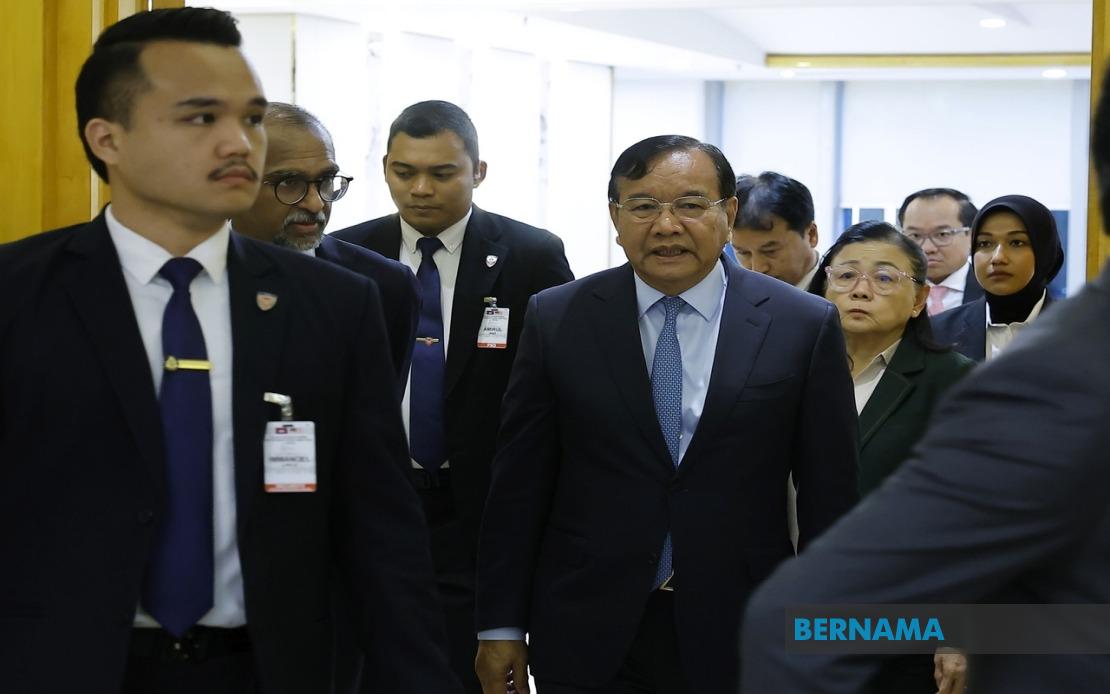
Cambodian Deputy Prime Minister and Minister of Foreign Affairs and International Cooperation Prak Sokhonn concluded his two-day official visit to Malaysia on Sunday, departing from Kuala Lumpur International Airport Terminal 1 at 4.45 pm on a commercial flight to Phnom Penh. Datuk Rozainor Ramli, the Malaysian Government's chief ceremony officer, attended the farewell at the airport, underscoring the diplomatic significance of the visit.
The timing of Sokhonn's mission carries strategic weight, as it marks preparatory groundwork for the 70th anniversary celebration of diplomatic relations between Malaysia and Cambodia scheduled for 2027. This milestone reflects a continuous relationship spanning seven decades, during which both Southeast Asian neighbours have navigated regional shifts while maintaining consistent engagement across multiple domains of bilateral cooperation.
A cornerstone achievement of the visit was the resumption of the Malaysia-Cambodia Joint Commission for Bilateral Cooperation (JCBC) Meeting, which Sokhonn co-chaired with Malaysian Foreign Minister Datuk Seri Mohamad Hasan in Kuala Lumpur. This marked the reactivation of a bilateral mechanism that had lain dormant for two decades, signalling renewed momentum in institutionalised cooperation between Kuala Lumpur and Phnom Penh. The revival of this high-level forum represents a deliberate effort to deepen engagement and provide structured channels for addressing shared priorities.
During his stay, Sokhonn paid a courtesy call on Prime Minister Datuk Seri Anwar Ibrahim at the Prime Minister's Office, where the two leaders reaffirmed Malaysia and Cambodia's longstanding historical bonds. Beyond ceremonial exchanges, both governments identified concrete areas for enhanced strategic cooperation, reflecting a pragmatic approach to bilateral relations. The discussions encompassed diverse sectors including the digital economy, artificial intelligence, the halal industry, food security, and human capital development—priorities that align with broader Southeast Asian development trajectories and regional integration goals.
Economic metrics underscore the growing commercial vitality of the Malaysia-Cambodia relationship. In 2025, bilateral trade surged 27.4 per cent year-on-year, reaching RM5 billion (USD1.17 billion), demonstrating resilient demand and expanding market linkages. Malaysian exports to Cambodia totalled RM4.13 billion (USD970 million), while Cambodia's exports to Malaysia amounted to RM880 million (USD200 million). This trade composition suggests Malaysia's role as both a supplier of manufactured goods and a market for Cambodian products, typical of complementary economic structures within ASEAN.
Beyond merchandise trade, Malaysia's investment presence in Cambodia underscores deeper economic integration. As of 2024, Malaysian cumulative foreign direct investment in the Kingdom reached USD3.20 billion (RM13.07 billion) across 162 registered projects, positioning Malaysia as Cambodia's third-largest foreign investor. This substantial capital commitment spans manufacturing, services, and infrastructure sectors, creating employment and technology transfer opportunities that benefit both economies. The investment stock reflects Malaysian entrepreneurs' confidence in Cambodia's investment climate and growth potential.
For Malaysian policymakers and business communities, Cambodia represents both an emerging market opportunity and a strategic partner in advancing ASEAN cohesion. The country's younger demographic profile, improving infrastructure, and labour cost competitiveness make it an attractive destination for Malaysian manufacturing relocation and regional supply chain diversification. As regional competition for investment intensifies, maintaining robust bilateral relations ensures Malaysian firms secure preferential positioning in Cambodia's developing economy.
The reactivation of the JCBC mechanism carries implications for resolving bilateral trade irritants and coordinating policies across sectors. Dormant for two decades, the forum's revival suggests both nations recognised the need for structured dialogue to manage the complexity of contemporary bilateral relations—including regulatory harmonisation, intellectual property protection, and labour standards. Regular high-level engagement through such mechanisms reduces misunderstandings and accelerates problem-solving.
Cambodia's strategic importance to Malaysia extends beyond bilateral economics. As ASEAN chair in 2025, Cambodia's initiatives on regional integration, digital transformation, and climate resilience directly influence the multilateral agenda affecting Malaysian interests. Strengthening Cambodia relations ensures Malaysia's voice shapes regional consensus on emerging issues including cyber governance, supply chain security, and the digital economy—areas central to Malaysia's Vision 2050 aspirations.
The visit also signals both nations' commitment to bridging historical gaps through contemporary cooperation frameworks. Regional analysts note that Southeast Asian partnerships function most effectively when anchored in institutionalised mechanisms rather than personality-dependent relationships. By reactivating the JCBC, Malaysia and Cambodia demonstrated maturity in building durable bilateral architecture resilient to leadership transitions and external pressures.
Looking ahead, the 70th anniversary milestone in 2027 offers Malaysia and Cambodia an opportunity to deepen people-to-people exchanges, academic partnerships, and cultural initiatives alongside economic and political cooperation. Educational exchange programs, tourism promotion, and cultural festivals can strengthen societal bonds, creating constituencies in both countries invested in sustained bilateral harmony.
For Southeast Asia's broader strategic landscape, vibrant Malaysia-Cambodia relations contribute to ASEAN unity and regional stability. As external powers compete for influence in the region, intra-ASEAN solidarity becomes increasingly valuable. Sokhonn's visit, though brief, reinforced commitment to consolidating Southeast Asian cohesion through pragmatic cooperation addressing shared development challenges and opportunities.

