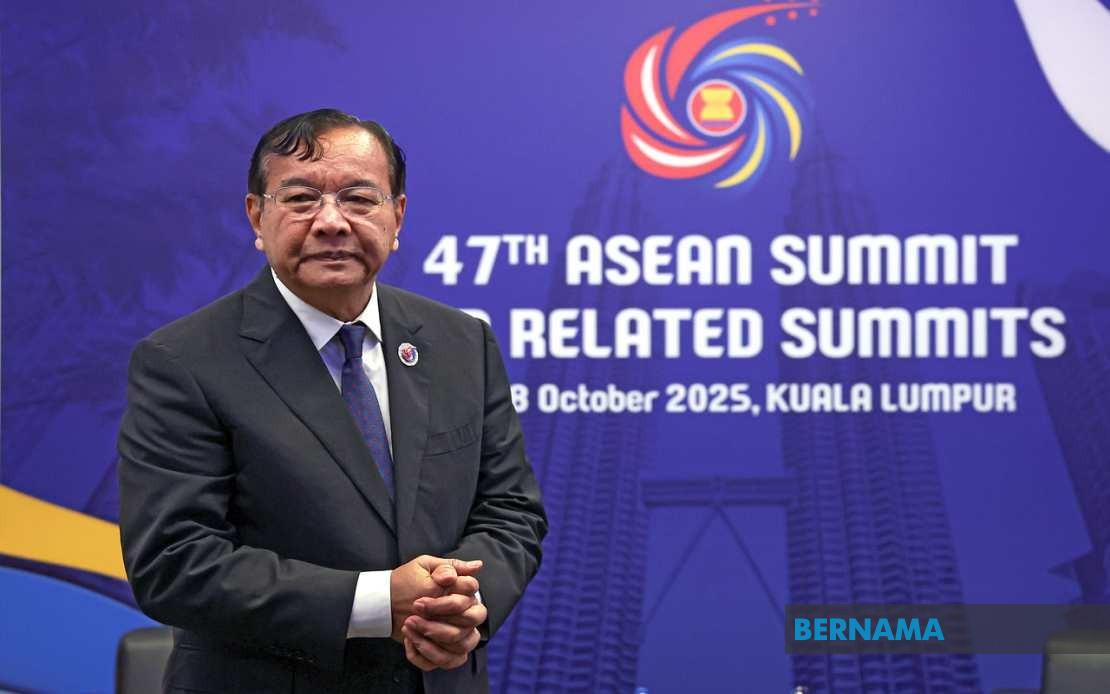
Cambodian Deputy Prime Minister and Minister of Foreign Affairs and International Cooperation Prak Sokhonn is in Malaysia this week for a significant diplomatic engagement that signals renewed momentum between the two Southeast Asian neighbours. The centrepiece of his two-day visit is the resumption of the Malaysia-Cambodia Joint Commission for Bilateral Cooperation, which will be co-chaired with Malaysia's Foreign Minister Datuk Seri Mohamad Hasan on Tuesday in Kuala Lumpur. This marks the third formal meeting of the commission, but more notably, it represents the revival of a mechanism that has lain dormant for two decades—the last session convened in Siem Reap in 2006, a striking gap that underscores how bilateral institutional engagement had stalled.
The timing of this visit carries particular significance as it falls within the lead-up to the 70th anniversary of diplomatic relations between Malaysia and Cambodia in 2027. The Cambodian delegation's presence in Kuala Lumpur, therefore, should be understood not merely as a routine exchange but as a deliberate signal of both nations' intention to deepen institutional cooperation and lay groundwork for celebrating their relationship in the coming years. This diplomatic recalibration suggests that both governments have reassessed the value of formal bilateral mechanisms and recognised the need for structured dialogue at the highest levels.
During his stay, Prak Sokhonn will undertake a courtesy call on Prime Minister Datuk Seri Anwar Ibrahim on Monday. Such engagements, while often characterised as ceremonial, serve as essential platforms for leaders to discuss substantive issues of mutual concern and to reaffirm the foundational commitments underpinning bilateral ties. The agenda is likely to encompass regional security, economic cooperation, and ASEAN-related matters, all of which are pertinent to both nations' strategic interests in an increasingly complex geopolitical environment.
The economic dimensions of Malaysia-Cambodia relations have demonstrated considerable vigour in recent years, providing solid ground for the political and institutional revival. Trade between the two countries surged 27.4 per cent year-on-year in 2025, reaching RM5 billion, equivalent to approximately US$1.17 billion. This expansion reflects growing commercial connectivity, with Malaysian exports to Cambodia amounting to RM4.13 billion, while Cambodia's shipments to Malaysia totalled RM880 million. For Malaysian businesses, Cambodia represents an increasingly important market, particularly in sectors aligned with regional supply chain integration.
Beyond trade, Malaysia has emerged as a substantial investor in Cambodia's economy. As of 2024, Malaysia's cumulative foreign direct investment in Cambodia stood at US$3.20 billion across 162 registered projects, positioning Malaysia as the kingdom's third-largest foreign investor. This investment footprint spans manufacturing, agriculture, infrastructure, and services, creating direct economic ties that bind the two countries together at the enterprise level. The concentration of Malaysian capital in Cambodia also generates recurring opportunities for business delegations and sector-specific dialogues that complement official governmental channels.
The resumption of the Joint Commission after two decades presents an opportunity to systematise cooperation that has continued informally and through bilateral channels. The commission traditionally serves as an umbrella mechanism under which sectoral working groups can coordinate on issues ranging from trade and investment to education, cultural exchanges, and security cooperation. By re-establishing this institutional framework, both nations can create clearer pathways for addressing bottlenecks, exploring new areas of collaboration, and ensuring that economic gains are complemented by broader people-to-people and institutional linkages.
For Malaysia, deepening ties with Cambodia aligns with broader ASEAN cohesion objectives and supports the regional architecture that has underpinned decades of stability and prosperity. Cambodia's strategic location and role as a gateway to Indochina make it a valuable partner for Malaysian enterprises seeking to expand into the wider Mekong region. Similarly, Cambodia's integration into ASEAN economies depends partly on building robust connections with more developed member states such as Malaysia, which can provide investment, expertise, and market access.
The expected signing of the Agreed Minutes at the conclusion of the JCBC meeting will formalise the outcomes of discussions and set parameters for cooperation going forward. These minutes typically outline specific commitments, timelines for implementation, and mechanisms for monitoring progress. By documenting agreements in this manner, both governments create accountability structures that elevate bilateral initiatives beyond rhetorical commitments to actionable frameworks with defined responsibilities and endpoints.
For Malaysian stakeholders—whether in business, academia, or civil society—the revitalisation of formal bilateral mechanisms opens avenues for deeper engagement with Cambodia. The re-establishment of the Joint Commission signals governmental commitment to facilitating cross-border cooperation, which often requires coordinated policy alignment and regulatory harmonisation. Industries such as agriculture, food processing, automotive components, and digital services stand to benefit from enhanced dialogue between sectoral ministries of both nations.
The broader context of Southeast Asian regionalism also informs the significance of this visit. As ASEAN nations navigate shifting global power dynamics and pursue various regional integration initiatives, maintaining strong bilateral relationships becomes increasingly important. Malaysia and Cambodia share interests in maritime security, transnational challenges such as trafficking and environmental protection, and economic development pathways that balance growth with sustainability. The Joint Commission provides a formal venue for addressing these multifaceted concerns.
Looking ahead to the 70th anniversary of diplomatic relations, this visit can be viewed as part of a deliberate strategy to refresh bilateral relations and create momentum for commemoration in 2027. Anniversary celebrations typically serve as junctures for reviewing past achievements and establishing fresh commitments for future collaboration. By resuming the Joint Commission now, both nations are positioning themselves to mark this milestone with tangible accomplishments and renewed institutional vigour.
The visit also reflects evolving regional dynamics within ASEAN, where smaller economies like Cambodia increasingly seek to strengthen ties with more industrialised neighbours to enhance their development prospects. For Malaysia, engaging actively with Cambodia demonstrates commitment to inclusive ASEAN cooperation and positions the country as a dependable development partner. This reciprocal benefit forms the foundation for sustainable bilateral relations that extend beyond individual administrations or economic cycles.

