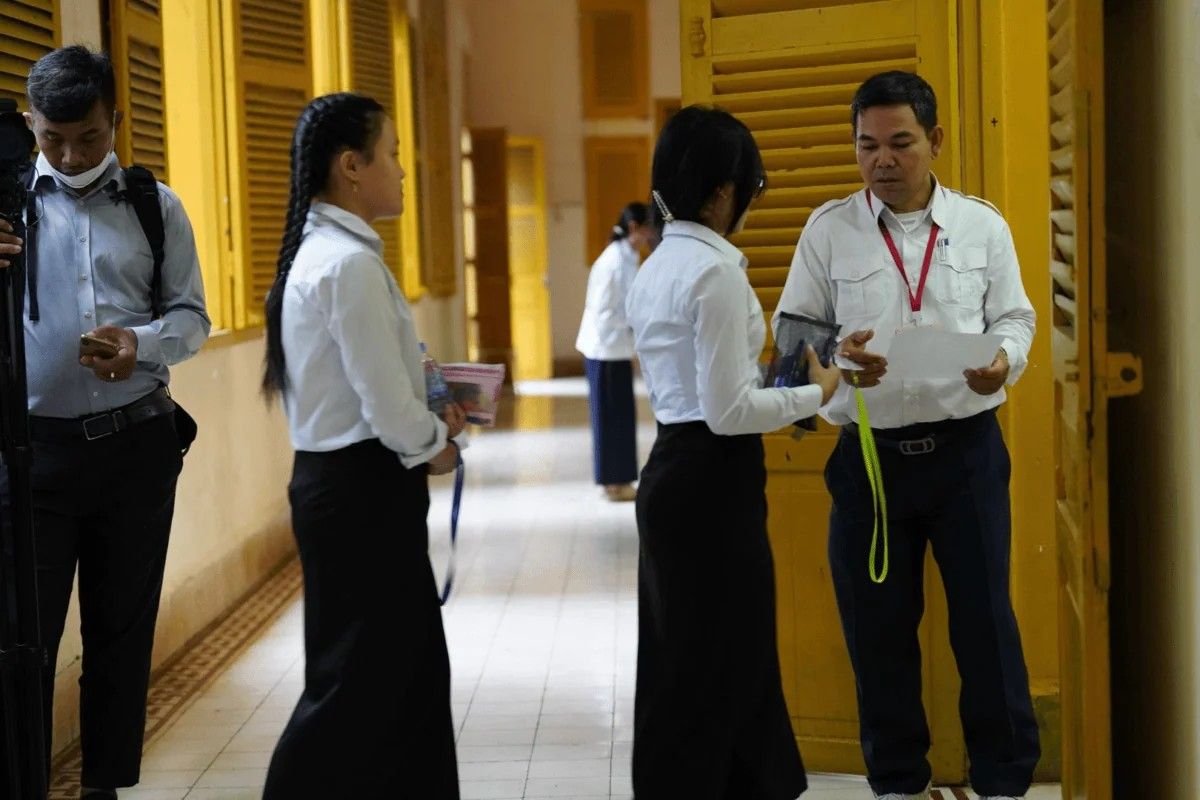
Cambodia's high school graduation examination cycle opened on August 10, welcoming over 150,000 students to examination centres nationwide, yet the occasion was shadowed by the continuing closure of educational facilities in border regions occupied by Thai military forces following armed confrontations the previous year. The administration expressed optimism that this sitting would proceed in substantially calmer conditions compared to 2025, when tests were held just four weeks after initial skirmishes erupted along the Cambodia-Thailand frontier.
Hang Chuon Naron, the Minister of Education, Youth and Sport, presided over the opening ceremony in Phnom Penh and drew sharp distinctions between the testing environment this year and last year's conditions. He characterised the 2025 examination period as unusually difficult, occurring as it did in the immediate aftermath of what he termed Thai invasion operations. The minister painted a striking portrait of the disruption inflicted on students in frontier areas, describing young people forced to pursue their studies from moving tractors as families evacuated ahead of military operations. Yet he also highlighted a remarkable success story—one student he encountered managed to achieve top grades despite these extraordinary hardships and subsequently gained admission to a prestigious tertiary institution, exemplifying resilience in the face of displacement.
The examination framework encompasses two distinct academic streams. The science track accommodates over 37,000 candidates, while the social science pathway enrolls more than 130,000 students, reflecting the broader preference for humanities studies across the Cambodian secondary system. This substantial cohort will sit examinations across numerous centres distributed throughout the kingdom, representing a significant logistical undertaking for the education authorities.
The most troubling aspect of this examination cycle remains the status of 25 educational institutions in border provinces that have been unable to reopen their physical facilities. These schools remain inaccessible because they lie within territory currently occupied by Thai military personnel, a lingering consequence of the border clashes that occurred during 2025. The situation has created an acute educational access problem for students in these zones, disrupting their normal learning environments and forcing alternative arrangements. The Cambodian government has been explicit in its demands that Thai forces withdraw from these areas and permit students to return to their established classrooms, viewing the continued occupation as an infringement on children's right to education.
Currently, only one institution—Banteay Mean Rith Lower Secondary School located in Oddar Meanchey province—has managed to arrange for affected students to continue their education through temporary encampments, representing a partial solution to the displacement crisis. However, this makeshift arrangement falls far short of providing all affected students with access to proper educational facilities. The minister's acknowledgment of this disparity underscores the severity of the border situation and its direct impact on educational outcomes for Cambodia's youth in frontier communities.
Anticipating potential examination irregularities, the Cambodian authorities have implemented stringent oversight mechanisms to maintain the integrity of this year's testing process. The minister explicitly pledged that corruption would be eliminated through rigorous organisational protocols, strict procedural enforcement, and comprehensive monitoring by representatives from multiple institutional stakeholders. This commitment appears partly motivated by the examination compromise that marred the previous year's mathematics papers, which were leaked to candidates in advance, compromising the validity of that assessment. Such breaches undermine the credibility of the examination system and disadvantage students who prepared diligently without access to advance materials.
The Anti-Corruption Unit has undertaken a substantial deployment to prevent such irregularities from recurring. Officials from the unit have positioned more than 4,000 observers throughout examination venues, a figure matching the deployment scale from the previous year. These monitors will maintain vigilance against cheating, paper leaks, and other forms of malpractice that could distort results. The consistency in observer numbers suggests that authorities have identified this level of coverage as necessary to maintain examination security and fairness across the testing network.
The situation reflects broader tensions affecting Cambodia's borderlands. The Thailand-Cambodia boundary has historically witnessed sporadic military confrontations, and the 2025 clashes represent one of the more significant recent incidents. The persistence of Thai military presence in Cambodian territory months after the initial violence underscores the complexity of border management and dispute resolution in Southeast Asia. For Malaysian observers, the situation illustrates how regional boundary disputes can have profound consequences for civilian populations, particularly vulnerable groups such as students whose education becomes collateral damage in geopolitical conflicts.
The examination commencement also carries symbolic weight for Cambodia's governance narrative. Successfully conducting a national examination cycle demonstrates state capacity to maintain institutional continuity despite military and territorial challenges. The government's focus on preventing corruption suggests an effort to project institutional competence and commitment to meritocratic principles, even as it grapples with territorial complications beyond its immediate control.
Looking forward, the resolution of the border dispute will remain crucial not only for regional stability but also for the restoration of normal educational access for thousands of Cambodian students. The closure of 25 schools represents an ongoing humanitarian dimension to what might otherwise be viewed as a straightforward territorial disagreement. International mechanisms and regional diplomatic channels will be essential for achieving a settlement that permits students to return to their established learning environments and allows Cambodia's education system to function without the constraints imposed by military occupation of civilian infrastructure.

