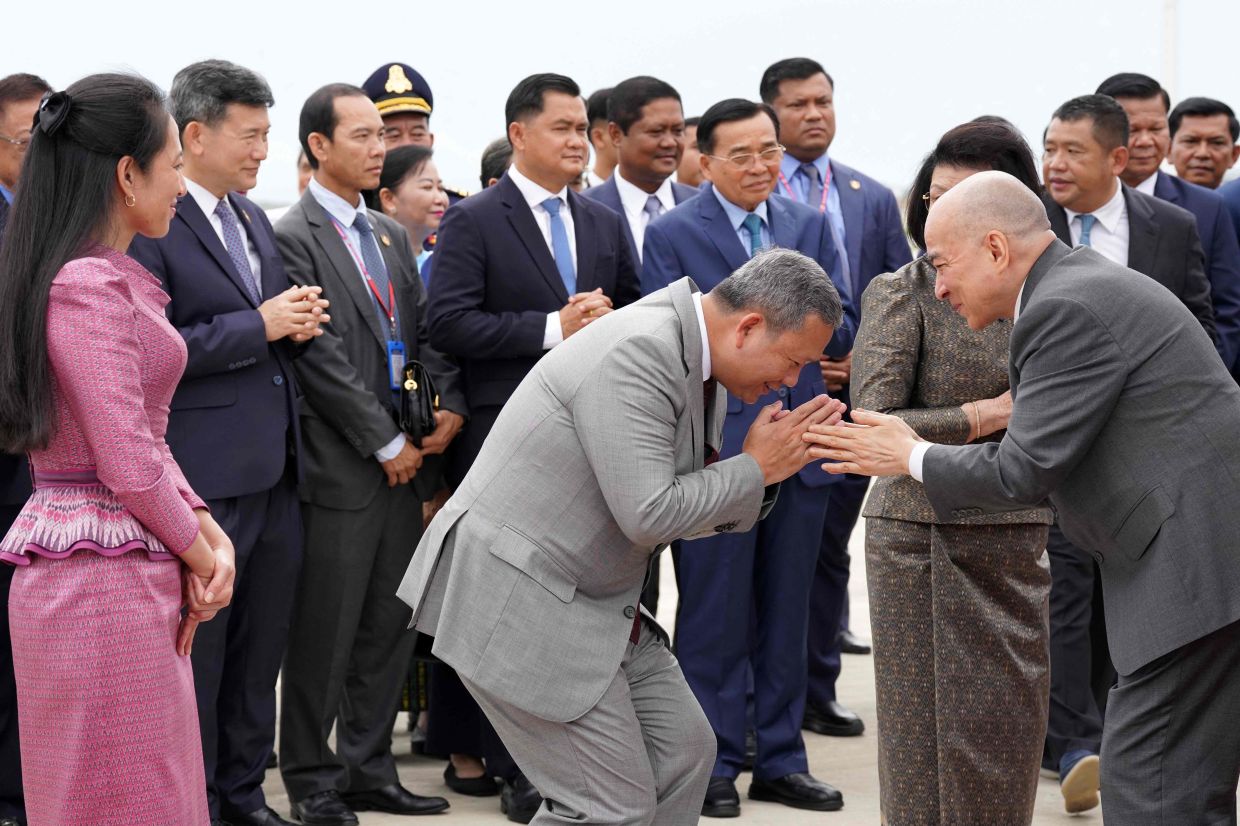
Cambodia's King Norodom Sihamoni arrived back in Phnom Penh on Friday afternoon after spending several months in Beijing receiving treatment for prostate cancer, marking his return to the kingdom following an extended medical absence that had kept the Southeast Asian nation's attention focused on the monarch's wellbeing. The 73-year-old ruler touched down at the capital's airport and was received by senior government figures, including Hun Sen, the kingdom's influential former leader and Hun Manet, his son who now serves as prime minister, according to state broadcaster TVK.
The royal palace issued a statement confirming that Sihamoni's health had significantly improved following more than three months of medical care in the Chinese capital, where he had undergone what palace officials described as successful surgical intervention. The monarch initially departed Cambodia earlier in the year for routine health examinations in Beijing, but the subsequent discovery of prostate cancer prompted him to remain in China for extended treatment under the supervision of Chinese medical specialists. The formal announcement of his diagnosis came in April, bringing the health situation into public awareness across Cambodia and the wider region.
Hun Sen, the former prime minister who has remained a politically significant figure despite stepping down from the top office, confirmed Sihamoni's safe arrival through a Facebook post that also included footage of the king's return to Cambodia. The senior statesman's prominent involvement in welcoming the returning monarch underscores the political significance attached to the royal family's health and stability within Cambodian governance structures. The presence of both Hun Sen and Hun Manet at the airport reception demonstrated continuity in Cambodia's power structures and the importance placed on this moment by the government.
Sihamoni's health journey carries particular resonance within Cambodian royal history, given his father's nearly identical experience decades earlier. King Norodom Sihanouk, Sihamoni's predecessor, similarly traveled to Beijing for cancer treatment and subsequently made the decision to abdicate from the throne in 2004, paving the way for his son's ascension to the monarchy. Sihanouk passed away in 2012, nearly a decade after his own medical treatment and retirement from active rule. This historical parallel has naturally prompted reflection within Cambodia regarding the stability and succession arrangements of the kingdom's most important institution.
The current king's lengthy time abroad has had consequences for Cambodia's ceremonial and symbolic functions, as the monarchy remains central to Buddhist-majority Cambodia's national identity and cultural practices. During his absence, routine royal duties and appearances that normally punctuate the calendar of Cambodian state affairs had been suspended or delegated, leaving a noticeable gap in the visible presence of the institution itself. His return therefore represents not merely a personal recovery but a restoration of institutional visibility that carries weight within Cambodian society.
Sihamoni represents an unusual profile among Southeast Asian monarchs, having spent the majority of his adult life in the arts and living abroad before assuming the throne relatively late in life. The king is fluent in multiple languages including Khmer, French, Czech and English, reflecting his cosmopolitan background and international experience. Prior to his accession to the throne, he had pursued a career in the performing arts and had maintained a low public profile, unlike many hereditary rulers who prepare for succession throughout their lives. His relative distance from political machinery before 2004 has shaped his reign and his relationship with Cambodia's complex power dynamics.
The reliance on Chinese medical facilities and expertise for treatment of Cambodia's reigning monarch illustrates the deepening health and medical partnership between Cambodia and China, extending beyond trade and investment relationships into matters of state health and leadership wellbeing. This dependence on Chinese medical infrastructure, while providing access to sophisticated healthcare, also reflects broader patterns of Cambodian alignment with Beijing across numerous policy domains. The fact that Sihamoni chose Beijing for his treatment, rather than facilities in Thailand or other regional medical hubs, signals the priority placed on the China-Cambodia relationship by Cambodia's leadership.
The king's recovery and return also occur against Cambodia's broader political backdrop, where Hun Manet's transition to prime minister represents a generational shift in the country's governance. The younger Hun's assumption of the top office follows his father's decades-long dominance of Cambodian politics, and the simultaneous absence and return of the king creates an interesting temporal dynamic in Cambodia's institutional evolution. The monarchy, while constitutionally constrained in direct political power, remains symbolically essential to Cambodia's governance legitimacy and national cohesion.
Sihamoni's medical journey underscores broader Southeast Asian patterns regarding aging leadership and succession planning across the region's major institutions. As several Southeast Asian nations grapple with generational transitions in both political and royal institutions, Cambodia's experience demonstrates the continuing importance of managing public perception around leadership health and continuity. The coordinated media presence and official statements surrounding Sihamoni's return suggest careful management of the narrative around his recovery and fitness to continue his role.
Moving forward, Sihamoni's restored presence in Cambodia will likely see a resumption of the full ceremonial calendar and symbolic functions of the monarchy, including religious observances and state occasions that depend on royal participation. The palace's characterization of his improved health status provides reassurance to the Cambodian public regarding institutional stability, though long-term health outcomes for a 73-year-old cancer survivor remain inherently unpredictable. The return also potentially alleviates concerns about the succession process or regency arrangements that might have emerged had the king's absence or illness extended considerably longer.

