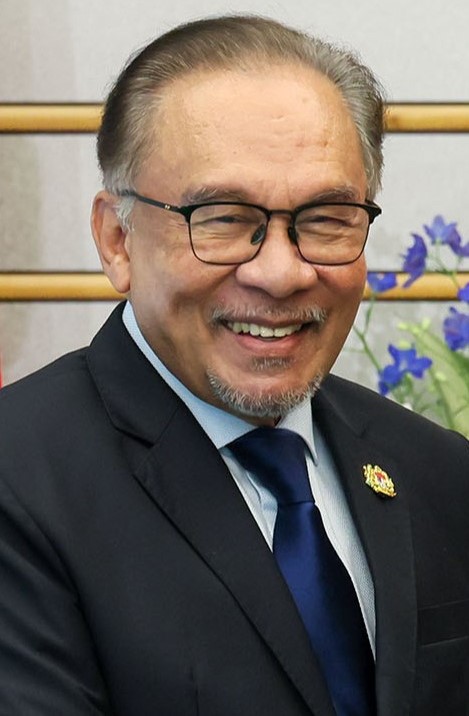
Former DAP Member of Parliament Tony Pua has voiced significant concerns about the scope of Malaysia's Sedition Act, particularly whether ordinary citizens and political commentators could face legal jeopardy for publicly responding to statements made by members of the royal family on political matters. The question strikes at a long-standing tension in Malaysian law between protecting the institution of the monarchy and preserving democratic space for legitimate political discourse.
Pua's inquiry represents a critical juncture in an ongoing national conversation about the proper balance between respecting constitutional institutions and maintaining the fundamental freedoms necessary for a functioning democracy. The Sedition Act, which has its roots in colonial-era legislation, remains a contentious legal instrument that critics argue has been wielded inconsistently and sometimes against political opponents rather than genuine threats to national stability. The question of whether responding to royal commentary on political issues constitutes sedition has not been clearly settled by judicial precedent, leaving considerable ambiguity for both public figures and ordinary Malaysians engaging in political discussion.
The constitutional position of the Malaysian monarchy is distinct and specially protected under the Federal Constitution, which accords the Yang di-Pertuan Agong and state rulers a unique legal status. This protection reflects Malaysia's particular historical experience as a constitutional monarchy where the institution of the Crown is understood as central to national identity and the social contract that holds the federation together. However, this elevated legal position has sometimes created grey areas in practice, particularly when members of the royal family venture into commentary on contemporary political issues that are otherwise subject to public debate and scrutiny.
Under existing law, the Sedition Act 1948 criminalizes speech that tends to promote feelings of ill-will or hostility between different groups in Malaysia, or that brings into hatred or contempt the Agong or the rulers of states. The statute has historically been interpreted by prosecutors and courts in ways that have generated substantial scholarly debate about its compatibility with modern international human rights standards and with Malaysia's own constitutional commitment to freedom of speech. The challenge lies in determining where legitimate political criticism ends and seditious speech begins, a distinction that becomes particularly murky when the subject is a royal personage commenting on matters of state policy.
Malaysia has witnessed several high-profile cases in recent years where individuals faced sedition charges for social media posts or public statements perceived as disrespectful toward the monarchy, though the precise relationship between these prosecutions and prior royal statements or the individuals' political motivations has varied significantly. These cases have had a chilling effect on public discourse, with many citizens choosing self-censorship over the risk of entanglement with authorities. The ambiguity surrounding what constitutes permissible response to royal political commentary has particularly affected opposition politicians, activists, and journalists who might otherwise contribute to national policy discussions.
The practical implications of this legal uncertainty extend beyond individual cases to affect the broader health of Malaysia's democratic institutions. When citizens fear that responding to public statements by any member of the royal family could trigger sedition investigations, the foundations of democratic deliberation become unstable. A healthy democracy requires the ability of ordinary people and elected representatives to contest, challenge, and disagree with arguments put forward by any public figure, regardless of their status or station. The suggestion that this ordinary democratic right might be curtailed simply because the person making the initial political statement happens to be royalty raises fundamental questions about the kind of society Malaysia is constructing.
International human rights bodies and domestic civil society organizations have consistently flagged concerns about the scope of sedition laws in Malaysia and their potential for abuse or misapplication. These organizations argue that the current legal framework does not adequately distinguish between speech that poses genuine threats to national cohesion and speech that simply expresses dissent or disagreement with government policy or public figures, including those from the royal establishment. The tension between protecting institutional dignity and preserving democratic freedoms remains unresolved in Malaysian jurisprudence, creating situations where legal advice to citizens might reasonably include suggestions for self-censorship on political topics.
Pua's public questioning of this legal ambiguity serves an important function in focusing attention on an issue that affects all Malaysians' ability to participate in political discourse. By raising the question in a clear and direct manner, the former MP invites legal scholars, government officials, and the judiciary to clarify the boundaries of permissible speech in relation to the monarchy's involvement in political matters. Such clarification would benefit both the institution of the Crown, which would no longer depend on the chilling effect of legal uncertainty, and the Malaysian public, which would have clearer guidance on the limits of acceptable political expression.
The resolution of this question likely requires legislative amendment, judicial clarification through test cases, or both. Any adequate resolution should preserve the dignity and constitutional position of the monarchy while simultaneously protecting the democratic space necessary for citizens to engage with political arguments made by any party, including members of the royal family. Other constitutional monarchies around the world have grappled with similar issues and have generally concluded that robust protection for the institution of the Crown is compatible with robust protection for freedom of speech on political matters. Malaysia might benefit from examining these comparative experiences as it works toward its own sustainable balance between institutional protection and democratic participation.