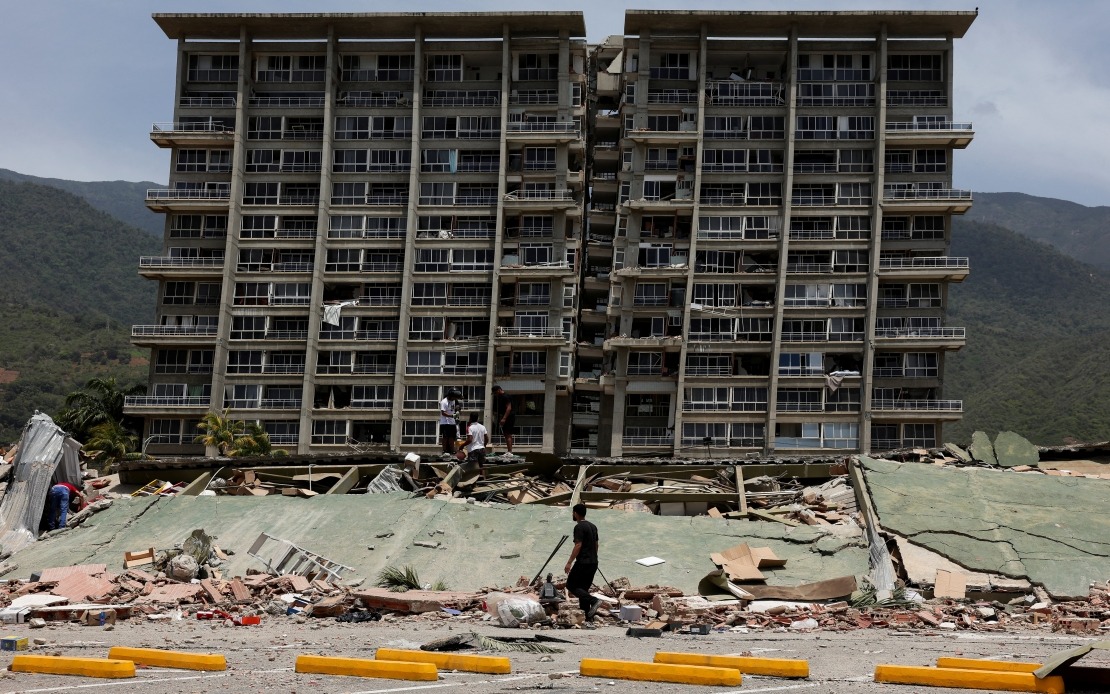
Canada has committed an initial US$5 million in emergency humanitarian assistance to Venezuela following a series of devastating earthquakes that have wreaked catastrophic damage across the Caribbean nation. The commitment, announced through Canada's Foreign Ministry on Thursday, comes as international relief efforts intensify to address the scale of the disaster unfolding in the region.
The earthquakes have left a trail of destruction characterised by significant loss of life and extensive structural damage across Venezuelan communities. While full assessments of the disaster's scope remain incomplete, Canadian officials warn that the humanitarian crisis extends well beyond initial estimates, with hundreds of thousands of people potentially affected by the natural disaster. The uncertainty surrounding exact casualty figures and displacement numbers underscores the ongoing challenges facing relief coordinators attempting to mount a comprehensive response.
Canadian Foreign Minister Anita Anand characterised the situation as heartbreaking, emphasising that families have lost loved ones and entire communities have been fractured by the earthquakes. Her statement reflected Canada's solidarity with the Venezuelan people during this critical period, signalling Ottawa's commitment to supporting recovery efforts alongside other international partners engaged in the relief operation. The ministerial statement positioned Canada as an active participant in the international response rather than a peripheral observer.
The newly announced funding represents a significant escalation of Canadian involvement in Venezuela's humanitarian crisis. This latest commitment builds upon approximately US$4.5 million in humanitarian assistance that Canada allocated earlier in 2024 to address pre-existing humanitarian needs within Venezuela. The cumulative contribution now exceeds US$9.5 million, demonstrating sustained Canadian engagement with Venezuela's complex humanitarian situation that extends beyond the immediate earthquake emergency.
Canadian funding will be distributed through established humanitarian partner organisations with demonstrated operational capacity in Venezuela. These experienced agencies will deploy resources to provide essential emergency services encompassing food distribution, clean water supply, sanitation infrastructure, and healthcare delivery to affected populations. Beyond these immediate survival needs, the funding also supports protection mechanisms for vulnerable populations and logistics coordination necessary for effective aid distribution across affected regions.
The scale of coordinated humanitarian response required reflects Venezuela's existing fragility prior to the earthquakes. The country has faced prolonged economic and political challenges that have weakened infrastructure and public services, making recovery from natural disasters exponentially more difficult. Pre-existing vulnerabilities in Venezuela's healthcare system, supply chains, and governance structures mean that earthquake damage compounds problems already constraining the nation's capacity to respond to crises independently.
Canadian officials have stressed that needs will continue evolving as assessments progress and rescue operations conclude. The ministry indicated that additional funding allocation details would be communicated within coming days as relief coordinators gain clearer understanding of priority requirements across affected areas. This measured approach acknowledges the fluid nature of emergency situations where initial damage assessments frequently underestimate total needs once comprehensive surveys are completed.
Canada's engagement through regional partners and international humanitarian organisations reflects the coordinated multilateral approach that characterises modern disaster response architecture. Rather than implementing bilateral relief mechanisms, Ottawa works through established networks of experienced agencies with existing presence and relationships in Venezuela. This approach maximises efficiency, reduces duplication of efforts, and ensures resources reach beneficiaries through channels already trusted by local communities.
For Malaysia and Southeast Asian nations, Canada's response demonstrates the interconnected nature of global humanitarian challenges and the expectation that developed economies contribute substantially to supporting vulnerable regions. The commitment also reflects how natural disasters transcend national borders in their humanitarian implications, mobilising international resources regardless of political tensions. Venezuela's situation, while geographically distant from Southeast Asia, illustrates principles applicable to regional disaster preparedness and international cooperation mechanisms that ASEAN nations increasingly emphasise.
The Canadian assistance underscores broader patterns of how developed nations calibrate humanitarian responses to natural disasters affecting strategically important but politically complex regions. Canada's willingness to provide substantial funding despite Venezuela's political tensions with Western powers demonstrates that humanitarian imperatives often supersede diplomatic considerations. This principle carries implications for how international responses to regional crises in Asia develop, particularly regarding natural disasters affecting countries with contested governance or geopolitical significance.
Moving forward, the effectiveness of Canadian and international aid will depend substantially on Venezuela's ability to coordinate relief distribution amid ongoing institutional constraints. The earthquakes have exposed vulnerabilities that pre-date the natural disaster, suggesting that sustainable recovery requires addressing underlying structural challenges alongside immediate humanitarian response. Canada's continued monitoring of the situation and willingness to adjust funding allocation based on evolving needs positions Ottawa to respond agilely as the disaster's full dimensions emerge and humanitarian priorities shift during recovery phases.

