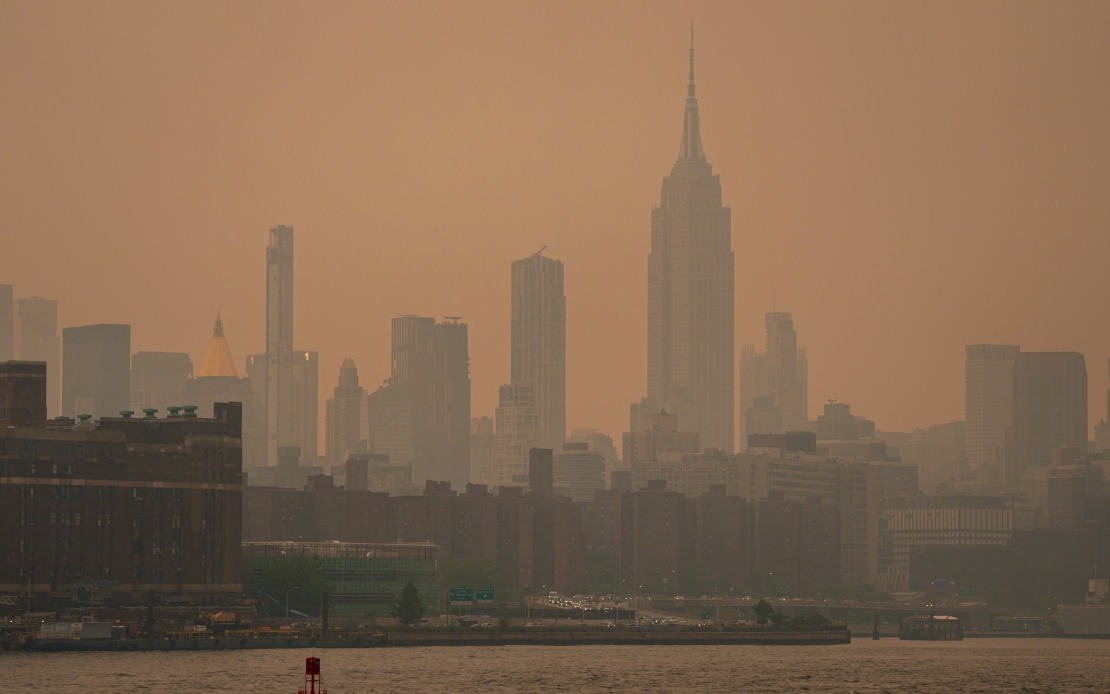
Mexican President Claudia Sheinbaum found her journey to attend the Argentina-Spain World Cup final complicated by environmental conditions stemming from wildfires raging across Canada. A scheduled flight from Cancún to New York on Saturday faced significant delays before being scrapped entirely, forced to yield to deteriorating air quality blanketing the New York region. The atmospheric hazard, caused by smoke drifting south from massive fires burning across Canadian provinces, prompted a recalculation of the president's itinerary to reach the tournament finale held in East Rutherford, New Jersey.
Instead of the conventional daytime travel route, Mexico's Defence Ministry arranged alternative transportation that carried Sheinbaum to New York through the night, allowing her to arrive in time for Sunday's match. This last-minute adjustment underscored the tangible impacts of environmental disruptions on high-level diplomatic schedules, a phenomenon increasingly familiar across North America as wildfire seasons lengthen and intensify. The situation demonstrated how natural disasters can cut across state boundaries and affect even the most carefully coordinated official movements.
Sheinbaum's attendance carried particular diplomatic significance, as she had received an unexpected invitation from United States President Donald Trump to witness the final. The gesture represented a notable moment of engagement between the two neighbouring leaders, particularly given the current tensions underpinning their bilateral relationship. Trump's invitation extended to include Mark Carney, Prime Minister of Canada, recognizing that the tournament was jointly hosted by three nations: Mexico, the United States, and Canada.
The relationship between Mexico and the United States faces considerable strain rooted in longstanding disputes over trade arrangements and security cooperation. These tensions have shaped interactions between the two governments over the past year, creating a backdrop of caution in diplomatic engagements. Prior to this World Cup occasion, Sheinbaum and Trump had managed only a single substantive meeting, which occurred during the tournament's official draw ceremony held in Washington last December.
The invitation to attend the final represented a somewhat unexpected outreach, suggesting that sporting events can occasionally transcend political differences and create opportunities for informal diplomacy. Sheinbaum's decision to proceed with attendance despite the travel complications reflected the importance of honouring such invitations and maintaining channels of communication with the American administration. Her presence alongside Trump and Carney symbolized the three-nation cooperation underlying the expanded World Cup format, even as underlying policy disagreements continued unresolved.
For Malaysian and Southeast Asian observers, the episode illustrated several broader patterns relevant to the region. First, environmental challenges originating in one nation increasingly demand responses from neighbours, establishing precedent for cross-border cooperation on climate and natural disaster management. Second, the incident demonstrated how major sporting events serve as platforms for diplomatic engagement, bringing together leaders who might otherwise communicate through more formal and adversarial channels. Third, it highlighted the practical vulnerabilities that even high-ranking officials face when natural systems deteriorate, a concern particularly acute in Southeast Asia given monsoon patterns and fire seasons.
The Canadian wildfires driving this disruption reflected escalating environmental pressures across the North American continent. Smoke from these fires had drifted thousands of kilometres southward, degrading air quality across multiple American states and creating hazardous conditions in major urban centres. The phenomenon underscored the reality that environmental crises respect no borders and that governments must coordinate responses to atmospheric pollution and public health threats regardless of political differences.
Sheinbaum's rerouting also highlighted the flexibility inherent in modern presidential travel arrangements, whereby defence ministry aircraft and alternative routing options allow leaders to maintain their schedules despite unforeseen disruptions. The overnight flight substitution represented a practical solution that preserved the diplomatic objective while acknowledging environmental constraints. Such adaptability becomes increasingly important in an era of mounting climate volatility and extreme weather events.
The World Cup final itself carried symbolic weight beyond the sporting contest, serving as a gathering point for leaders of three nations collaborating on a multilateral entertainment and cultural project. Despite trade tensions, security disagreements, and migration disputes, Mexico, the United States, and Canada had coordinated successfully to host the tournament, demonstrating capacity for cooperation on shared initiatives. Sheinbaum's determination to attend, even when faced with travel obstacles, reflected recognition that such occasions carry value beyond immediate political calculation.

