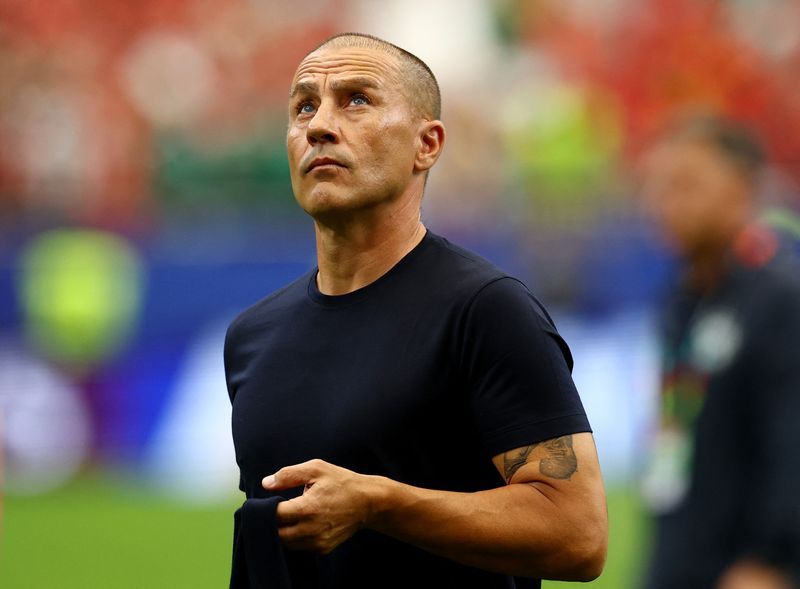
Uzbekistan's maiden World Cup campaign suffered a devastating blow on Tuesday in Houston, where Portugal inflicted a crushing 5-0 defeat on the Central Asian nation in Group K. Rather than deflect criticism, coach Fabio Cannavaro immediately stepped forward to accept responsibility for the heavy loss, a gesture that underscored both his professionalism and the difficult circumstances surrounding his team's first appearance at football's grandest stage.
With two matches now completed, Uzbekistan finds itself in an increasingly precarious position. The back-to-back defeats—a 3-1 reverse against Colombia followed by the Portugal thrashing—have left the team needing a victory in their final group encounter against the Democratic Republic of Congo on Saturday to harbour any realistic hope of advancing. Mathematically, progression to the knockout stages remains theoretically possible, but Cannavaro's team must overcome long odds to revive their tournament.
During his post-match address to journalists, Cannavaro struck a measured tone that blended accountability with measured optimism. He acknowledged his players' commitment and effort despite the scoreline, praising their willingness to compete at a level that starkly exceeded their previous experience. The Italian tactician, who famously captained Italy to World Cup glory in 2006, drew upon his vast experience to frame the loss as a learning opportunity rather than a final judgment on his squad's capabilities.
Cannavaro's insistence on personal accountability reflected a philosophy he has maintained throughout his career, both as a decorated centre-back and now as a coach navigating uncharted waters. He rejected any notion of blaming individual players for lapses in concentration or execution, instead attributing the defeat to his own tactical decisions and match management. This approach served to shield his squad's confidence during an already difficult period, recognising that morale would be fragile following such a comprehensive defeat.
A crucial turning point in the match came when Uzbekistan had a legitimate goal disallowed. Azizjon Ganiev's strike at 2-0 would have provided psychological momentum and suggested a competitive contest, but the decision to rule it out for an infringement in the build-up visibly deflated his team. Cannavaro identified this moment as pivotal, noting how the reversed decision undermined the confidence his players had begun to accumulate through their bold, enterprising approach to the match.
The disallowed goal proved particularly damaging because Uzbekistan had adopted an encouraging tactical philosophy in the opening stages. Rather than retreating into defensive caution against a superior opponent, Cannavaro had encouraged his players to press forward courageously and express themselves technically. This instruction aligned with his broader vision of using the World Cup as a developmental platform rather than merely a stage to endure embarrassing defeats. When fortune seemed to reward their bravery with Ganiev's goal, only to have it taken away, the psychological blow cascaded into a collapse that allowed Portugal to assert complete dominance.
Cannavaro's comments about the importance of creating an environment where players could take risks without fear of constant criticism carried particular significance for a debutant nation. Building a sustainable football culture at the international level requires patience and long-term thinking that transcends individual matches. By instructing his players that mistakes and misplaced passes would be tolerated as part of their learning journey, Cannavaro was essentially investing in Uzbekistan's football future rather than chasing short-term results.
The coach's perspective on the tournament as an invaluable educational experience for his nation reflects growing maturity within Asian football. Uzbekistan has emerged as an increasingly significant force in Central Asian and Asian football over recent years, but the quantum leap to the World Cup stage represented an entirely different challenge. Cannavaro's framing of defeats as inevitable stepping stones in a longer developmental arc suggested realistic expectations about how quickly a debut World Cup team could compete against established powerhouses.
Looking ahead to the Congo match, Cannavaro faces the dual challenge of maintaining his players' belief while preparing tactically for an opponent they might realistically defeat. A victory would provide not only a mathematical possibility of advancement but also a crucial psychological boost for the squad's future development. The coach's determination to keep his team focused on remaining possibilities, despite the mathematical improbability, demonstrated the resilience required to manage a tournament campaign at this level.
Cannavaro's willingness to absorb blame and maintain an analytical rather than emotional response to the Portugal defeat offered a stark contrast to the disappointment his players must have felt in the immediate aftermath. His leadership style—combining accountability, tactical instruction, and long-term perspective—suggested that Uzbekistan's football journey at the World Cup, while initiated with painful results, might ultimately yield valuable foundations for sustained improvement. For a nation experiencing its World Cup debut, such measured stewardship could prove as valuable as any individual victory.