Cape Verde will attempt one of world football's greatest upsets when they face Argentina in the knockout rounds, buoyed by an unlikely journey that has already transformed their standing in global sports. The African island nation, which defied astronomical odds by reaching the elimination phase for the first time, enters the contest with genuine belief that they can add another shock result to their remarkable tournament run.
The Cape Verdean delegation's confidence stems from a group stage campaign that produced results the international football community thought impossible. Drawing with Spain and Uruguay—both former World Cup champions—secured their passage through a pool many had written off before the tournament began. Rather than viewing Argentina as an overwhelming nightmare opponent, assistant coach Humberto Bettencourt framed the matchup as an opportunity, telling assembled reporters at their Tampa training base that facing the reigning champions would constitute "a pleasure."
Bettencourt's philosophical approach to the daunting challenge reveals the mindset driving Cape Verde's unexpected success. He dismissed the conventional wisdom that mathematics and historical precedent determine outcomes on the football pitch, arguing instead that the intangible qualities developed within his squad matter far more than statistical probability. The coaching staff had previously been given only one percent chance of qualification; he dismissed such figures as irrelevant distractions from the genuine ambitions his team harboured.
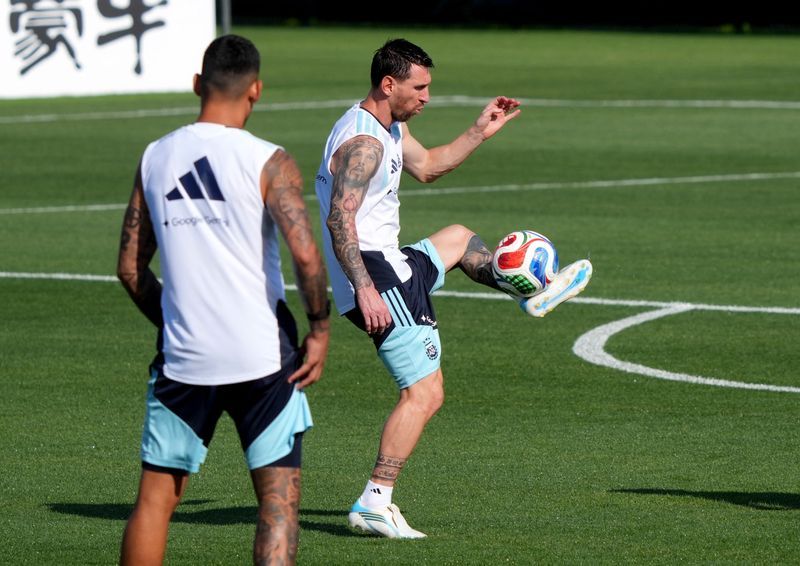
The strategic blueprint Cape Verde intends to deploy against Argentina reveals an approach grounded in collective football rather than individual containment. Bettencourt explicitly rejected suggestions that his team would abandon their core tactical identity or attempt to nullify Lionel Messi through man-marking, a common defensive approach when facing the Argentine star. Instead, the coaching philosophy emphasizes understanding Argentina's collective movements, anticipating the spaces the team creates, and disrupting the combinations that enable Messi to operate effectively rather than focusing narrowly on the individual.
Cape Verde's participation at this level carries implications extending far beyond the football pitch itself. As the least populous nation ever to qualify for a World Cup knockout stage, their presence has fundamentally altered the international profile of a small archipelago that has historically existed on the periphery of global sports consciousness. The squad composition itself illustrates the diaspora dynamics that have shaped modern Cape Verde, with players born across Europe and the Americas bringing diverse backgrounds and experiences to their national team.
The tournament squad itself embodies Cape Verdean migration patterns spanning centuries. Players representing the nation were born in the Netherlands, Portugal, France, the United States, and Ireland, reflecting how Cape Verdean communities have established themselves worldwide. Notably, a significant player contingent traces roots to Argentina itself, creating additional emotional layers to the upcoming confrontation and demonstrating how global mobility has become integral to contemporary international football.
Cape Verde faces personnel challenges heading into the Argentina match, though the situation remains manageable. Midfielder Telmo Arcanjo's participation remains uncertain following a leg injury that prevented him from training midweek, with medical staff evaluating his fitness status as 50-50 for the knockout encounter. Conversely, combative left back Sidny Lopes Cabral will return to action after completing a one-match suspension incurred through accumulated yellow cards during the group stage against Spain and Uruguay, reinstating a defensive player who provides important steel in Cape Verde's formation.
Argentina approaches the contest with full strength available and the momentum of perfect group stage execution. Coach Lionel Scaloni is expected to restore Messi to the starting lineup after deploying him as a substitute in the final group match against Jordan, a strategic rotation Scaloni employed despite Argentina's overwhelming dominance. Messi responded to his substitute role by scoring his sixth tournament goal in Argentina's 3-1 victory, extending the team's unbeaten record through three opening matches with maximum points collected.
Scaloni's selection dilemma concerns not whether to include Messi, but rather which supporting personnel best complement his Argentine squad's abundance of attacking talent and capacity to dismantle opposition defences. The Argentina technical staff possesses numerous elite-level options capable of penetrating Cape Verde's rearguard, and the coaching challenge involves determining which tactical configuration prevents what would unquestionably rank among the most stunning World Cup upsets in tournament history.
The upcoming encounter symbolizes how global football has fundamentally shifted, with unpredictability and competitive balance reaching levels unimaginable in previous generations. Cape Verde's legitimate presence in knockout football, paired with their refusal to accept predetermined narratives about their limitations, demonstrates that contemporary international football permits genuine surprise. While Argentina's talent and recent form suggest they will likely progress, Cape Verde has already demonstrated through their group stage performances that assuming outcomes based purely on historical hierarchy or national resources represents increasingly flawed methodology.

