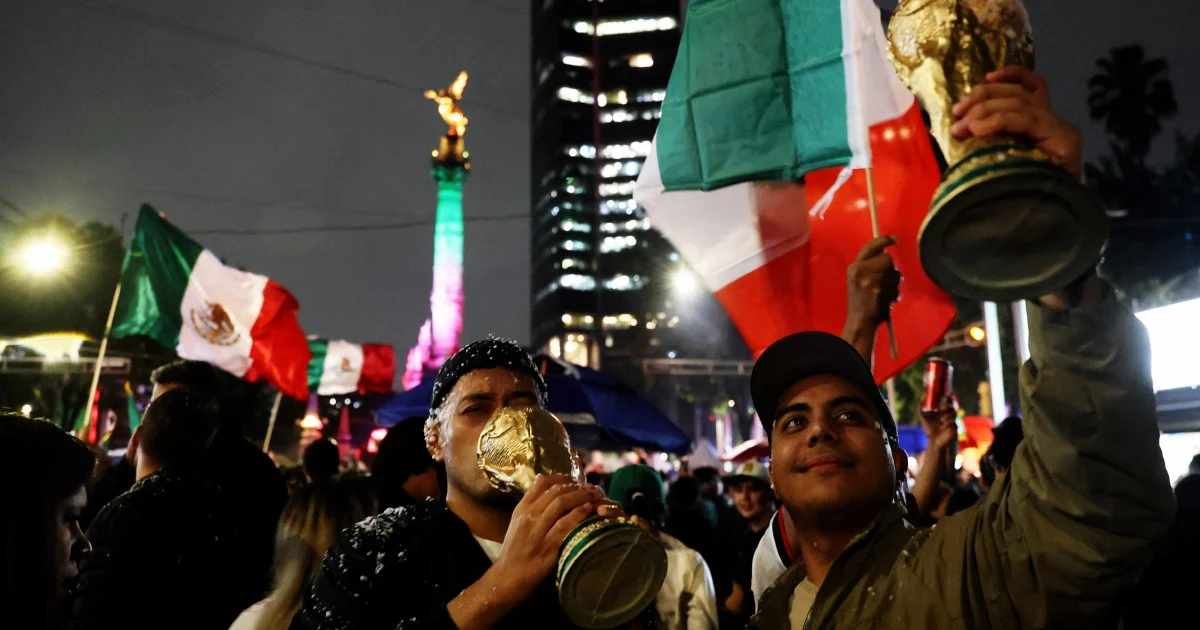
A celebratory gathering of Mexican football supporters descended into chaos and violence on Wednesday evening when a car accelerated deliberately into a crowd in Cabo San Lucas, one of Mexico's premier coastal resort destinations. The incident left 17 people requiring medical attention, according to authorities in Los Cabos. The driver was taken into custody at the scene, though details about motive remain unclear at this stage.
Cabo San Lucas, situated at the southern tip of the Baja California Peninsula where the Pacific Ocean meets the Sea of Cortez, draws hundreds of thousands of international tourists annually and serves as a major economic hub for the region. The attack occurred amid spontaneous street celebrations following Mexico's World Cup performance, when large crowds had gathered informally throughout the resort town. The violence represents a stark reminder of how public gatherings, even those celebrating national pride in sport, remain vulnerable to sudden and unpredictable threats.
Social media footage verified by international news agencies captured the moments leading up to and immediately following the vehicle's entry into the crowd. The black car appears surrounded by people dressed in Mexico's national football team colours, with spectators moving freely around and in front of the vehicle. Within seconds, the car's acceleration becomes unmistakable as it powers forward, lifting people off their feet and sending them tumbling across the pavement before the vehicle finally comes to rest against street bollards designed to prevent precisely such incidents.
The aftermath presented a harrowing scene across multiple video recordings. Bystanders and fellow supporters rushed to the vehicle, attempting to extract the driver from inside and apparently attacking the person once removed. Meanwhile, numerous injured individuals lay bloodied on the street, their conditions unclear from the footage. Emergency responders descended on the scene to manage the medical crisis and secure the area from further danger.
For Malaysia and the broader Southeast Asian region, this incident carries particular resonance given the region's own experiences with public safety challenges during large gatherings and sporting celebrations. Major football tournaments and international matches consistently draw crowds to public spaces throughout Southeast Asia, and the Cabo San Lucas attack underscores vulnerabilities that extend far beyond Mexico's borders. Authorities across the region have long grappled with balancing the festive spirit of spontaneous celebrations with security protocols that can realistically be implemented in open public spaces.
The incident also reflects broader concerns about vehicle-ramming attacks, a tactic that has become increasingly common globally over the past decade. From European Christmas markets to public squares in the Middle East and beyond, perpetrators have discovered that vehicles can be weaponised with minimal planning or sophistication. This reality has forced cities worldwide, including those in Malaysia and Southeast Asia, to invest in physical barriers, emergency response training, and crowd management strategies that were once considered unnecessary.
Cabo San Lucas attracts significant numbers of Malaysian and Southeast Asian tourists alongside visitors from across the Americas and beyond. The resort town's reputation for safety and world-class hospitality may face renewed scrutiny following Wednesday's violence. Tourism authorities and local government officials will likely face pressure to articulate enhanced security measures and reassure potential visitors that such incidents remain statistically rare despite their dramatic impact.
The arrest of the driver represents the beginning of a criminal investigation that will attempt to establish whether the attack was premeditated, politically motivated, criminal in nature, or stemmed from impaired judgment or mental health crisis. Mexican authorities will need to determine quickly whether this represents an isolated incident or part of a broader pattern. The international news attention the incident has already garnered means that details will emerge gradually as investigations progress.
World Cup celebrations across Mexico had been largely peaceful prior to this incident, with fans taking to streets in towns and cities nationwide following positive match results. The majority of supporters engaged in traditional festivities—singing, dancing, displaying flags, and gathering in public spaces in genuine communal celebration. The sudden eruption of violence serves as a sobering counterpoint to these otherwise joyful expressions of national sporting pride and demonstrates how swiftly public safety situations can deteriorate.
Los Cabos city authorities must now balance multiple competing demands: providing transparency about the incident and investigation; managing media attention and public anxiety; reassuring both residents and the tourism industry that public spaces remain fundamentally safe; and implementing whatever additional security measures prove practical and proportionate. The 17 injured individuals and their families face physical and emotional recovery, while the broader community confronts questions about security preparedness that extend well beyond this single tragic event.
For Southeast Asian policymakers and security professionals monitoring developments, the Cabo San Lucas incident offers instructive lessons about crowd management, barrier design, emergency response coordination, and the psychological impact of sudden violence on otherwise celebratory public gatherings. Whether in Malaysia, Thailand, Indonesia, or elsewhere across the region, authorities must continually reassess how best to enable the spontaneous joy and community bonding that major sporting events provide while maintaining realistic and effective safeguards against threats that have unfortunately become part of the modern security landscape.

