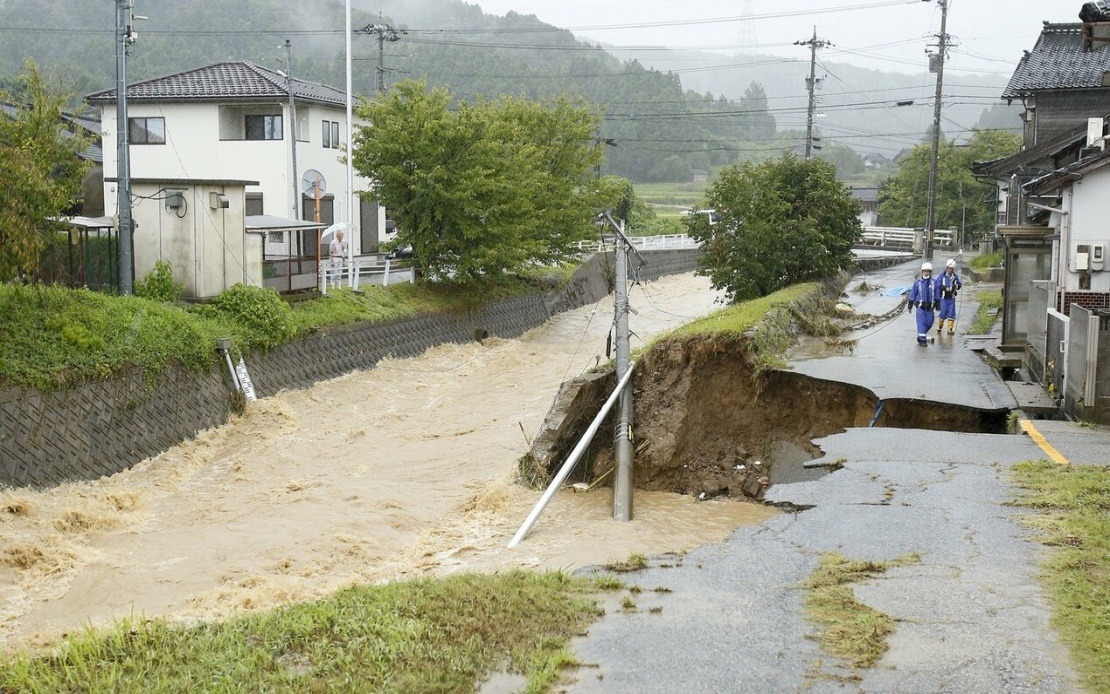
Japan's central coast endured an onslaught of destructive weather on Thursday as torrential downpours unleashed widespread flooding and landslides across multiple municipalities in Ishikawa and Toyama prefectures. The Japan Meteorological Agency activated its most severe alert level, a measure rarely issued and signalling that catastrophic conditions had either already manifested or were imminent. The timing proved particularly concerning given that the nation had only recently grappled with similar devastation in Chiba Prefecture earlier in the month, which had claimed thirteen lives and left thousands of vehicles stranded.
The alert system designated five municipalities as requiring immediate protective action, encompassing Himi in Toyama Prefecture alongside Hakui, Shika, Hodatsushimizu and Nakanoto in Ishikawa Prefecture. Authorities issued evacuation directives affecting approximately 180,000 residents across these two prefectures, with officials emphasizing the urgency of relocating to safer ground and maintaining constant awareness of potential debris flows. The scale of the displacement underscored the genuine peril posed by conditions unfolding across the region, with residents warned that remaining in affected areas exposed them to life-threatening scenarios.
Rainfall totals shattered historical records in several locations. Within a twelve-hour window extending to 7:20 am, Himi and Hakui each recorded over 300 millimetres of precipitation, whilst Hodatsushimizu received more than 200 millimetres—each figure representing unprecedented accumulation for their respective areas. These measurements conveyed the extraordinary intensity of the weather system and provided stark quantification of why meteorological authorities had deemed conditions catastrophic. A firefighter in his fifties based in Himi reported to Kyodo News that river barriers had given way, with numerous vehicles becoming submerged in the resulting floodwaters and triggering multiple emergency rescue requests.
The mechanism driving this destructive weather stemmed from a combination of atmospheric factors. A weather front extending from the Sea of Japan had progressively moved across northern and eastern regions, with meteorologists forecasting its southward progression through Friday. Additionally, an incursion of frigid air aloft intersecting with a trough of low pressure created sharply unstable atmospheric conditions primed for producing torrential rainfall. This interplay of meteorological ingredients generated the precise atmospheric profile conducive to generating the deluge affecting central Japan.
Projections issued by the Japan Meteorological Agency suggested the threat would persist through the following day. Hokuriku stood positioned to receive potentially 200 millimetres of additional rainfall over a twenty-four-hour period concluding at noon Friday, whilst the Kanto-Koshin and Tokai regions faced anticipated accumulations reaching 150 millimetres. These forecasts underscored that communities remained within the danger window, with no immediate reprieve anticipated from the sustained atmospheric assault. Niigata Prefecture, bordering Toyama to the north, similarly experienced intensive precipitation, extending the geographic scope of the weather emergency.
The absence of reported fatalities as of Thursday morning represented a significant distinction from the catastrophe that had devastated Chiba Prefecture just weeks earlier. That earlier disaster had demonstrated the lethal potential of such weather systems, with thirteen confirmed deaths and widespread vehicular abandonment—at one juncture, approximately 2,500 vehicles lay abandoned across prefectural roads, their occupants stranded by impassable inundation. The rapid mobilization of evacuation procedures and public warnings in response to the current crisis suggested that lessons from that recent tragedy had accelerated emergency preparedness.
For Malaysian and Southeast Asian observers, the Japanese meteorological authority's multilayered alert framework offers instructive contrast to regional early-warning systems. Japan's five-tier warning hierarchy, with Level 5 representing the most extreme classification, provides granular graduated responses enabling authorities to calibrate public communications precisely to genuine risk magnitude. Such precision messaging proves critical for maintaining public compliance, as alerts issued too frequently or for marginal hazards risk triggering warning fatigue wherein residents discount genuine dangers. The Japanese approach reflects decades of institutional refinement in earthquake and typhoon preparedness.
The geographic concentration of this emergency across Japan's northwest coastline carries implications for regional logistics and economic activity. Both Ishikawa and Toyama prefectures serve as nodes within broader manufacturing and commercial networks spanning East Asia. Disruption to transport infrastructure, electrical systems and supply-chain operations in these regions can generate cascading effects across the region. Malaysian businesses maintaining commercial relationships with Japanese firms in these prefectures would face immediate operational complications as evacuation orders disrupted normal commercial activity.
Climate scientists tracking long-term atmospheric trends have documented a propensity for extreme rainfall events to intensify in frequency and severity across East Asia, with warming ocean temperatures providing additional atmospheric moisture. The succession of extreme weather episodes—the Chiba disaster merely three weeks prior to this Ishikawa-Toyama emergency—suggests acceleration of this troubling pattern. Japan's experience navigating successive severe weather events offers cautionary precedent for Southeast Asian nations confronting analogous intensification of monsoon precipitation and localized extreme rainfall phenomena.

