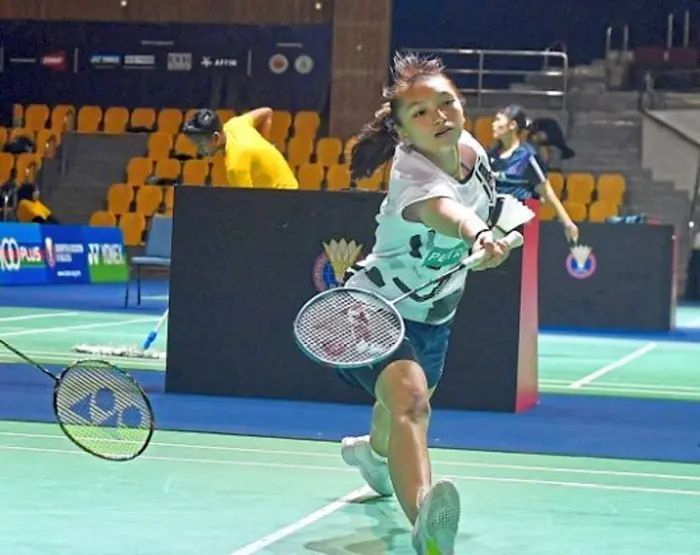
Malaysia's emerging badminton talent Noraqilah Maisarah Ramdan has demonstrated remarkable range and skill across multiple competitive disciplines, yet her coaching team believes the 19-year-old's trajectory toward elite status will ultimately hinge as much on psychological fortitude as on technical mastery of the sport. Mixed doubles coach Nova Widianto, overseeing her development in that particular format, has articulated a vision for Noraqilah's progression that prioritises mental maturity and character development alongside continued refinement of her playing ability.
Nova, reflecting on his observations of Noraqilah's development since childhood, acknowledges her inherent gifts without reservation. The coach recognises in the young shuttler a foundation of exceptional technical ability that sets her apart among peers at her developmental stage. Yet this early promise, in Nova's assessment, represents merely the starting point of a longer journey requiring careful stewardship beyond the court's boundaries.
The coaching staff's approach to Noraqilah's career exhibits deliberate caution about accelerating her advancement despite obvious potential. This measured philosophy stems from recognition that Malaysia's badminton programme contains numerous players of considerable technical quality. What distinguishes sustainable champions from merely talented competitors, Nova suggests, is the intangible dimension of character resilience and mental discipline required to navigate the pressures accompanying athletic recognition.
Nova identifies a particular vulnerability that confronts young athletes gaining initial success and public acclaim. When competitive achievements arrive relatively quickly and surrounding figures offer frequent praise, the psychological impact can prove destabilising if not carefully managed. This observation speaks to the coaching team's conviction that their role extends beyond tactical instruction and technical correction to encompass mentorship of a player's overall psychological development and emotional equilibrium.
Recent performance data supports the narrative of Noraqilah's emerging talent across different formats. In women's doubles, she demonstrated adaptability by combining with scratch partner Ong Xin Yee to capture the title at the second leg of the Under-21 National Championship held in Kuantan. Her steadier partnership with Low Zi Yu produced an even more impressive outcome at the Australian Open, where the pairing advanced to the quarter-finals—a result that propelled their world ranking to a career-best position of No. 70. Such results validate the technical foundation Nova references and demonstrate that Noraqilah possesses the fundamental skills to compete at increasingly demanding levels.
In mixed doubles, where Nova directly coaches her, Noraqilah partners with Loo Bing Kun. The pairing advanced to the second round at the Sydney tournament, establishing a current world ranking of No. 115. These achievements across two distinct doubles formats showcase genuine versatility rather than sporadic success—a quality that coaches often prize in developing players, as it indicates adaptability and comprehensive tactical understanding.
Despite satisfaction with Noraqilah's dual-discipline participation, Nova has begun introducing longer-term strategic considerations into programme planning. He acknowledges that sustained progression toward the absolute pinnacle of international badminton will eventually necessitate specialisation. The demands of competing simultaneously in women's doubles and mixed doubles, whilst manageable during her current developmental phase, become increasingly incompatible with the focused preparation required for elite international competition.
Nova's articulation of this future reality reflects practical understanding of how top-level badminton operates globally. The tournament calendar, training demands, physical preparation requirements, and tactical preparation for different partnership configurations expand exponentially as players advance. Attempting to maintain competitive excellence across multiple formats simultaneously becomes logistically and physically unsustainable at the highest echelon of the sport.
Yet the coach adopts a permissive stance regarding Noraqilah's immediate future, deeming her youth sufficient justification for maintaining diversified competition across formats while she develops. This philosophy permits accumulation of experience across different situations, opponents, and partnership dynamics—valuable exposure that builds the broader understanding beneficial to later specialisation. The strategic bifurcation in Nova's thinking—encouraging breadth now, anticipating necessary narrowing later—reflects sophisticated planning for a player's career arc.
The Olympic dimension introduces specific urgency to eventual specialisation decisions. Should Noraqilah aspire to Olympic competition, Nova contends that focus on a single discipline becomes essential for maximising the probability of selection and competitive success at that pinnacle event. Olympic badminton demands peak preparation for one or perhaps two specific formats, leaving minimal room for athletes maintaining serious competition across additional disciplines.
For Malaysian badminton, the development philosophy articulated by Nova addresses broader questions about talent nurturing within the national programme. Malaysia's history of producing world-class badminton players creates expectations of continuity in generating future champions. Yet Nova's emphasis on character development reflects maturation in coaching philosophy that recognises technical excellence alone proves insufficient—the mental resilience distinguishing champions from talented competitors requires intentional cultivation.
Noraqilah's progression will offer test case for whether deliberate, unhurried development prioritising character alongside skill produces superior long-term outcomes compared to accelerated advancement. Her journey over the next several years may provide insights valuable not only for her own career trajectory but for Malaysia's broader approach to identifying and developing the next generation of badminton excellence.

