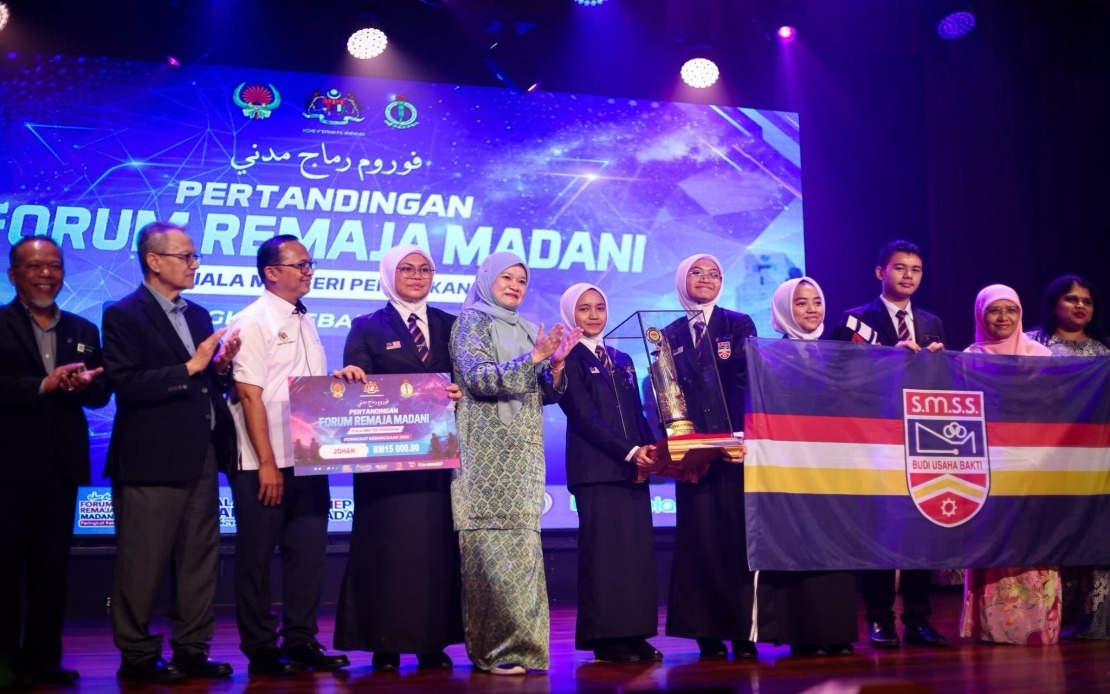
Education Minister Fadhlina Sidek has outlined a vision for Malaysian character education that extends beyond moral instruction to encompass intellectual development and civic engagement. Speaking after observing participants at the National MADANI Youth Forum, she articulated a framework where young people are equipped not only to express themselves confidently but to do so with intellectual rigour and social grace when confronted with opposing viewpoints.
The minister's intervention reflects growing recognition within Malaysia's education establishment that cultivating informed citizenship requires more than traditional ethics instruction. The emphasis on critical thinking skills signals a departure from approaches that prioritize conformity, instead valuing the capacity of young Malaysians to construct coherent arguments, anticipate counterarguments, and modify their positions in light of evidence. This approach aligns with global trends in pedagogical reform, though its adoption in the Malaysian context carries particular significance given the nation's multicultural composition and ongoing conversations about national cohesion.
Fadhlina's framing of disagreement as essential to national maturity carries substantial political weight. By redefining a healthy democracy not as one where consensus prevails but as one where citizens navigate difference productively, she addresses a fundamental tension in Malaysian society. The statement suggests that social stability need not depend on uniformity of opinion; rather, it rests on citizens' capacity to engage with contrary views without descending into acrimony or disrespect. This reframing could have implications for how educational institutions approach controversial topics and encourage student participation in classroom discussion.
Central to the minister's vision is the conviction that educational institutions should not dictate the substance of what young people think but rather ensure they possess the knowledge and communication skills to advocate effectively for their positions. This distinction is crucial, as it situates the educator's role as facilitator of intellectual development rather than arbiter of acceptable thought. By framing the educator's responsibility in terms of equipping students with argumentative tools and social courtesies, Fadhlina sidesteps potential accusations of indoctrination while still maintaining space for values education.
The integration of language development into this educational philosophy underscores the minister's view that fluency in Malay extends beyond linguistic competence to encompassing the capacity to articulate complex ideas within the national language. She contends that the Malay language will strengthen when younger generations recognize it as a vehicle capable of expressing sophisticated thought rather than merely a subject of mandatory study. This perspective carries implications for curriculum design, suggesting that Malay language instruction should be integrated with content-rich disciplines rather than taught in isolation from substantive ideas.
For Malaysian educators, the framework Fadhlina describes presents both opportunities and challenges. Schools would need to cultivate classroom environments where respectful disagreement is modeled and practiced, where teachers themselves demonstrate how to engage with contrary positions without dismissiveness or hostility. This requires professional development initiatives that equip educators with techniques for facilitating productive controversy while maintaining focus on academic learning objectives. The absence of such preparation could result in well-intentioned policies failing to translate into classroom practice.
The regional context further enriches the significance of Fadhlina's remarks. Across Southeast Asia, nations grapple with balancing social cohesion with democratic expression, and Malaysia's approach to character education influences perspectives among neighboring countries. Should Malaysian schools successfully demonstrate that critical engagement and mutual respect can coexist, this model could inform educational policy discussions throughout the region, particularly in contexts where governments similarly attempt to strengthen national identity while enabling citizen participation.
Fadhlina's emphasis on listening skills alongside speaking skills deserves particular attention. By coupling the capacity to articulate positions with the courtesy and intellectual humility required to genuinely hear contrary arguments, she identifies a skill set increasingly rare in polarized public discourse. This dual focus suggests that character education in Malaysia should cultivate both confidence and intellectual generosity, enabling young people to hold their views firmly while remaining open to being persuaded by superior reasoning.
Implementation of this vision would require sustained investment in teacher training, curriculum revision, and perhaps most importantly, institutional commitment to tolerating the messiness that inevitably accompanies genuine intellectual discourse. Schools and educational administrators would need to resist pressure to shut down discussions that generate controversy, provided such discussions remain anchored in evidence and conducted with mutual respect. This presents a significant departure from educational cultures where order and agreement are paramount values.
The minister's remarks also implicitly address concerns about youth disengagement from public discourse. By creating spaces where young people's contributions are genuinely solicited and valued, educational institutions can cultivate a generation invested in democratic processes and civic participation. This contrasts sharply with educational environments where youth are expected to absorb established knowledge without question, which often produces either compliance or alienation rather than engaged citizenship.
Looking forward, the effectiveness of Fadhlina's vision will depend on whether these principles become embedded across Malaysian educational institutions or remain confined to selected forums such as the MADANI Youth Forum. Scaling character education approaches that emphasize critical thinking and respectful debate requires alignment across teacher preparation programs, curriculum frameworks, assessment systems, and school leadership cultures. Without such comprehensive institutional reform, even well-articulated policy statements risk remaining aspirational rather than transformative.
The minister's characterization of a mature nation as one capable of productive disagreement carries profound implications for how Malaysia understands itself and aspires to develop. It positions democratic maturity not as the suppression of difference but as the cultivation of citizens equipped to engage across divides with both intellectual rigor and social respect. Whether Malaysian schools can translate this vision into daily practice will substantially shape the nation's social and political trajectory in coming decades.

