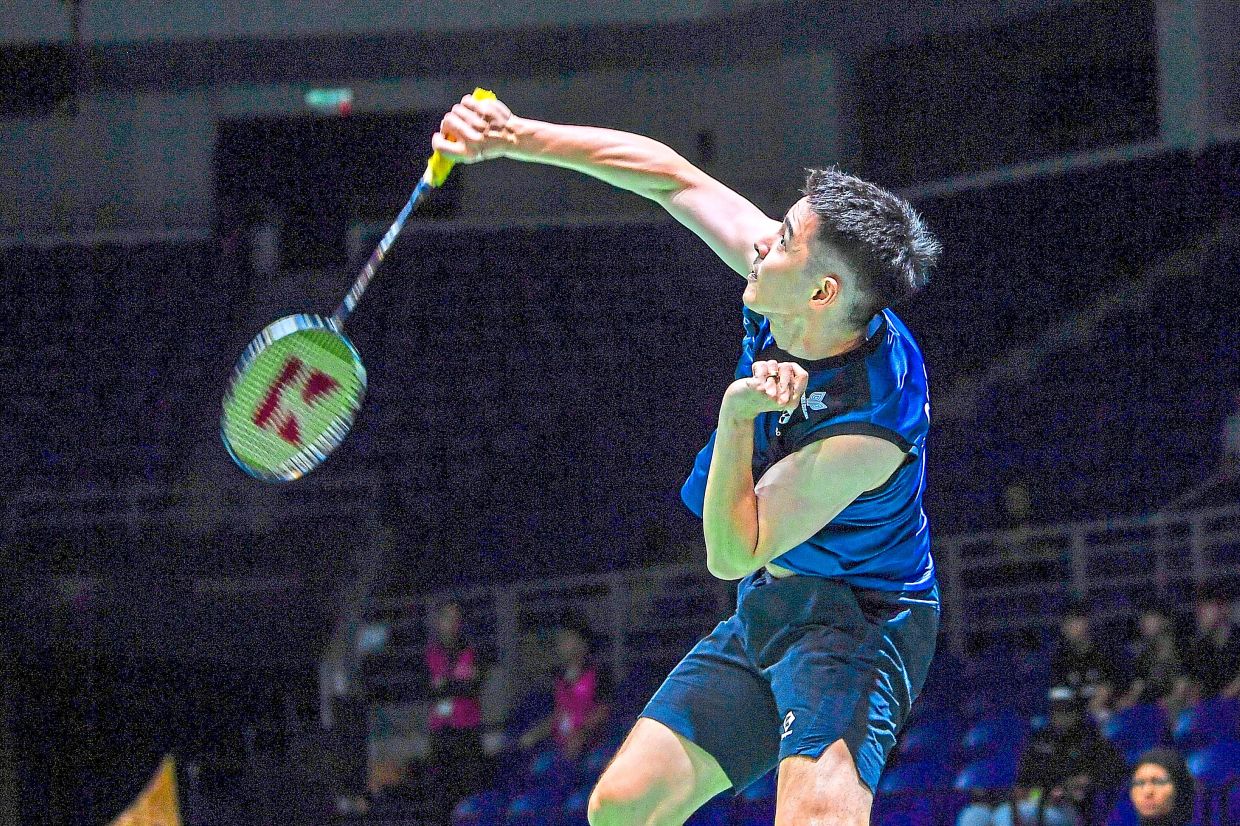
Malaysian shuttler Cheam June Wei has moved closer to potential glory at the Korean Masters after overcoming Taiwan's seventh-seeded Su Li-yang in a closely contested quarterfinal clash at the Asan Yi Sun-sin Gymnasium on Friday. The intense three-set encounter, which saw June Wei prevail 23-21, 10-21, 21-18, represents yet another significant scalp for the independent player in what has emerged as a breakthrough tournament performance.
June Wei's victory extends a remarkable run that few observers anticipated when the tournament commenced. The Malaysian's journey to the semifinals has been characterised by successive upsets against higher-ranked opponents, a pattern that defies conventional tournament progression where seeded players typically advance. His quarterfinal opponent, though seeded seventh, represented another established player on the international circuit, making the triumph all the more noteworthy for a competitor operating outside the conventional team support structure.
In the opening round, June Wei produced one of the tournament's most eye-catching results by eliminating world No. 29 Jason Teh, followed by another impressive display to overcome China's world No. 49 Dong Tianyao in the second round. This sequence of victories against progressively challenging opponents demonstrates not merely good fortune but genuine competitive improvements and mental resilience that bodes well for Malaysian badminton's depth beyond the traditional elite contingent.
Following his quarterfinal success, June Wei spoke with the measured confidence of an athlete surprised by his own advancement yet grounded in the present moment. He articulated no elaborate tactical analysis but rather emphasised the psychological approach that enabled his victories—focusing entirely on individual points rather than contemplating the broader match context. This point-by-point methodology served him particularly well against Li-yang, whose resistance through extended rallies tested both technical proficiency and stamina.
The Malaysian doubles campaign similarly progressed beyond the quarterfinal stage, with Man Wei Chong and Soh Wooi Yik advancing in commanding fashion. Their quarterfinal against India's Krishna Prasad Garaga-Pruthvi Krishnamurthy Roy proved one-sided, with the Malaysian pair dismantling their opponents 21-7, 21-8 in a performance that underscored their technical superiority and court positioning. Such emphatic victories in major tournaments enhance the credibility of Malaysia's doubles contingent internationally.
The men's doubles draw also featured an intriguing all-Malaysian quarterfinal encounter between two domestic pairings, a scenario reflecting both the strength of Malaysian doubles in contemporary badminton and the frequent absence of international mixed groupings. Tee Kai Wun and Yap Roy King emerged victorious from this confrontation against Aaron Chia and Aaron Tai, recording a decisive 21-12, 21-15 scoreline that provided little suspense. Such dominant outcomes between Malaysian pairs illustrate the competitive intensity within domestic badminton even at the highest levels.
Mixed doubles outcomes proved considerably less favourable for Malaysian representation, with all three entries eliminated at the quarterfinal stage. The categorical nature of these losses suggests potential defensive vulnerabilities or match-specific challenges that warrant tactical scrutiny. Jimmy Wong and Cheng Su Yin succumbed to South Korea's second-seeded pairing of Kim Jae-hyeon and Jang Ha-jeong, defeated 17-21, 18-21 in a closely contested affair that remained within reach throughout both sets.
The second Malaysian mixed doubles pair, Loo Bing Kun and Noraqilah Maisarah Ramdan, experienced a more comprehensive quarterfinal reversal. They encountered China's third seeds Gao Jiaxuan and Wu Mengying and were dispatched 14-21, 15-21, a scoreline suggesting the Malaysian combination faced difficulty maintaining competitive intensity. Such outcomes indicate that Malaysia's mixed doubles development may require additional focused investment relative to the programme's traditional men's doubles emphasis.
A third Malaysian mixed doubles entry, Chen Tang Jie and Clarissa San, similarly departed the tournament after a quarterfinal loss to Japan's Haruki Kawabe and Kokona Ishikawa, falling 20-22, 17-21. The narrow nature of the first set suggests potential tactical opportunities were available, yet the pair proved unable to capitalise on such moments under tournament pressure. These three eliminations collectively indicate that mixed doubles remains an underdeveloped category within Malaysian badminton, despite the category's elevated profile globally.
June Wei's progression to the semifinals acquires broader significance within Malaysian badminton's contemporary landscape, where individual player achievements carry implications beyond immediate tournament success. His run demonstrates that breakthrough performances can emerge from independent players, a reality that potentially influences athlete management structures and funding allocation philosophies within the domestic badminton ecosystem. The confidence gained through such victories often transcends individual tournaments, creating momentum that extends across subsequent international competitions.
The Korean Masters represents a significant tournament within Asia's badminton calendar, with results carrying meaningful ranking implications for players pursuing Olympic qualifications or world championship selections. June Wei's advancement positions him advantageously for these longer-term competitive objectives while simultaneously providing Malaysian badminton administration with encouraging evidence that programme depth extends beyond the traditionally prominent pairs and established singles representatives.
As June Wei prepares for semifinal competition, his tournament narrative reflects broader developments within Southeast Asian badminton where consistent improvement at intermediate levels creates sustainable competitive advancement. Malaysia's mixed doubles challenges, conversely, suggest areas requiring strategic attention and potential programme restructuring. The simultaneous presence of these contrasting results at a major tournament exemplifies the uneven development characteristic of badminton programmes across the region.

