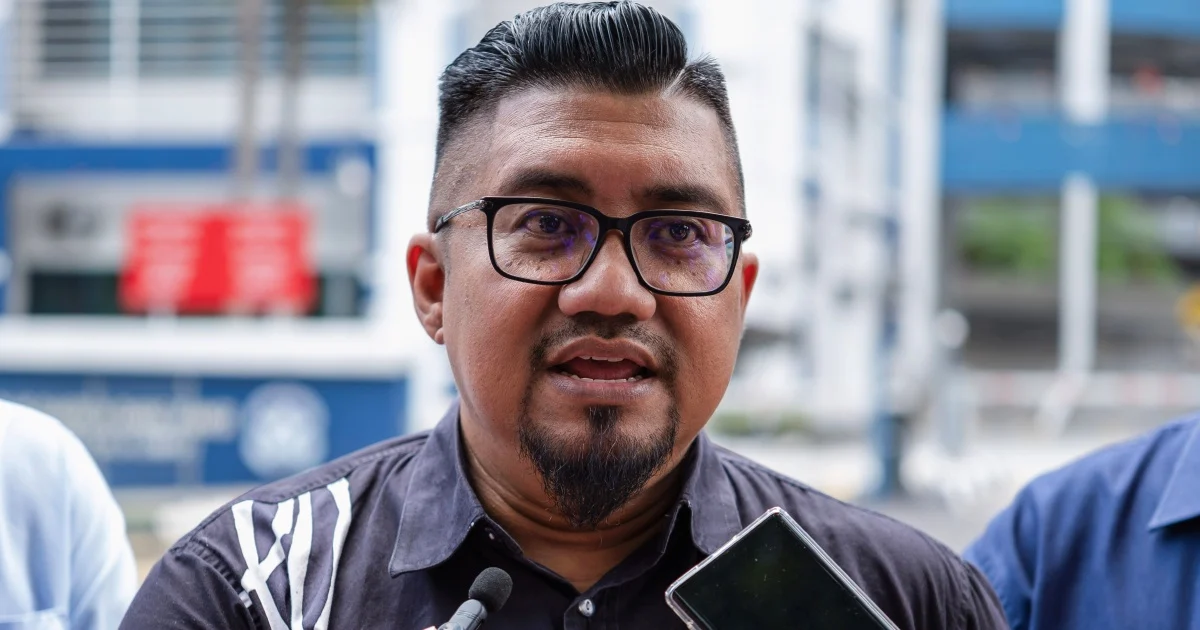
Political activist Badrul Hisham Shaharin, widely recognised by his online moniker Chegubard, entered a not guilty plea before the Sessions Court in Seremban today, rejecting allegations that he published seditious material on Facebook targeting the Negri Sembilan Royal Institution. The development marks the latest chapter in an ongoing legal challenge for the prominent social commentator, whose provocative social media presence has frequently drawn official scrutiny.
The case centres on content that prosecutors allege was deliberately designed to incite contempt or disaffection toward the monarchy and state institutions of Negri Sembilan. Such charges fall under Malaysia's sedition laws, provisions that have sparked considerable debate among civil liberties advocates and legal scholars who contend they are sometimes deployed against legitimate political commentary. The Sessions Court in Seremban will now determine whether the evidence presented by prosecutors meets the threshold required for conviction.
Cheghbard's profile as a political activist has grown substantially over recent years, particularly among younger Malaysians engaged with social and political discourse on digital platforms. His commentary on governance, institutional accountability, and public administration has cultivated a significant following, though his willingness to challenge established narratives and question official narratives has periodically put him at loggerheads with authorities. This particular matter reflects the increasingly fraught terrain where social media activism intersects with Malaysia's complex legal framework surrounding sedition and national security.
The charge itself underscores ongoing tensions in Malaysian society regarding the boundaries of free expression and the scope of protections afforded to political commentary. While the Federal Constitution guarantees certain freedoms of speech and assembly, these guarantees are explicitly subject to reasonable restrictions designed to maintain public order, national security, and respect for constitutional institutions. The challenge for courts in such cases lies in determining precisely where that boundary lies—a determination that carries significant implications for journalists, activists, and ordinary citizens participating in online discourse.
Negri Sembilan's Royal Institution occupies a particular constitutional position within Malaysia's federal framework. As one of the states with a hereditary ruler, Negri Sembilan's monarchy holds ceremonial and symbolic significance that the state recognises as warranting legal protection. The institution's reputation and dignity are shielded by both general defamation law and the more stringent provisions of sedition statutes, reflecting a broader Malaysian legal tradition that accords special status to constitutional monarchy and national institutions.
From a regional perspective, Malaysia's handling of such cases attracts considerable international attention. Global human rights organisations frequently monitor sedition prosecutions, viewing them as potential indicators of the health of democratic freedoms and judicial independence in Southeast Asia. The outcome of Chegubard's case may influence perceptions of Malaysia's commitment to allowing robust political debate while maintaining institutional stability—a balance that governments across the region continue to grapple with.
The not guilty plea opens the court process to full trial proceedings, during which both the prosecution and defence will present evidence and arguments regarding the contested Facebook posts. The prosecution will need to demonstrate beyond reasonable doubt that the content in question constituted seditious material—that it was deliberately calculated to promote feelings of ill-will and hostility between different groups, or to stir up discontent against established institutions. The defence will likely argue that the posts constituted legitimate political expression protected by constitutional guarantees, potentially challenging the prosecution's interpretation of the material's intent and effect.
For Malaysian civil society observers, the case exemplifies broader questions about digital expression in an evolving media landscape. As Malaysians increasingly conduct political discourse through social media platforms rather than traditional forums, the interaction between colonial-era sedition laws and modern online communication becomes increasingly strained. Prosecutors and law enforcement must navigate the challenge of distinguishing between genuinely seditious content designed to incite violence or institutional collapse and forthright political criticism that, while provocative or uncomfortable for authorities, falls within the bounds of permissible speech.
Cheghbard's case also reflects the particular vulnerability of prominent activists and public figures who operate in the digital sphere. With substantial online followings, their statements reach broader audiences and potentially carry greater perceived impact, making them potentially more vulnerable to official sanction. This dynamic can have a chilling effect on political discourse, as individuals considering public commentary must weigh the risks of legal consequences against their desire to contribute to national conversation.
The court's eventual decision will carry implications extending well beyond Chegubard's personal circumstances. It will offer guidance on how Malaysian courts interpret sedition law in the contemporary context, particularly regarding social media publication. Whether the court emphasises strict protections for speech or adopts a more expansive interpretation of seditious content will help shape the boundaries of acceptable political expression for all Malaysians navigating the increasingly fraught intersection of digital activism and traditional legal frameworks.
As proceedings advance, observers across Malaysia and Southeast Asia will monitor how the sessions court balances competing interests: protecting legitimate institutional dignity while preserving space for citizens to critique, question, and challenge those in positions of power. The outcome may well influence how other activists, journalists, and ordinary Malaysians calculate the risks of participating in contentious online debate.

