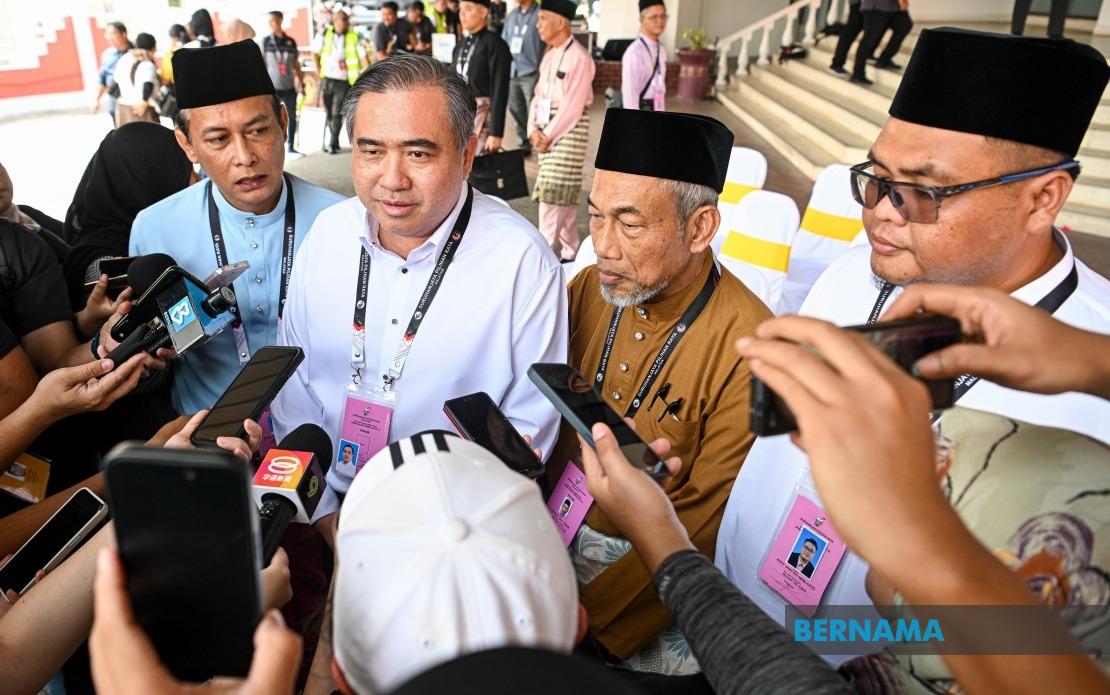
Anthony Loke, who holds the Transport Ministry portfolio while representing the Jelebu parliamentary constituency, has underscored the strategic importance of the Chennah state seat in Pakatan Harapan's broader strategy to maintain its grip on Negeri Sembilan during the forthcoming state election. Speaking after nomination proceedings concluded at Dewan Besar Kuala Klawang, Loke identified Chennah as among the four most pivotal seats within his parliamentary division that will determine whether the opposition coalition can secure another term in government.
The contest for Chennah will be a direct bilateral encounter between Loke representing Pakatan Harapan and Siow Kong Choon fielded by Barisan Nasional, according to Jelebu Parliamentary returning officer Abdul Rahim A Aziz. This straightforward matchup between the two major political blocs is indicative of the competitive nature of the Negeri Sembilan contest, where neither side appears assured of dominance, making individual state constituencies take on outsized significance in determining the ultimate outcome.
Loke's emphasis on Chennah's importance stems from historical precedent. During the 2018 election that brought Pakatan Harapan to power in Negeri Sembilan for the first time in the state's modern political history, the Chennah and Kelawang seats both voted for the coalition, providing crucial support in forming the state government. These two constituencies therefore occupy a special place in PH's electoral calculus—they were instrumental in the first conquest, and their retention is viewed as essential for a successful defence of the state administration in the upcoming polls.
Pakatan Harapan's position in Negeri Sembilan represents a significant shift from decades of Barisan Nasional dominance. Since 2018, the state government has operated under PH's direction for two consecutive terms, establishing itself as an alternative centre of administrative control within Malaysia's federal structure. For voters contemplating which direction to take the state, Loke's argument rests fundamentally on the performance record that PH has accumulated over six years of executive responsibility.
The incumbent minister framed the election as a referendum on his coalition's delivery of tangible improvements to residents' lives. According to Loke's statement to reporters, the Pakatan Harapan administration has demonstrated its capacity to produce substantive progress and provide reliable governance structures, creating a foundation of performance upon which the coalition can appeal for renewed public backing. This rhetorical strategy—emphasizing continuity and demonstrable results rather than promises of future change—reflects PH's approach as the sitting government rather than as an opposition force seeking to overturn incumbents.
The structure of the Jelebu parliamentary division, with its clustering of strategically significant state seats, means that results in constituencies like Chennah will reverberate throughout the broader electoral competition. Losing even one of the pivotal seats could trigger a cascade effect, emboldening opposition forces and potentially shifting momentum toward Barisan Nasional across multiple constituencies. Conversely, securing Chennah and the other identified key seats would position Pakatan Harapan to maintain or potentially expand its presence in the state assembly.
For Malaysian observers tracking state-level politics, the Negeri Sembilan election carries implications beyond the state's borders. Negeri Sembilan has functioned as a bellwether of sorts, with shifts in its political complexion sometimes preceding broader movements in national politics. An emphatic victory for Pakatan Harapan would signal the coalition's sustained appeal in peninsular Malaysia's heartland, while a loss would raise questions about electoral momentum heading toward potential federal-level contests.
The nomination of candidates has now formalized what had been expected—that Loke himself would stand for re-election in Chennah, confirming his role as a frontline political asset for Pakatan Harapan in this critical region. As Transport Minister, Loke occupies a position of significant ministerial authority within the federal government, yet he remains actively engaged in state-level electoral competition, a dual responsibility that underscores the interconnected nature of Malaysia's political structures.
Barisan Nasional's decision to field Siow Kong Choon against Loke in Chennah signals the opposition coalition's determination to recapture ground it lost in 2018. The contest between these two candidates will likely centre on competing narratives about state development trajectories, fiscal management, and the delivery of local services—issues that resonate acutely with voters in a state assembly election where direct impact on constituencies remains tangible and visible.
The broader Negeri Sembilan state election thus hinges significantly on outcomes in seats like Chennah, where established political figures with federal ministerial roles engage directly with constituent concerns. For Pakatan Harapan, retaining such seats is not merely about securing a majority in the state assembly—it is about validating the coalition's broader claims to effective governance and demonstrated competence in delivering for ordinary Malaysians.

