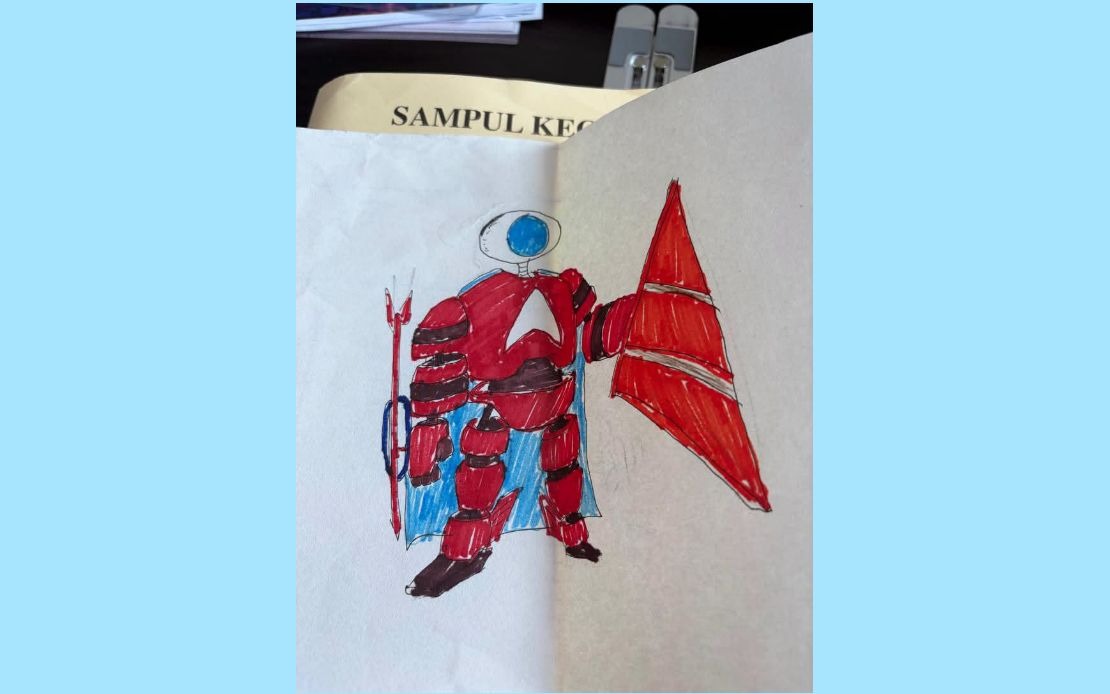
Prime Minister Datuk Seri Anwar Ibrahim has highlighted an encounter that left a lasting impression during his recent grassroots engagement in Negeri Sembilan, when a child with special needs presented him with a heartfelt artwork. Through a Facebook post, Anwar reflected on the moment the drawing was handed to him by the young artist, who was being carried by his father at the event, underscoring the personal significance he attaches to the gift and the encounter itself.
The artwork itself depicts a robot character dressed in red and blue armour, gripping what appears to be a staff-like implement in its left hand. While seemingly simple in its execution, the drawing carries deeper resonance within the context of Malaysia's inclusive governance framework, where the Prime Minister has consistently emphasised the importance of engagement across all community segments, regardless of circumstances or background.
Anwar's acknowledgment of the gift on social media reflects a deliberate political positioning that values accessibility and direct connection with ordinary Malaysians. His explicit gratitude underscores an administration that seeks to position itself as responsive to grassroots voices and attentive to the dignity of all citizens, including persons with disabilities and their families. Such gestures, while personal in nature, carry symbolic weight in Malaysian political discourse, particularly as the government navigates questions around social inclusion and welfare provisions.
The Temu Anwar platform serves as the vehicle for these interactions, functioning as a structured dialogue mechanism between the Prime Minister's office, younger demographics, and members of the public representing diverse socioeconomic backgrounds. These engagements are designed to foster direct communication channels outside traditional bureaucratic structures, allowing for unscripted encounters that occasionally yield moments of genuine human connection transcending the formality of state functions.
The significance of this particular encounter extends beyond the symbolic realm. Malaysia's disability advocacy community has long pressed for greater visibility and inclusion across government initiatives and public discourse. When senior political leaders acknowledge and publicly celebrate interactions with persons with special needs, it sends a signal about the valuation of inclusive spaces within state institutions and society more broadly. Such moments, however incremental, contribute to broader narratives around accessibility and representation.
For families navigating Malaysia's social welfare and support systems, such public acknowledgment from the highest office carries practical implications. Visibility in political discourse frequently translates into prioritisation in policy discussions and resource allocation debates. The Prime Minister's willingness to share this moment suggests an administration attuned to these communities' concerns, though advocacy groups often emphasise the importance of translating such acknowledgments into substantive policy frameworks and adequately funded support structures.
The Temu Anwar initiative itself has become a notable feature of Anwar's political engagement strategy since assuming office. These sessions bypass formal appointment protocols and invite spontaneous participation from citizens across economic strata, occupational backgrounds, and demographic categories. The model reflects a particular approach to democratic governance that privileges accessibility and reduces barriers to direct engagement with state leadership, though critics have occasionally questioned the substantive outcomes of such platforms beyond their symbolic and participatory dimensions.
The artist's father's presence at the event, carrying his son throughout the programme, itself merits consideration. It highlights the practical realities faced by caregivers in Malaysia when attempting to participate in public events and civic engagement opportunities. Infrastructure, accessibility, and support systems that enable family participation in governmental forums remain areas where gaps persist, despite increasing awareness and advocacy efforts across the disability rights sector.
Anwar's retention of the drawing as a keepsake, and his public sharing of this fact, demonstrates an approach to political leadership that privileges personal connection and emotional resonance alongside policy formulation. In contemporary Malaysian politics, where communications operate simultaneously across formal state channels and social media platforms, such personal gestures accumulate significance through digital amplification and public discussion. The post functions simultaneously as a genuine expression of appreciation and as a carefully calibrated political message about the administration's values.
The broader context of Malaysian governance increasingly incorporates discussions around inclusive development, though implementation gaps frequently persist between policy intention and ground reality. Events like Temu Anwar, and the public reflection upon them through platforms like Facebook, become part of an iterative national conversation about what inclusive governance actually entails. For persons with disabilities and their families, such conversations matter profoundly, as they establish baseline expectations for how state leadership acknowledges and engages with their communities.
Moving forward, the challenge for policymakers involves translating moments of genuine interpersonal connection into systemic improvements in accessibility, support provision, and representation within government structures. Advocacy organisations representing the disability community typically emphasise that individual instances of recognition must be accompanied by institutional reforms, funding allocations, and legislative protections that substantively alter lived experiences for persons with special needs and their families across Malaysia.

