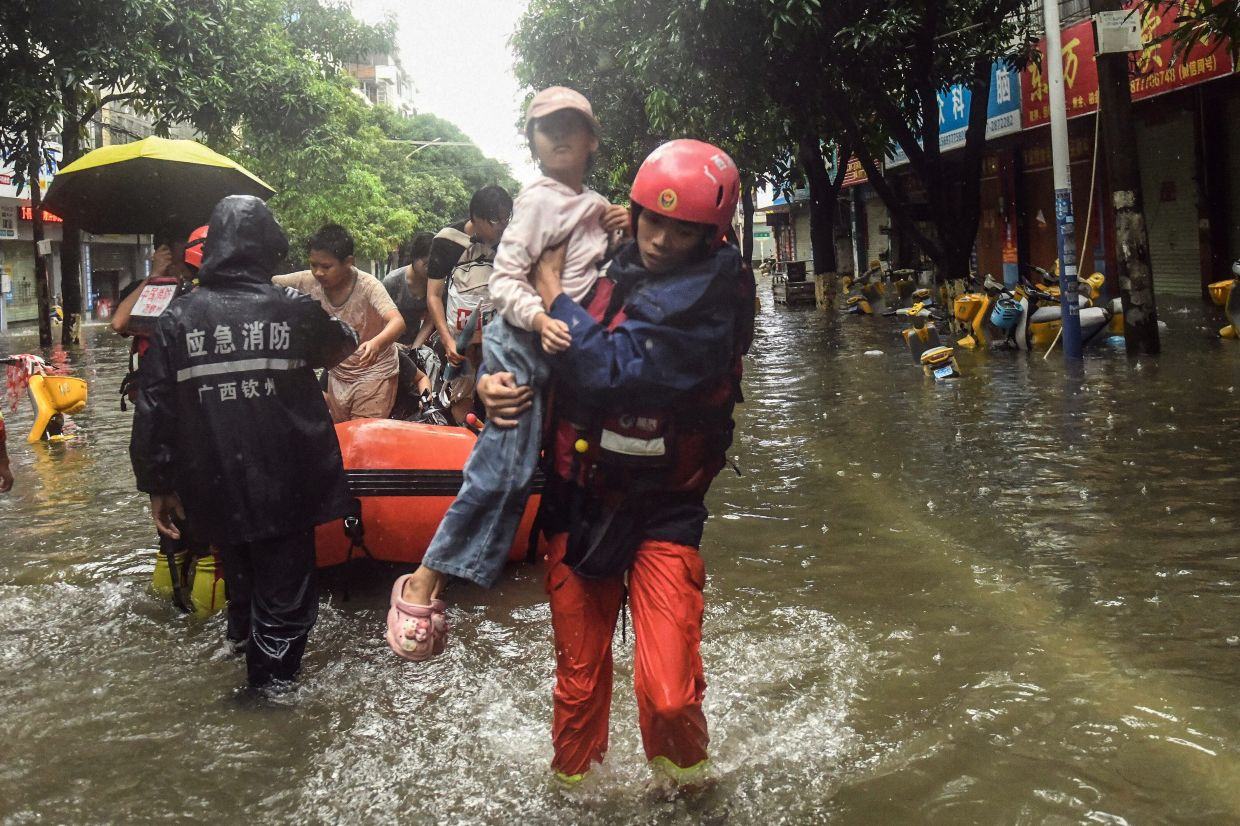
China is grappling with a cascade of natural disasters across multiple regions, with rescue operations intensifying after storms claimed at least 38 lives and displaced over 100,000 people. The calamities range from catastrophic flooding triggered by Typhoon Maysak in the southern regions of Guangxi and Guangdong to a devastating landslide in northwestern Gansu province, highlighting the nation's vulnerability to extreme weather events during the summer monsoon season.
In Guangxi province, the situation has grown increasingly dire as the scale of flooding becomes apparent. Six confirmed deaths and the evacuation of at least 130,000 residents underscore the magnitude of the crisis unfolding in this southern region. The torrential rainfall unleashed by Typhoon Maysak has overwhelmed local drainage systems and natural waterways, transforming entire communities into disaster zones. Meteorological officials have warned that heavy precipitation will continue through Wednesday, raising concerns about further inundation and potential cascading failures of critical infrastructure.
The hydrological damage across Guangxi has been staggering in scope. State media reports indicate that 40 rivers and waterways have burst their banks due to unprecedented water flows, wreaking havoc on the agricultural sector. Nearly 13,000 acres of farming land have been damaged, representing a significant blow to local food production and rural livelihoods. The destruction of arable land compounds the humanitarian crisis, as communities already displaced by flooding face potential food security concerns in the coming months.
Among the most alarming developments is the failure of a reservoir dam in the region, captured in dramatic footage released by state broadcaster CCTV. Images of the breached structure and torrents of muddy water surging past crumbled concrete sections illustrate the raw power of the flooding. Rescue workers, equipped with life vests and operating from inflatable boats, have been deployed to search for survivors in the waters. This infrastructure collapse represents a critical emergency, as reservoir failures can amplify downstream flooding and destroy communities situated along river valleys.
Minister of Water Resources Li Guoying has cautioned that conditions will worsen before improvement. Flood peaks at the Wuzhou Hydrological Station in Guangxi are expected early Thursday, with water levels potentially exceeding warning thresholds by more than six metres. This projection underscores the ongoing threat to residents and to the structural integrity of embankments and additional reservoirs in the affected areas. The minister warned that "the safety of reservoirs and embankments in the affected areas faces a severe test" due to persistent rainfall and the prolonged passage of floodwaters at elevated levels.
The Chinese government has mobilized substantial resources to address the humanitarian emergency. The State Flood Control and Drought Relief Headquarters has maintained the second-highest alert level for flood-control emergency response in Guangxi. Relief supplies including food, raincoats, and rubber boats have been dispatched to affected communities. These logistical efforts, though necessary, highlight the challenge of coordinating massive aid operations in regions cut off by floodwaters and where transportation infrastructure has been compromised.
Beyond the flooding in the south, thunderstorms and gale-force winds ravaging Hubei province in central China have claimed 11 additional lives and injured 331 people. The destruction in this region includes nearly 4,800 damaged houses and 22 complete structural collapses. One person remains missing, and the full extent of damage continues to be assessed as rescue teams work through affected communities. Tornadoes have also been reported in other areas, adding to the multiplicity of weather-related hazards besieging the nation.
In a separate and equally tragic development, a catastrophic landslide in Rencang village, Dangchang County, in northwestern Gansu province has claimed 21 lives. The geological disaster, which occurred at approximately 6:56 am on Tuesday, initially buried 33 people before rescue operations commenced. Although search and rescue efforts at the site have concluded, the loss of life represents a significant tragedy for the affected community. Investigations into the cause of the landslide are ongoing, though experts will likely examine factors such as soil saturation from seasonal rainfall, geological instability, and land-use patterns.
The Gansu provincial government has allocated 30 million yuan, equivalent to approximately US$4.4 million, for reconstruction and recovery efforts following the landslide. This funding represents an initial step toward rebuilding damaged infrastructure and supporting affected families. However, the true economic and social costs of this disaster will likely extend far beyond the initial appropriation as communities work to restore normalcy and address long-term displacement and psychological trauma.
The cascade of disasters unfolding across China underscores a critical reality for the region and broader Asia: extreme weather events triggered by climate variability and global warming patterns pose escalating risks to densely populated areas. For Malaysia and Southeast Asia, these events in China serve as a sobering reminder of the region's vulnerability to similar typhoons and flooding. The monsoon season affects comparable latitudes and geographic conditions, meaning Malaysian and regional policymakers must strengthen disaster preparedness, early warning systems, and resilience infrastructure to mitigate comparable catastrophes.
China's central leadership has emphasized the urgency of the response. Chinese President Xi called on rescuers to "go all out" in organizing emergency operations, signaling political commitment to the crisis response. However, the multiplicity of simultaneous disasters across distant regions strains the nation's disaster management capacity and reveals systemic challenges in coordinating large-scale relief efforts amid ongoing environmental threats.
As rescue operations continue and recovery efforts begin, the human and economic toll of these disasters will likely grow. The 38 confirmed deaths, over 100,000 evacuations, thousands of damaged structures, and vast areas of destroyed agricultural land represent immediate losses that will ripple through China's economy and communities for months. For neighboring Southeast Asian nations, including Malaysia, the events in China serve as a compelling case study in disaster preparedness and the urgent need for investment in climate resilience strategies that can mitigate the impact of increasingly severe weather phenomena.

