Beijing has publicly commended Prime Minister Datuk Seri Anwar Ibrahim for his recent remarks endorsing the one-China principle in relation to Taiwan, marking another demonstration of Malaysia's diplomatic alignment with China on this sensitive geopolitical issue. The Chinese Ministry of Foreign Affairs released a statement of appreciation through its official X account on Wednesday, underscoring what it views as Anwar's principled stance and his unwavering commitment to this cornerstone of Chinese foreign policy.
The formal endorsement from Beijing's foreign ministry reflects the high sensitivity China places on international acknowledgement of its sovereignty claims over Taiwan. By publicly highlighting Anwar's comments, China signals to both its domestic audience and the international community that Malaysia—a significant Southeast Asian economy and ASEAN member—maintains positions aligned with Beijing's core strategic interests. This public recognition serves multiple diplomatic purposes, reinforcing bilateral relations while subtly pressuring other nations to adopt similar rhetoric.
In his recent interview with Al Jazeera, Anwar made explicit statements about Taiwan's status within the broader Chinese state, declaring that "it is one China" and noting that this position is widely accepted internationally. These remarks reflect Malaysia's longstanding diplomatic approach of recognising the People's Republic of China while acknowledging historical sensitivities around Taiwan's political status. For Malaysian policymakers, maintaining this delicate balance proves essential given Malaysia's significant economic ties with China and its broader strategic interests in Southeast Asia.
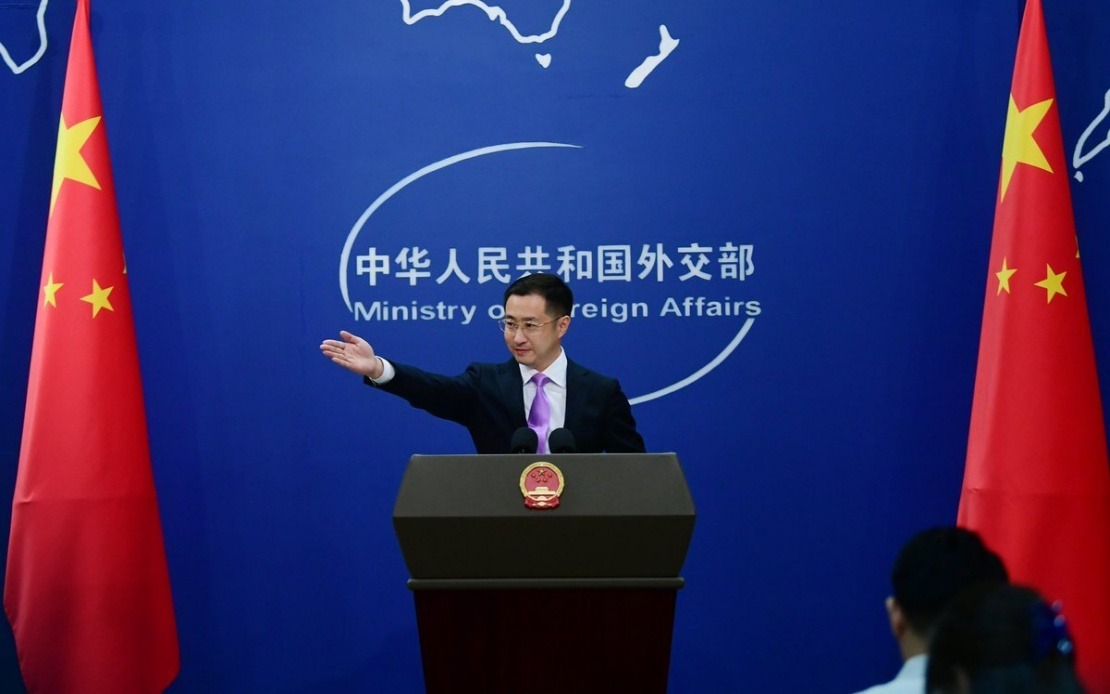
Chinese foreign ministry spokesperson Lin Jian elaborated on Beijing's interpretation during a regular press briefing in the capital, emphasizing that adherence to the one-China principle represents both popular sentiment and moral correctness. Lin asserted that Taiwan constitutes an inalienable component of Chinese territory, framing reunification not as a political aspiration but as an inevitable historical trajectory that cannot be reversed or obstructed. This framing transforms what Beijing sees as a legal and moral certainty rather than a matter subject to negotiation or alternative interpretation.
The timing of these exchanges carries significance within the broader context of United States-China tensions over Taiwan's political future. As Washington maintains its complex unofficial relationship with Taipei while ostensibly respecting the one-China framework, Beijing actively seeks affirmations of support from regional partners. Malaysia's public position therefore becomes part of a larger diplomatic strategy whereby Beijing accumulates statements of principle from influential nations, strengthening its narrative on the international stage.
For Malaysia specifically, navigating this terrain requires careful calibration. As a major trading partner of both China and Western nations, Malaysia benefits economically from relationships across the geopolitical divide. Anwar's statements reflect a pragmatic recognition of China's regional influence and Malaysia's economic interdependencies, while avoiding inflammatory language that might provoke reactions from other significant partners. This approach has become characteristic of ASEAN's broader positioning, where member states attempt to maintain profitable relationships across competing power blocs.
China's official response also contained assertions about the international community's commitment to the one-China principle being unshakeable, suggesting Beijing believes this consensus provides legitimacy to its territorial claims. By highlighting Malaysia's position, Beijing implies that support for the one-China framework extends across diverse nations with varying political systems and foreign policy traditions, lending weight to what it presents as universal recognition of historical facts.
The exchange demonstrates how Southeast Asian capitals continue managing their relationships with Beijing while maintaining broader diplomatic flexibility. Malaysia's public affirmations on Taiwan policy, while consistent with its historical diplomatic recognition of the People's Republic, nonetheless represent choices about which issues to emphasize and how prominently to state them. The decision to make such statements in high-profile international forums like Al Jazeera interviews amplifies their resonance with both Beijing and domestic audiences.
Looking forward, these interactions reveal the intricate diplomatic dance that characterizes Southeast Asian engagement with China. Nations in the region must acknowledge Beijing's core strategic interests while preserving space for engagement with other powers and maintaining their own foreign policy independence. Malaysia's approach under Anwar's leadership suggests a strategy of explicit support for positions China prioritizes while avoiding actions that might create ruptures with other significant partners.
The broader implications for Southeast Asia involve the region's ongoing attempt to remain a space of strategic competition rather than exclusive Chinese dominance. Individual nations' statements on sensitive issues like Taiwan, while appearing routine, collectively shape the diplomatic environment and international perceptions of consensus around contested territorial and political claims. Malaysia's positioning, therefore, extends beyond bilateral relations with China to influence regional dynamics and the broader international conversation about Asia's political future.

