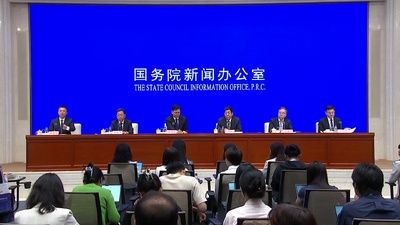
Beijing has categorically denied accusations of forced labour and coerced migration in Xinjiang Uygur autonomous region, with Chen Ruifeng, Minister of the National Ethnic Affairs Commission, dismissing the allegations as unfounded on Wednesday, June 24. The Chinese government continues to face scrutiny from Western nations and international human rights organisations over its employment practices in the far western region, an issue that has become increasingly contentious in global diplomacy and trade discussions. Chen's statement represents the latest in a series of official rejections from Beijing regarding these charges, which have shaped international relations and triggered economic sanctions from multiple countries.
The minister underscored that China's constitutional framework and existing legislation comprehensively prohibit all manifestations of forced labour, establishing a legal foundation that, according to government claims, protects workers across the country. To strengthen these protections further, China passed the Law on Promoting Ethnic Unity and Progress on March 12, with implementation scheduled for July 1. This new legislation specifically addresses the safeguarding of cross-regional workers, introducing enhanced mechanisms for rights protection and legal assistance. According to Chen, these measures are designed to guarantee that workers of all ethnic backgrounds maintain their fundamental rights and receive appropriate legal support when relocating for employment opportunities.
Chen emphasised that individuals from Xinjiang who seek work outside their home region do so entirely by choice, driven by personal aspirations to improve their families' living standards and develop professional capabilities. The characterisation of such employment movements as forced, he argued, fundamentally misrepresents the situation on the ground. Instead, Chen portrayed labour transfers from Xinjiang as carefully designed initiatives that respect the autonomy of workers while simultaneously expanding job availability and raising household incomes. This distinction between voluntary movement and state coercion forms the crux of Beijing's defence against international criticism.
The scale of employment generation in Xinjiang has been substantial according to official figures. Over the past five years, the region has created more than 2.39 million new urban jobs through various policy mechanisms and investment initiatives. Beyond urban centres, agricultural workers from Xinjiang have undertaken 16.1 million trips for work outside their home communities during the same period. These figures are presented as evidence of the region's focus on employment expansion and economic opportunity creation rather than labour exploitation. The data underscores a policy shift toward engaging workers in the broader Chinese economy and facilitating their integration into different sectors and regions.
Income growth metrics provide further context to Beijing's narrative about Xinjiang's economic development trajectory. The per capita disposable income of urban residents has increased at an average annual rate of 5.3 per cent over five years, while rural residents have experienced even stronger gains at 8.1 per cent annually. These growth rates, which exceed national averages in some cases, suggest that employment policies have translated into tangible improvements in household finances for many Xinjiang residents. For policymakers in Beijing, such economic data serves as a counter-argument to allegations that employment schemes are extractive or exploitative in nature.
The establishment of what Beijing describes as a comprehensive employment policy framework represents a deliberate attempt to institutionalise protections for workers across Xinjiang. By creating formal systems for managing labour rights and ensuring access to legal recourse, Chinese officials argue they have addressed potential vulnerabilities that might exist in less regulated environments. Chen highlighted that the government's approach aims to maximise voluntary participation in employment schemes while guaranteeing that work remains dignified and respects individual choice. This institutional architecture, according to the minister, ensures that all able-bodied residents who wish to work can secure employment while maintaining their rights and protections.
For Malaysian and regional observers, China's steadfast defence of its Xinjiang policies reflects deeper geopolitical tensions that extend beyond labour practices. The allegations have become entangled with broader concerns about human rights, religious freedom, and governance in ethnically diverse regions. ASEAN nations, which include Muslim-majority countries, have generally maintained cautious diplomatic positions on the issue, balancing relationships with both China and Western nations. Malaysia, as a country with significant economic ties to China and a Muslim population, faces particular pressures to address the Xinjiang question while maintaining stable bilateral relations.
The new Law on Promoting Ethnic Unity and Progress represents Beijing's attempt to provide legislative backing for its employment model and demonstrate commitment to formal protections. Implementation beginning July 1 signals that the government intends to operationalise these safeguards systematically across the region. Whether such legal frameworks address the core concerns raised by international critics remains contested, with Western governments and human rights groups continuing to question the voluntary nature of employment programmes and the adequacy of legal protections in practice. The gap between Beijing's legal commitments and independent verification of conditions on the ground continues to shape the international debate surrounding Xinjiang employment policies.
China's rejection of forced labour allegations should be understood within the context of competing narratives about development, employment rights, and governance in ethnically complex regions. Beijing presents its approach as progressive, benefiting workers through expanded opportunities and income growth. Western critics contend that structural coercion exists regardless of formal legal protections and that employment schemes function within broader surveillance and control systems. For regional policymakers and business communities, this disagreement carries implications for supply chain management, labour standards, and diplomatic positioning in an increasingly polarised international environment. The question of employment practices in Xinjiang will likely remain a focal point in ongoing disputes over human rights standards, labour protections, and the legitimacy of different governance models.