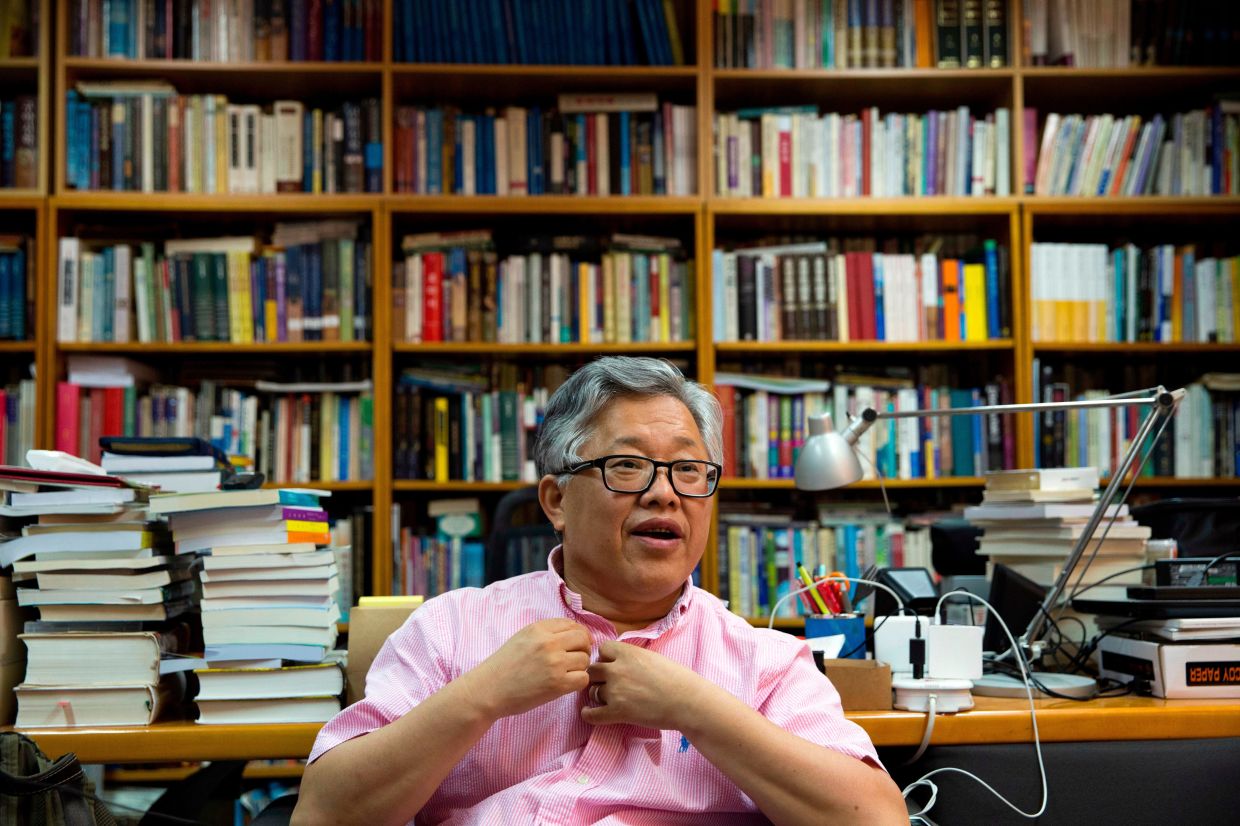
China has freed Ezra Jin, the founder of Zion Church, an unregistered religious congregation in Beijing, after the Chinese government confirmed his release coincided with direct diplomatic pressure from US President Donald Trump. Jin had spent nine months in detention since his arrest in October alongside other church members, marking another development in China's increasingly stringent approach toward independent religious organisations operating outside state control.
The release signals a rare instance of personal diplomacy yielding tangible results between Washington and Beijing on religious freedom matters. Trump had personally raised Jin's case during his May visit to meet with Chinese President Xi Jinping, publicly stating that the Chinese leader would "strongly consider" Jin's release. On Saturday, international rights organisation ChinaAid confirmed that Jin had travelled to Los Angeles following his discharge from Chinese detention, bringing an unexpected conclusion to nearly a year of uncertainty for his family and congregation.
Zion Church represents a significant strand of China's religious landscape—one of thousands of unregistered congregations that operate independently of the state-approved religious framework. Unlike officially sanctioned churches that operate under government supervision and ideological guidelines, underground churches offer worshippers a space for faith practice without Communist Party oversight. Zion Church itself had grown to approximately 1,500 members before authorities forced its physical closure in 2018, yet the community maintained vitality through digital platforms that expanded significantly during the Covid-19 pandemic, eventually reaching believers across 40 Chinese cities.
Jin's detention on October 10 occurred under the broad charge of "suspicion of the illegal use of information networks," a commonly employed accusation that Beijing uses to target those operating digital platforms it considers problematic. Chinese authorities alleged that Jin and fellow church members had leveraged internet tools to organise religious activities outside the state system. The vagueness of such charges has become characteristic of how China pursues individuals engaged in activities deemed subversive by Communist Party standards, making prosecutions difficult to challenge and allowing authorities considerable discretion in detaining suspects indefinitely.
Chinese officials explicitly framed Jin's release as a diplomatic gesture, telling him that his freedom resulted from high-level discussions between Trump and Xi, deliberately connecting it to Fourth of July commemorations in the United States. This characterisation reflects Beijing's careful calibration of how it presents concessions internationally—by attributing the decision to goodwill gestures rather than acknowledging systemic pressure, the government maintains its narrative of conducting religious policy according to its own priorities while appearing responsive to international partners. The political theatre surrounding the release underscores how religious freedom cases have become entangled with broader bilateral dynamics between the world's two largest economies.
However, Jin's release represents only a partial resolution to the wider situation facing his congregation. Eight other Zion Church members arrested simultaneously with Jin in October remain in Chinese custody, their fate unresolved despite the pastor's liberation. This selective release—freeing a church founder while detaining rank-and-file members—may suggest that Beijing views certain individuals as more valuable for diplomatic purposes or bargaining with foreign governments, while ordinary worshippers lack equivalent leverage for negotiating their freedom.
The Jin case emerges within a substantially darker environment for China's religious communities. Xi Jinping's tenure has witnessed an intensification of state surveillance and control mechanisms targeting churches, temples, and mosques alike. The government has systematically dismantled independent religious structures, replacing them with tightly regulated institutions that incorporate Communist Party ideology into worship and messaging. In June, authorities raided an Early Rain Covenant Church service in Sichuan province, detaining leadership while in the same month removing the cross from Yayang church in Zhejiang province—dramatic visual demonstrations of the state's willingness to physically assert dominance over religious spaces.
Zion Church's trajectory illustrates the precariousness facing underground congregations in contemporary China. Founded in 2007, the church flourished during its first decade, establishing deep roots in Beijing's Christian community. Yet by 2018, mounting governmental pressure forced the physical closure of worship spaces, compelling the community to transition entirely to digital platforms. This transition, rather than eliminating the church's presence, paradoxically expanded its reach through online networks—a consequence that highlights how attempting to suppress religion can sometimes extend its influence through technological means authorities struggle to fully control. Jin's family had relocated abroad after 2018's crackdown, yet he remained in China, prioritising pastoral responsibilities over personal reunification, subsequently facing travel restrictions that separated him from young children for more than seven years.
For Malaysian and broader Southeast Asian readers, the implications extend beyond China's borders. China's religious policy increasingly influences how overseas Chinese communities and international religious organisations operating in the region navigate their relationships with Beijing. The case demonstrates that religious freedom remains negotiable within Chinese diplomatic frameworks—something that may be traded in bilateral arrangements with major powers yet remains systematically constrained for ordinary believers. Additionally, the release illustrates how US diplomatic leverage on human rights matters can occasionally produce concrete results, raising questions about whether regional governments might pursue similar approaches on behalf of detained citizens and religious adherents.
Jin's release, while genuinely significant for his family's circumstances, thus functions simultaneously as genuine diplomatic victory and strategic theatre. The explicit acknowledgment that his freedom flowed from Trump-Xi discussions transforms a religious liberty outcome into evidence of bilateral engagement and American diplomatic efficacy. Yet this framing obscures the fundamental problem: China's systematic suppression of independent religious practice continues unabated, and occasional releases of high-profile detainees do not represent policy shifts but rather cosmetic adjustments designed to manage international perceptions while maintaining substantive control over religious life.

