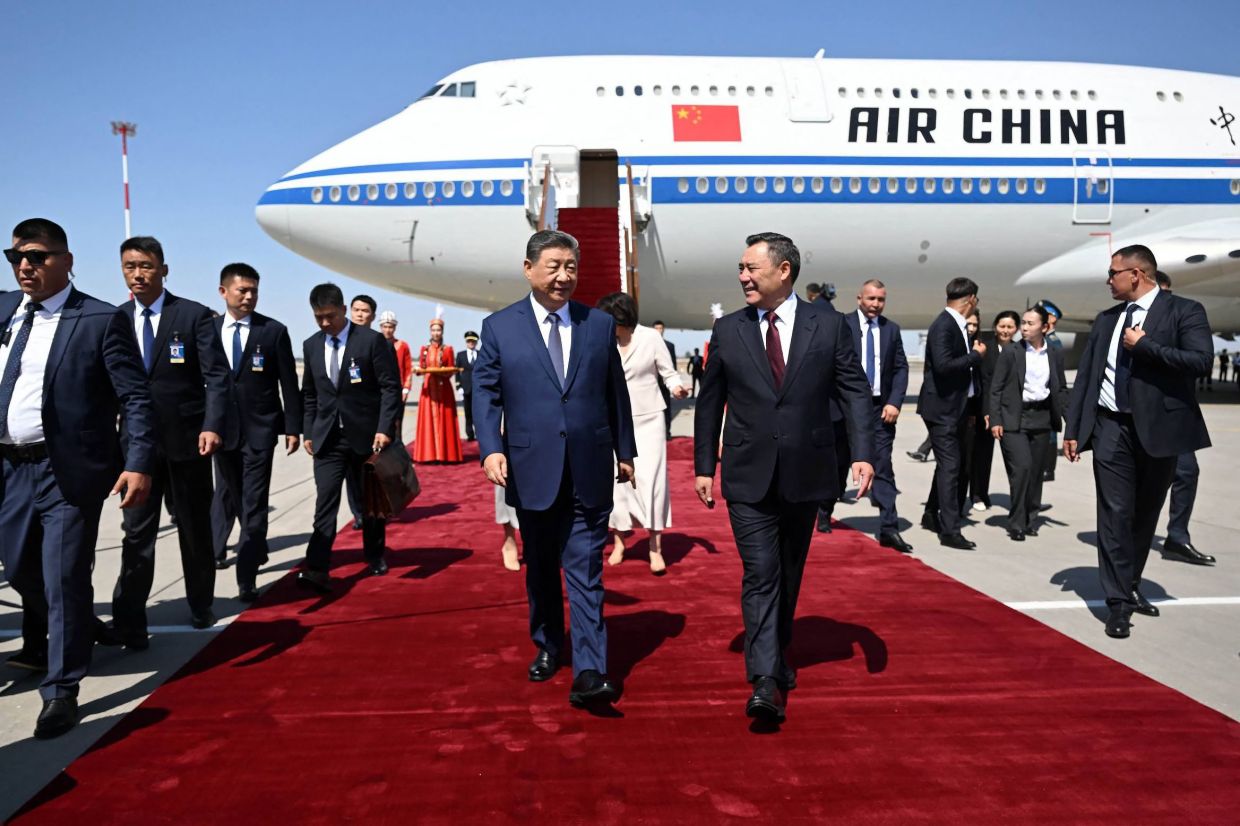
The Shanghai Cooperation Organisation is hosting its latest summit in Bishkek, Kyrgyzstan, drawing together the leaders of three major Asian powers—Chinese President Xi Jinping, Russian President Vladimir Putin and Indian Prime Minister Narendra Modi—in what represents a significant moment for a bloc increasingly framed as an alternative to Western-led global structures. The gathering underscores deepening cooperation among nations seeking to establish their own sphere of influence amid intensifying geopolitical fragmentation.
The three-day summit will feature extensive bilateral meetings that reveal the strategic calculations of key participants. Putin and Xi are scheduled to meet on Monday, following which the Russian president will hold talks with Iranian President Masoud Pezeshkian on Tuesday, when official SCO sessions commence. These carefully orchestrated encounters reflect how member states use the forum to conduct high-level diplomacy, particularly nations facing international isolation or sanctions. For Russia, now entrenched in its fourth year of full-scale war against Ukraine, and Iran, engaged in conflict with the United States and Israel, the summit provides a crucial venue to reinforce relationships with allies outside the Western orbit.
Since its establishment in 2001 as a security-focused organisation among China, Russia and four Central Asian republics, the SCO has undergone significant expansion and repositioning. The bloc has grown to encompass ten full members—Russia, China, India, Iran, Pakistan, Belarus, Kazakhstan, Kyrgyzstan, Tajikistan and Uzbekistan—transforming from a relatively modest regional body into a platform with considerable geopolitical weight. China and Russia have aggressively promoted the organisation as a counterpart to Western institutions like the G7, and Beijing has invested considerable diplomatic capital in elevating the SCO's profile and ambitions within its strategic framework.
Chinese officials have characterised the organisation as having pioneered a novel approach to regional cooperation, language that masks Beijing's broader vision of reshaping the global order. This messaging reflects a coordinated strategy between China and Russia to promote what they term a multipolar world order, fundamentally challenging the post-Cold War international architecture dominated by Western nations and institutions. Beijing's commitment to expanding the SCO encompasses pledges of development financing and technical assistance, initiatives designed to deepen member states' dependence on and alignment with Chinese strategic interests.
For many participating nations, the summit functions as a demonstration of resilience and unity in response to Western pressure. Several member states have experienced tension with Western powers over sanctions, trade disputes or geopolitical alignment, making the SCO forum an important platform for signalling that they retain viable alternatives and robust partnerships outside the Western sphere. The gathering allows participants to present an image of a cohesive bloc capable of coordinating on regional security and economic matters, even as underlying contradictions simmer beneath the surface.
However, observers caution against overstating the SCO's cohesion or transformative potential. The organisation lacks the institutional depth, military integration or ideological unity of formal military alliances, and its member states pursue distinct—sometimes competing—national interests. The presence of both India and Pakistan within the same framework, for instance, highlights fundamental tensions that constrain the bloc's ability to act decisively on major security issues. Similarly, India and China maintain substantial strategic rivalry, particularly in border disputes and regional influence competitions, dynamics that inevitably complicate collective decision-making.
For India specifically, analysts suggest the summit represents more an exercise in strategic positioning than an opportunity for tangible accomplishments. New Delhi's participation allows it to maintain a seat in a region increasingly defined by great-power competition while avoiding complete alignment with any single power. According to Dinakar Peri, a security studies fellow at Carnegie India, the SCO provides Delhi a platform to observe shifting geopolitical alignments, protect its own interests and establish itself as a dependable actor within regional structures. By maintaining an active presence within the organisation despite inherent complications, India can hedge its broader foreign policy and ensure it retains influence over regional developments that directly affect its security and economic interests.
Turkey, holding dialogue partner status within the SCO, similarly views the organisation as integral to its strategy of balancing engagement with both Western institutions and Eurasian powers. President Recep Tayyip Erdogan has repeatedly expressed ambitions for Turkey to achieve full membership, a trajectory that reflects Ankara's broader aspirations to position itself as a bridge between Europe and Asia. While Turkey maintains formal NATO membership and substantial trade relationships with European Union nations under a 1995 trade agreement, its long-stalled EU accession bid has created openings for Turkey to cultivate relationships and influence within alternative multilateral forums. The SCO summit offers Ankara an arena to strengthen its standing in Central Asia and the Middle East while simultaneously signalling to the West that it possesses viable alternatives should Western partnerships prove insufficiently valuable.
The SCO's strategic messaging should be understood within the context of broader competition for influence within Central Asia and along the Eurasian landmass. China's investment in the organisation reflects its determination to consolidate its position as the primary external power shaping regional affairs, while Russia uses the forum to maintain relevance despite economic constraints. For smaller member states, particularly Central Asian republics, participation offers access to resources and security guarantees from larger neighbours while attempting to preserve some degree of autonomy and balance among competing powers.
For Southeast Asian observers and policymakers, the SCO summit carries implications for regional stability and alignment. The bloc's activities and evolution directly affect the balance of forces that shape geopolitical competition affecting Southeast Asia, particularly regarding how China and Russia project influence and how India and other nations respond to Chinese assertiveness. The extent to which the SCO develops institutional capacity, consensus-building mechanisms and coordinated strategies will influence how Asian power dynamics unfold over coming years.
While the SCO undoubtedly represents an important vehicle for non-Western cooperation and a symbol of resistance to American-led unipolarity, its actual capabilities and coherence remain substantially limited by internal contradictions and divergent interests among members. The summit in Bishkek will likely reinforce symbolic unity while substantive outcomes prove modest, reflecting the fundamental tension between the organisation's aspirations and the geopolitical realities constraining collaborative action among states with competing priorities and unresolved disputes.

