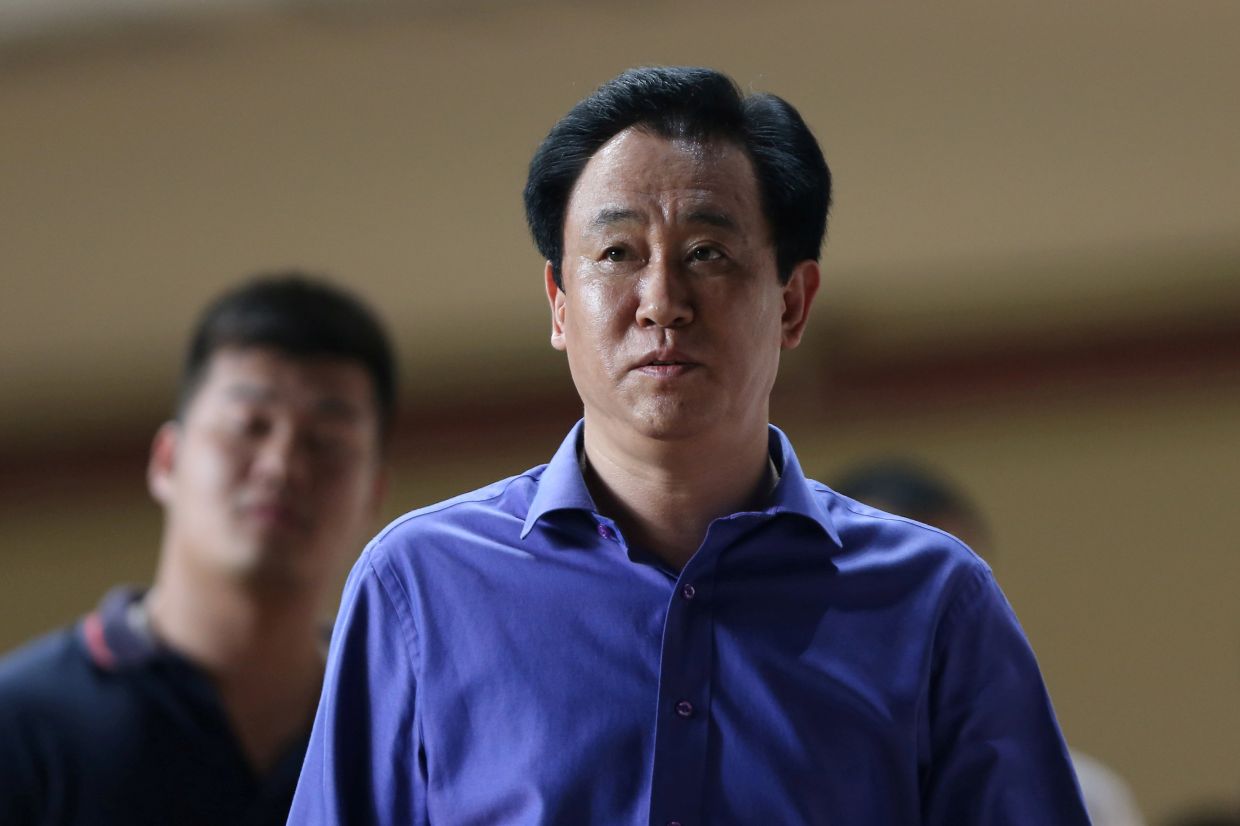
China has handed down a life sentence to Xu Jiayin, the founder of Evergrande Group, along with fines totalling 15.82 billion yuan (US$2.4 billion) levied against the company and its real estate subsidiary. The Shenzhen Intermediate People's Court in Guangdong province announced the verdict on Thursday, concluding a legal process that began after the property developer's catastrophic default in 2021—an event that sent shockwaves through China's real estate sector and reverberated across global markets.
Xu's conviction encompasses multiple offences spanning from 2016 to 2021, with the court determining that he orchestrated large-scale financial fraud, embezzlement, and bribery schemes to artificially inflate the company's assets while concealing mounting liabilities. The judgment explicitly stated that the founder and his company engaged in systematic deception of creditors and investors, fundamentally breaching national financial regulations. Beyond the life sentence, Xu faces permanent revocation of political rights and confiscation of all personal property—a sweeping penalty that extends far beyond mere incarceration.
Evergrande's trajectory encapsulates the excesses that characterised China's property boom over three decades. The company became the public face of Chinese real estate ambitions, aggressively marketing homeownership as an aspirational achievement while leveraging aggressive expansion strategies and mounting debt to fuel growth. At its zenith, Evergrande embodied the seemingly unstoppable force of China's real estate sector, which had become a cornerstone of economic expansion and a primary vehicle for wealth creation among the nation's emerging middle class.
The company's downfall accelerated sharply following Beijing's introduction of stricter regulatory frameworks designed to curb speculative borrowing and reduce systemic risks within the financial system. These measures, implemented to contain property-market excesses, dramatically curtailed Evergrande's access to fresh credit. Unable to refinance its sprawling debt obligations or complete construction on thousands of pre-sold residential units, the developer spiralled toward insolvency. The 2021 default marked a watershed moment, transforming Evergrande from a symbol of prosperity into an emblem of regulatory crackdown and financial mismanagement.
The court's investigation uncovered additional criminal conduct beyond financial fraud. Prosecutors established that Xu and his associates deliberately obtained control over financial institutions through bribery and corruption—a finding that points to deeper systemic corruption within corporate governance structures. Though the court did not name the specific financial institutions involved, the revelation underscores how interconnected real estate developers had become with the broader financial ecosystem, creating cascading vulnerabilities when the sector contracted.
Xu's April plea of guilty to multiple charges—including embezzlement, bribery, and financial fraud—facilitated the swift conclusion of his trial. His willingness to accept culpability appears to have been factored into sentencing, though the severity of the life sentence suggests the court viewed his crimes as exceptionally grave. This judicial approach contrasts with differing international precedents, reflecting China's emphasis on deterrence and the restoration of public confidence in financial oversight.
Beyond Xu's individual culpability, the court also held five other senior Evergrande executives accountable, sentencing them to prison terms ranging from six to eighteen years. This broader prosecutorial reach demonstrates the government's determination to establish clear accountability throughout the company's leadership structure, signalling that complicity in financial misconduct carries severe consequences. The staggered sentences likely reflect varying degrees of involvement and responsibility among the executives.
For Malaysian and Southeast Asian observers, Evergrande's collapse and subsequent criminal proceedings carry significant implications. The region's property developers, many of which expanded aggressively into Chinese markets or absorbed Chinese investment capital, faced considerable exposure to Evergrande's supply chains and financing networks. The case exemplifies how regulatory tightening in major economies can transmit financial stress across borders and demonstrate the importance of maintaining transparent, sustainable business practices in real estate development.
The settlement also reflects Beijing's broader commitment to reshaping China's economic growth model away from property-dependent expansion towards more sustainable sectors. By imposing harsh penalties on Evergrande's leadership, authorities aim to recalibrate market expectations and discourage future developers from replicating the aggressive, debt-fuelled strategies that characterised the pre-2020 era. This regulatory shift has profound implications for how Chinese capital flows into regional markets.
Moreover, the Evergrande case illustrates the political economy of state intervention in China. The developer was not simply wound down through bankruptcy proceedings; instead, it became the object of criminal prosecution designed to assign personal culpability to executives. This approach combines financial oversight with accountability mechanisms intended to restore public trust in institutions and demonstrate that even prominent figures face consequences for misconduct. The confiscation of Xu's personal property signals comprehensive remedial action.
The penalties imposed—both the life sentence and the multi-billion-dollar fine—represent one of the most severe judicial outcomes in Chinese corporate crime history. The magnitude underscores how seriously Beijing treats financial fraud and the protection of creditor and investor interests within the domestic financial system. For international investors and regional competitors, the verdict serves as a cautionary reminder about the consequences of financial mismanagement in China's tightly regulated environment.
Looking forward, Evergrande's judicial resolution may facilitate restructuring efforts and provide clarity to creditors about the company's liability landscape. However, thousands of apartment buyers who prepaid for units under Evergrande's various projects remain vulnerable, highlighting the human costs embedded within this corporate-level financial catastrophe. Regional property markets will monitor how Chinese authorities balance corporate rehabilitation with protections for ordinary consumers affected by developer defaults.

