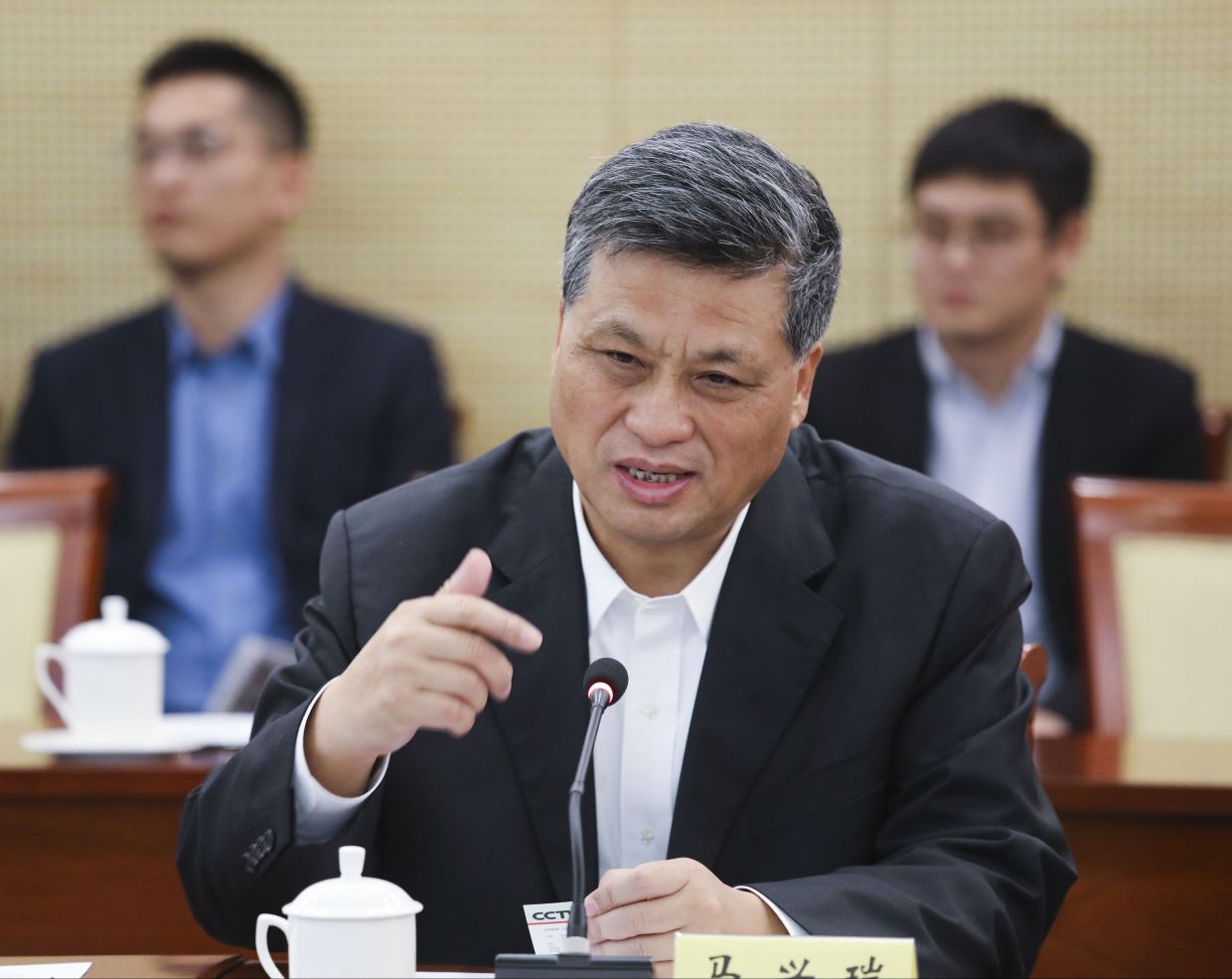
China's anti-corruption machinery has formally charged former Politburo member Ma Xingrui, a 67-year-old aerospace engineer who once oversaw the country's new-generation carrier rocket programme, with a sweeping catalogue of offences ranging from bribery to nepotism. The move represents a significant escalation in Xi Jinping's anti-corruption campaign and underscores the vulnerability of even the party's most senior figures to disciplinary action. The Central Commission for Discipline Inspection released its findings on Tuesday following a Politburo review and approval on June 30, marking the completion of an investigation initially announced in April.
The allegations against Ma paint a portrait of systematic abuse of power extending beyond his individual conduct to his entire family network. Investigators determined that he accepted gifts and money improperly, leveraged his position to secure discounted property purchases for relatives, and engaged in transactional arrangements involving sexual favours in exchange for advancement or financial gain. More significantly, the disciplinary commission found that Ma deliberately fostered an environment enabling his relatives to capitalise on his political standing, effectively transforming his office into a mechanism for enriching his household members. This pattern of family-centred corruption represents one of Beijing's persistent concerns about elite cadres converting public authority into private wealth dynasties.
Ma's political trajectory illustrates how senior technical expertise can translate into powerful positions within China's bureaucratic hierarchy. After spending years at the China Aerospace Science and Technology Corporation, where he served as general manager from 2007 to 2013 and directed both the manned space programme and carrier rocket development, he transitioned into provincial governance. His appointment as deputy party secretary of Guangdong in 2013 marked his entry into the broader political sphere. He subsequently advanced through increasingly prominent roles including party secretary of Shenzhen, provincial vice-governor, and eventually governor before assuming leadership of Xinjiang in 2021 and joining the Politburo the following year.
The investigation exposed Ma's willingness to abuse state power for personal enrichment and to benefit political allies. Prosecutors found that he manipulated personnel decisions to benefit others seeking cadre appointments and employment advancement, often working through family intermediaries to obscure his involvement. His deployment of public authority to secure business benefits for associates, including preferential treatment in project contracting and resource allocation, demonstrated a calculated approach to leveraging his office. Perhaps most damaging was the finding that Ma did not fully cooperate during initial questioning, concealing the true extent of his misconduct rather than making a sincere confession as party discipline requires.
The commission's assessment that Ma had "lost his ideals and beliefs" and "abandoned his political conviction" strikes at the ideological foundation of party membership. Such characterisations go beyond cataloguing specific wrongdoings to suggest a fundamental corruption of the values the Communist Party claims to represent. By framing Ma's actions as a betrayal of the party's "principles and original mission," disciplinary authorities positioned his case within Xi's broader narrative of restoring party ideological purity and revolutionary commitment. This ideological dimension explains why Ma faces not merely administrative consequences but criminal prosecution through the judicial system, with asset confiscation.
The timing and scale of Ma's removal reflects intensifying consolidation within China's top leadership. His investigation represents the third Politburo member to come under scrutiny during Xi's current term beginning in 2022, a frequency unprecedented in recent decades. Two top military commanders, including He Weidong, former vice-chairman of the Central Military Commission, have already been purged, reducing the Politburo from 25 to 21 members. This pattern suggests a deliberate effort to reshape the party's elite governing body, potentially removing figures from rival factional networks or replacing them with loyalists more aligned with Xi's governance vision.
Xinjiang has emerged as a particular focal point for anti-corruption investigations, with multiple senior officials facing charges in recent months. Beyond Ma, authorities have moved against Chen Weijun, former executive vice-chairman of Xinjiang's provincial government, and Li Xu, former deputy commander of the Xinjiang Production and Construction Corps. This concentration suggests either genuine systemic corruption in the region's governance structures or a strategic decision to consolidate control over this strategically crucial western territory through personnel changes. For observers of Chinese politics, the Xinjiang cases raise questions about whether corruption serves as the stated rationale for broader factional realignments.
The aerospace sector connection extends the corruption network beyond Ma himself. Multiple former subordinates from the China Aerospace Science and Technology Corporation have been caught in anti-corruption investigations over recent years, suggesting either widespread misconduct in that institutional environment or possibly targeting of networks associated with particular patrons. This pattern echoes historical precedent in Chinese politics where investigating one senior figure often triggers cascading probes through their former associates and subordinates, creating a ripple effect through bureaucratic hierarchies.
For Malaysia and Southeast Asia, these developments carry implications for engagement with China's leadership and institutional stability. Rapid turnover in elite Chinese politics can create uncertainty about decision-making continuity and the reliability of commitments made by particular officials. The anti-corruption campaign, while potentially strengthening institutional discipline, also concentrates power within Xi's immediate circle and reduces pluralism within party deliberations. Regional governments monitoring China's internal developments must assess whether these purges strengthen or destabilise governance, and how personnel changes might affect bilateral relationships and policy priorities.
Ma's case also demonstrates how technical expertise, while valuable in acquiring high office, offers no immunity from political vulnerability in Xi's system. The emphasis on his aerospace background alongside his corruption suggests that competence and revolutionary credentials cannot protect cadres who fail to align with current power structures or who abuse their authority for personal enrichment. As the party continues purging the Politburo at a pace unseen in decades, the implicit message to officials at all levels is clear: technical achievement and administrative success remain subordinate to political loyalty and ideological conformity as measured by Xi's administration. Ma's prosecution will likely serve as a cautionary example throughout China's bureaucracy about the costs of insufficient revolutionary consciousness and inadequate party discipline.

