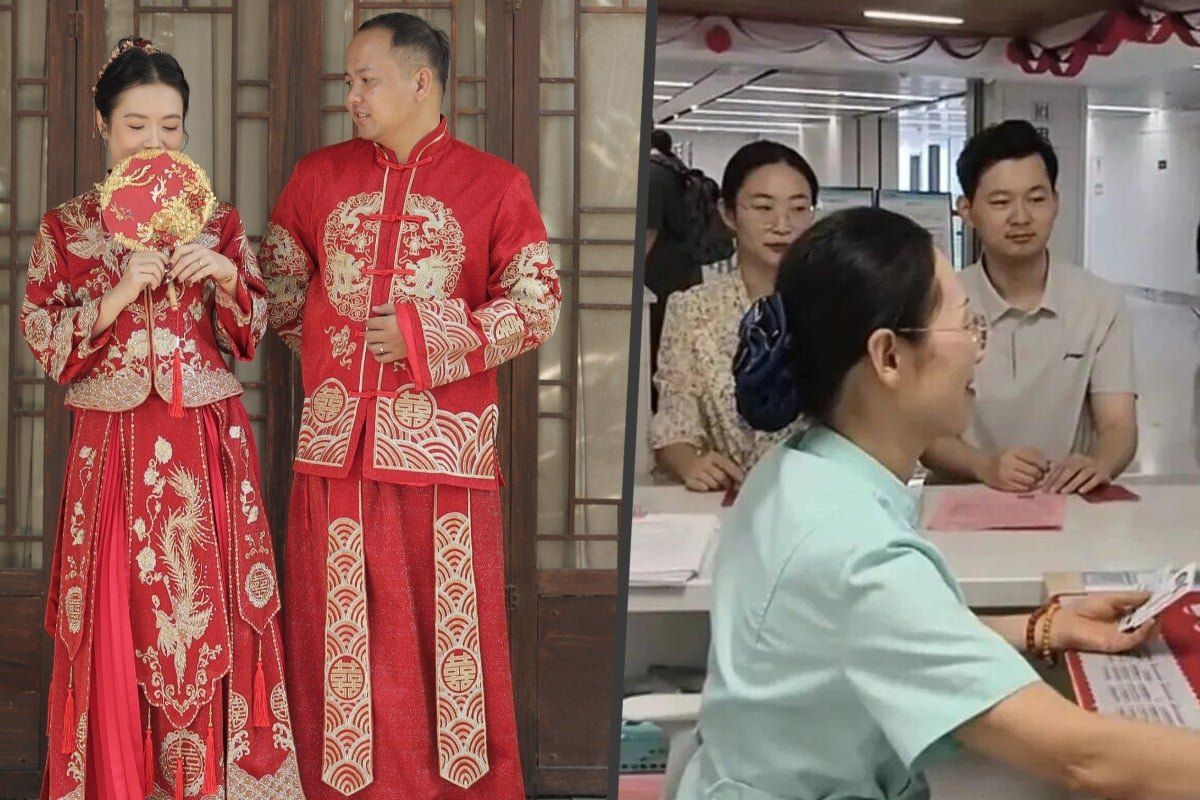
China is deploying an unconventional strategy to combat plummeting marriage rates: making it easier and more entertaining to get married. Rather than confining registration to traditional civil affairs bureaus, authorities have partnered with hospitals, banks, nightclubs, airports, temples, and metro stations to offer marriage certification services. This creative approach reflects deepening demographic anxieties within the world's most populous nation, where younger generations increasingly postpone or forgo marriage altogether.
The expansion accelerated following regulatory changes introduced in May last year that fundamentally simplified the marriage registration process. Couples no longer need to present hukou booklets—official household registration documents—nor must they marry at their home registration location. These reforms removed long-standing bureaucratic barriers that had historically complicated marriage administration. Within a year of implementation, authorities established over 500 dedicated marriage registration sites outside conventional civil affairs bureaus, complemented by more than 1,300 outdoor collaborative locations issuing certificates in partnership with local government agencies.
The venues themselves have become increasingly imaginative and venue-specific. The Postal Savings Bank of China's Tianjin branch made history in August as the nation's first bank to provide marriage services, blending financial and romantic transactions. That same month, the Maternal and Child Health Hospital in Zibo City, Shandong province, introduced its own registration programme, streamlining marriage certification with premarital medical examinations and preconception counselling. The hospital positions this integration as practical for couples preparing for parenthood, offering one-stop convenience. Guangzhou Baiyun International Airport distinguished itself by becoming the first airport to issue marriage certificates, sweetening the deal with complimentary observation deck access where newlyweds can watch aircraft operations.
Temples, parks, and metro stations have entered the marriage registration ecosystem as well. Beijing and Nanjing feature centuries-old temples accommodating couples seeking traditional ceremonies alongside modern registration. Shanghai's nightclubs partner with civil affairs bureaus to conduct special certification ceremonies in club environments, transforming venues typically associated with entertainment into spaces for romantic commitment. In August, Hefei's metro station became China's first transport facility offering marriage services. These diverse locations transform what was once routine administrative business into memorable experiences, potentially enhancing the cultural significance of marriage itself.
Initially, the strategy appeared successful. During the third quarter of last year, 1.61 million couples registered marriages nationwide—a 22.5 per cent year-on-year increase. Full-year 2023 figures showed 6.76 million marriages, up 657,000 from the previous year. Yet this optimism proved short-lived. The first half of this year saw marriages decline 7.5 per cent year-on-year, with only 3.28 million couples formalising unions. This dramatic reversal suggests that improved accessibility, while initially spurring registration, addresses surface-level obstacles rather than fundamental hesitations about marriage itself.
Criticism from Chinese social media reveals the deeper problem. Online commentators questioned whether inconvenient registration procedures actually deterred marriage, noting that registration convenience represents a minor consideration compared to life-altering decisions. One widely-shared quip sarcastically proposed establishing divorce services atop Mount Everest, mocking the premise that location alone influenced marital decisions. More substantive criticism pointed toward genuine barriers to marriage: financial pressures, housing costs, family expectations, and concerns about personal freedom. Young Chinese increasingly view marriage not as an inevitable life milestone but as an optional commitment with significant risks.
The underlying demographic crisis driving these registration initiatives extends beyond mere scheduling inconvenience. China faces accelerating population decline, with fewer young adults available for marriage as a result of decades of restrictive fertility policies. Economic anxieties compound reluctance, as younger generations confront inflated property prices, competitive employment markets, and uncertain futures. Gender imbalances, themselves consequences of historical sex-selective family planning, further complicate pairing prospects. These structural issues cannot be resolved through innovative venue selection or streamlined paperwork alone.
For Southeast Asian nations observing China's experience, the marriage registration initiative offers instructive lessons about demographic management limits. Malaysia, with its own concerns about declining birth rates among certain communities, might note that administrative convenience, while valuable, substitutes for neither economic security nor cultural shifts in attitudes toward marriage. The Chinese example demonstrates that governments cannot legislate or locate their way out of fundamental social transformations where younger generations reassess traditional institutions.
The expansion of marriage registration venues does accomplish genuine administrative improvement for couples already committed to marriage, removing genuine friction from the process. However, the recent decline suggests these reforms function best as quality-of-life enhancements for decisively-minded couples rather than as marriage rate multipliers. Chinese policymakers appear to be discovering what demographic researchers have long documented: that procedure matters far less than the underlying conditions making marriage appealing. Whether through hospitals or nightclubs, whether at airports or temples, official registration services cannot generate the confidence, financial security, and cultural conviction that young adults require to embrace marriage as their choice.

