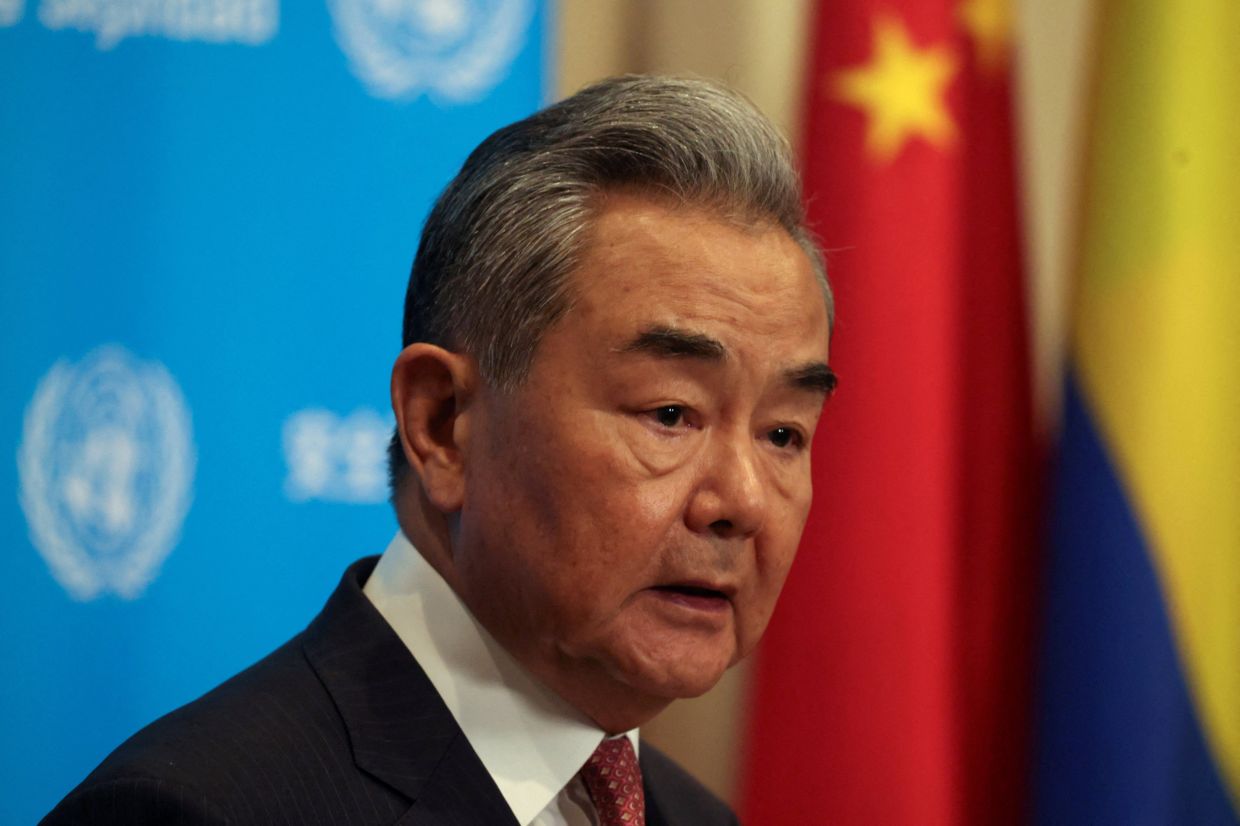
China's Foreign Minister Wang Yi has cautioned US Secretary of State Marco Rubio about the sensitivity surrounding Taiwan, emphasizing the need for Washington to exercise the "utmost caution" when dealing with matters affecting the island, according to remarks made during a Tuesday telephone conversation between the two officials.
The exchange reflects Beijing's continued determination to keep Taiwan policy at the forefront of Sino-American discussions, even as both countries attempt to stabilize their broader relationship following recent high-level diplomatic engagement. Wang stressed that building a constructive and strategically stable partnership between the two superpowers serves the interests not only of China and the United States, but also the wider international community. His message underscored China's view that managing the Taiwan question carefully is essential to preventing escalation.
Wang articulated a framework for improved bilateral relations that goes beyond rhetoric. He argued that both nations should work to "remove interference, overcome obstacles, and stay firmly on this correct path". This formulation suggests Chinese frustration with what Beijing perceives as American support for Taiwan's separate political status and international engagement. The emphasis on removing interference carries particular weight, as China has long viewed American military assistance to Taiwan and high-level diplomatic contacts with Taipei as forms of external meddling in its internal affairs.
The Foreign Minister further elaborated on what Beijing considers necessary for genuine cooperation. Rather than simply issuing statements of goodwill, Wang insisted that meaningful partnership demands concrete action, mutual movement toward understanding, and sustained commitment over time. This represents a characteristic Chinese diplomatic approach—moving beyond symbolic gestures to substantive behavioral change. The message implies that China expects the United States to demonstrate its commitment to stability through measurable adjustments in policy.
Wang outlined a specific agenda for managing the bilateral relationship more effectively. He proposed that the two countries should expand their areas of cooperation and develop additional positive collaborative frameworks while simultaneously reducing contentious issues and working to mitigate various risks and potential crises. This zero-sum framing—lengthening cooperation lists while shortening problem lists—reflects how Beijing approaches strategic competition with Washington. It suggests that China believes progress is possible if both sides make deliberate choices to focus on shared interests.
For Beijing, Taiwan represents far more than a regional dispute. The Chinese government regards Taiwan as an integral part of its territory, a view that fundamentally shapes all other aspects of its foreign policy calculations. This position has become increasingly central to how China evaluates American intentions and commitment to respecting Chinese sovereignty. The emphasis placed by Wang on Taiwan handling suggests that Beijing sees this issue as a litmus test for whether Washington genuinely seeks constructive relations or merely tactical advantage.
The timing of Wang's call carries significance in the context of recent diplomatic developments. Only weeks earlier, Chinese President Xi Jinping conducted a closely watched summit meeting with US President Trump, during which both leaders discussed a "new vision" for their nations' relationship. At that May summit, Xi raised Taiwan explicitly, warning that any careless handling of the issue could trigger conflict and push bilateral relations into an "extremely dangerous" state. This language conveyed unmistakably that China views the potential for miscalculation on Taiwan as the most serious threat to Sino-American stability.
America's approach to the summit negotiations reflected Washington's effort to score domestic political victories while managing its largest economic competitor. The Trump administration released detailed fact sheets highlighting commitments Beijing allegedly made on supply chain issues, semiconductor availability, and other matters affecting American economic interests. These public declarations were framed as achievements demonstrating the administration's effectiveness in negotiating with China. However, the emphasis on concrete economic gains masks deeper concerns about strategic competition.
Despite apparent stabilization of relations since the May summit, recent weeks have produced troubling signals suggesting underlying tensions remain. Various incidents and statements have reminded observers that the fundamental strategic competition between Washington and Beijing has not disappeared simply because high-level officials have conducted cordial meetings. These strains underscore how fragile the current equilibrium may be, particularly regarding issues like Taiwan where both sides have deeply incompatible core interests.
For Southeast Asia and the broader Indo-Pacific region, the state of US-China relations directly affects security calculations and economic strategies. Nations across the region, including Malaysia, must navigate carefully between these two great powers. Any deterioration in US-China relations, particularly over Taiwan, could force regional nations to make uncomfortable choices about alignment and commitment. Wang's warning to Rubio reflects Beijing's determination to prevent such deterioration by keeping Washington focused on the stakes involved in mishandling Taiwan.
The warning also signals that China intends to maintain Taiwan as a central element of its diplomatic engagement with Washington, rather than compartmentalizing it as a separate issue. By raising it through Wang's comments to Rubio, Beijing ensures that the matter receives high-level attention and underscores its importance. This approach aims to condition American decision-making, encouraging the administration to weigh Taiwan issues alongside other bilateral concerns.
Moving forward, the success of Sino-American efforts to build what both sides call a "constructive" relationship will likely depend on how effectively they manage the Taiwan question. Wang's message serves as notice that Beijing will not accept what it views as American interference in internal affairs, even as China expresses willingness to work cooperatively on other matters. The challenge for Washington involves finding ways to maintain its commitments to Taiwan while avoiding actions that Beijing interprets as provocative.

