China's aspirations to become a global leader in artificial intelligence research face a fundamental obstacle: the country lacks sufficient domestic production of the sophisticated instruments needed to generate the high-quality experimental data that underpins modern AI development. This vulnerability has become increasingly apparent as researchers grapple with the challenge of training and validating advanced AI systems for scientific applications, a field where data quality directly determines success.
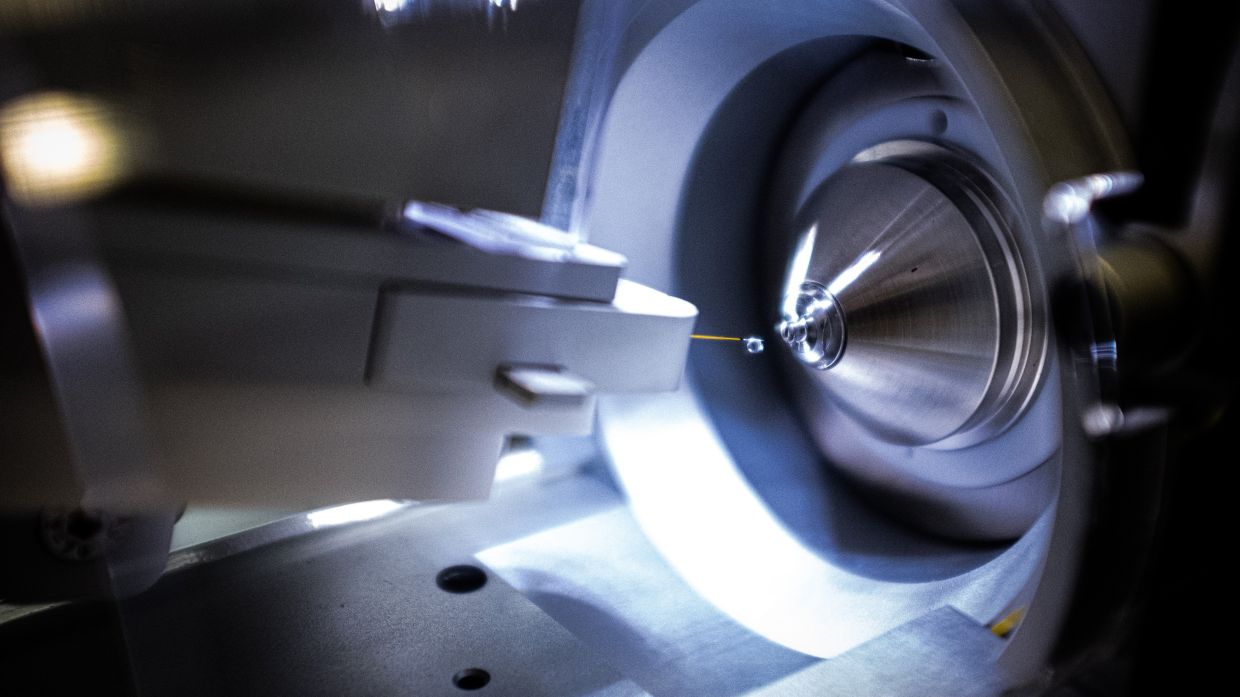
The scope of China's equipment dependency is striking. In 2024 alone, China imported nearly US$17 billion in scientific instruments, with more than three-quarters of the major research equipment deployed across the nation originating from foreign manufacturers. A December report by Beijing-based consulting firm Puhua Policy detailed this reliance, while an earlier analysis by LeadLeo consultancy revealed that China sources 83 per cent of its mass spectrometers and chromatographs from abroad, along with 75 per cent of its spectrometers. These are not peripheral tools but foundational instruments—mass spectrometers identify molecular compositions, chromatographs separate chemical compounds for detailed analysis, and spectrometers use light to characterise material properties. Without them, contemporary scientific research becomes essentially impossible.
Weinan E, a mathematician and Academy of Sciences member at Peking University's mathematical sciences school, crystallised the problem during the "AI for Science" conference in Shanghai last week with a striking metaphor. "Without domestically developed precision instruments, it becomes difficult to obtain first-hand, high-quality experimental data, leaving AI 'like cooking without rice,'" he said, according to Shanghai-based news outlet The Paper. E conceptualised "AI for Science" as a novel research paradigm in 2018, positioning artificial intelligence as a tool for accelerating scientific discovery. Yet that vision falters when researchers cannot access the equipment necessary to generate the training data upon which such systems depend.
The dependency extends beyond mass spectrometers. China remains almost completely reliant on imports for optical instruments and biological tissue analysis equipment, creating cascading inefficiencies throughout the research ecosystem. High import costs, lengthy maintenance cycles, and sluggish after-sales support combine to slow down scientific productivity and create supply-chain vulnerabilities that could prove catastrophic during geopolitical tensions or trade disputes. For a nation investing heavily in scientific advancement as a cornerstone of national competitiveness, this structural weakness represents a significant strategic liability.
Meanwhile, Washington has systematically constrained China's access to precisely these technologies. By December 2020, during Donald Trump's first presidency, more than 42 per cent of China-related entries on the US Commerce Department's restricted export control list involved scientific instruments and equipment. These restrictions have intensified rather than relaxed as the Biden administration and now Trump's second term have treated advanced scientific equipment as potential dual-use technology that could facilitate military modernisation and weapons design through artificial intelligence applications.
In January, the US Department of Commerce escalated these efforts by announcing fresh export controls targeting high-parameter flow cytometers and specific mass spectrometry equipment. The justification proved telling: these technologies could "generate high-quality, high-content biological data, including that which is suitable for use to facilitate the development of AI and biological design tools." In other words, the US recognised precisely what China needs—high-quality biological data—and moved to restrict access, creating a deliberate constraint on China's ability to develop competitive AI systems for scientific research.
Beyond equipment shortages, E identified equally concerning gaps in China's artificial intelligence capabilities themselves. The country's foundation models—the large language models underpinning modern AI—lag significantly behind their American counterparts in fundamental strength and versatility. This gap cannot be addressed through superficial modifications, he argued. Adding scientific capabilities to existing open-source models represents a "false premise" when the underlying foundation remains structurally weaker. Solving genuinely complex scientific problems demands robust base models, not merely post-training adjustments applied to inferior foundations.
The strategic divergence between American and Chinese approaches to scientific AI illuminates the challenge. The United States has concentrated on strengthening general-purpose foundation models while systematically integrating them with automated research infrastructure—a top-down strategy that leverages comprehensive capability. China has adopted a more tactical, application-driven approach, building specialised scientific AI infrastructure that combines data, software, computing resources and automated equipment for particular research domains. While this narrower focus can yield rapid results in specific areas, it lacks the flexibility and depth required for breakthrough discoveries across multiple disciplines.
Recognising these systemic limitations, E called for comprehensive restructuring of China's scientific establishment to accommodate the demands of the AI era. He proposed three critical "breaks" that must occur. First, disciplinary boundaries must dissolve, enabling cross-field collaboration that combines insights from physics, chemistry, biology, computer science and mathematics. Second, the artificial separation between theoretical research and experimental work must be bridged, creating seamless feedback loops where computation informs experiments and empirical results refine models. Third, the entrenched divide between academia and industry must crumble, permitting the rapid translation of discoveries into practical applications and vice versa.
Beyond structural reorganisation, E advocated for fundamentally reimagining how scientific contributions are evaluated and rewarded. Traditional metrics—publications in prestigious journals—should no longer dominate assessment. Instead, institutions should recognise and valorise the development of datasets, software tools, and research infrastructure that enable others' discoveries. This cultural shift proves essential because artificial intelligence research increasingly depends on the quality of underlying data and tools rather than individual papers. A researcher who creates a widely-used database or software framework contributes more to scientific progress than one who publishes numerous modest studies.
For Malaysia and Southeast Asia, China's struggle carries significant implications. The region's own scientific ambitions and growing interest in AI applications depend partly on access to advanced instruments and methodologies. If China's research ecosystem becomes constrained by equipment shortages and inadequate foundation models, it may prove unable to serve as the regional technology hub and research partner that Southeast Asian nations increasingly anticipate. Additionally, the widening US-China technological divide over scientific equipment suggests that regional nations may face pressure to choose technology partners, potentially fragmenting the research ecosystem that benefits from open scientific collaboration.
China's response to these interconnected challenges—import dependency, US export controls, weak foundation models, and institutional rigidity—will determine whether it can realistically compete in AI-driven scientific discovery. The equipment problem admits of only one solution: massive investment in domesticating precision instrument manufacturing, a process requiring years and sustained commitment. The foundation model gap requires accelerated development of competitive base models, drawing on insights from the country's computing prowess. And the institutional challenges demand leadership willing to challenge entrenched academic hierarchies and evaluation systems. Without progress across all three fronts, China's AI for Science initiative risks remaining conceptually ambitious but practically constrained.

