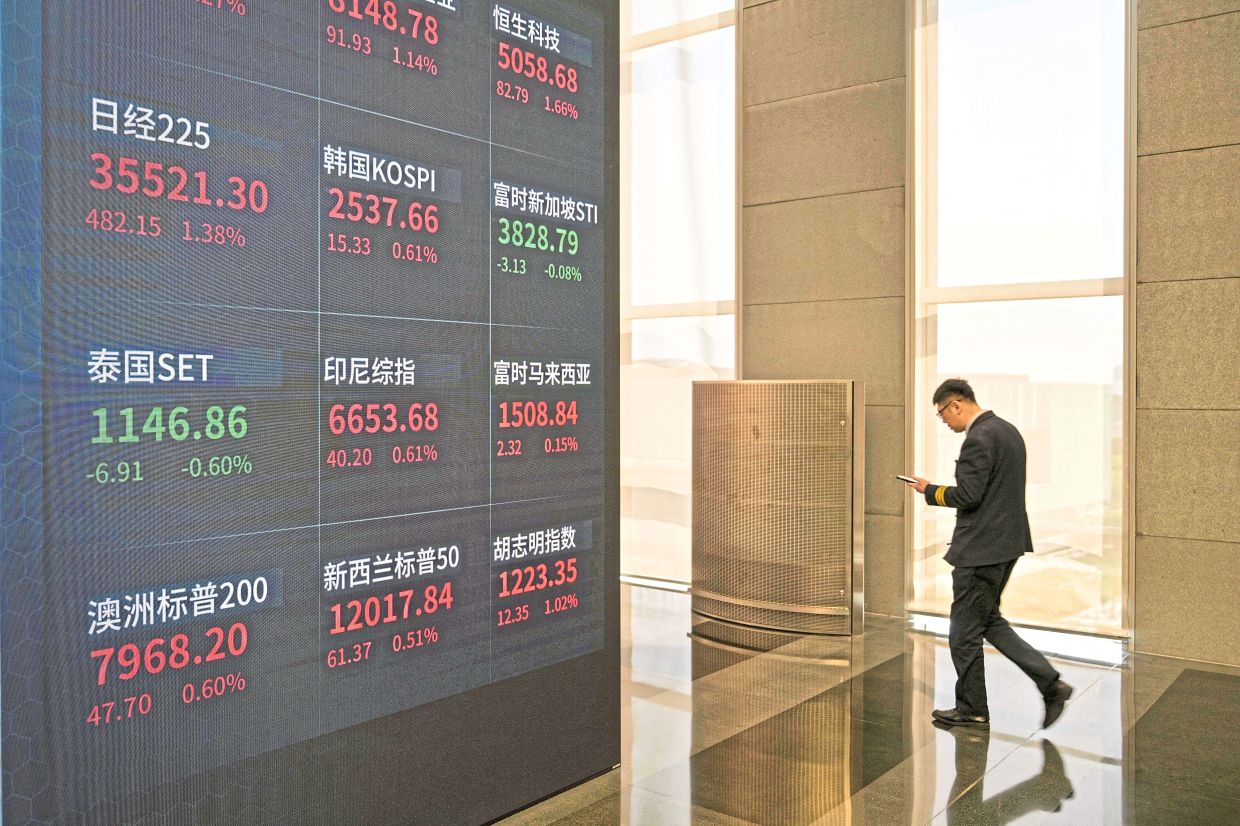
Chinese property developers saw their stocks tumble across both mainland and Hong Kong exchanges on Monday following the release of sweeping regulatory changes designed to overhaul how the nation's massive real estate sector finances new construction. The mainland CSI300 Real Estate Index fell 4.6% by mid-afternoon trading, while Hong Kong-listed Chinese developers declined 6.5%, with the Hang Seng's Hong Kong developers index losing nearly 5%. The sharp selloff reflects deep investor concerns about the structural pressure these new rules will place on company finances at a moment when the property sector is already grappling with its sixth consecutive year of contraction.
The central bank and financial regulators unveiled the new framework on Friday, marking a significant departure from the presale model that has underpinned China's property industry for decades. Under the existing system, developers have routinely collected cash from homebuyers purchasing units before construction completion, creating a self-perpetuating cycle where early sales funded ongoing projects. The revised approach dramatically curtails this mechanism by stipulating that mortgages will only be issued after residential projects reach completion. Local governments have simultaneously been directed to actively promote the sale of finished units, a move designed to protect homebuyers from the delivery risks that have plagued the sector during its recent downturn.
The implications for developer funding are severe and immediate. Construction-phase financing, which previously relied substantially on presale revenue and early mortgage disbursements, must now originate from developers' own capital reserves or development loans from banks. According to analysis from Nomura, this represents a fundamental challenge to the business model that has powered real estate expansion throughout China's economic boom. Official data demonstrates the magnitude of the disruption: presales and mortgages currently account for approximately 40% of development capital, meaning developers face a potential 40% reduction in readily available cash for expansion and investment in the near term. Industry executives, speaking anonymously to avoid regulatory scrutiny, have privately acknowledged this bottleneck will severely constrain their ability to acquire land or pursue new ventures precisely when the sector needs stimulus rather than restriction.
Designated state-backed developers took the heaviest losses, suggesting investors fear even companies with government support cannot fully insulate themselves from the funding squeeze. China Jinmao, Yuexiu Property, and Greentown China each shed more than 14% of their value, while larger state-owned players China Resources Land and China Overseas Land & Investment declined more than 9%. Even financially robust private-sector firms deemed relatively secure, including Longfor Group and Seazen, experienced declines of 7.2% and 5.5% respectively. State-backed players retain certain advantages—access to bank financing at preferred rates between 2 and 3% compared with 5 to 6% for private competitors—yet these structural advantages provide only partial shelter from the cash flow compression triggered by the regulatory reshaping.
China's property crisis, now in its sixth year, continues to weigh heavily on the world's second-largest economy while affecting millions of Chinese households simultaneously. The sector represents a critical engine for export-driven growth and has become a focal point in international trade tensions. Despite periodic intervention attempts, Beijing's previous stabilization efforts have yielded mixed results. New-home prices in premier cities such as Beijing and Shanghai have stalled, while second-hand housing prices in smaller inland cities have declined nearly a quarter from 2020 levels. The market has undergone dramatic structural change, with state-owned property firms now dominant after numerous private competitors defaulted during the prolonged downturn. This shift itself complicates the regulatory environment, as Beijing must now consider how state enterprises absorb the shock of reduced presale funding without triggering broader financial instability.
The new regulatory framework incorporates secondary measures aimed at reducing household debt burdens and potentially stimulating consumption. Personal mortgage terms have been extended from a maximum of 30 years to 40 years, theoretically liberating cash for consumer spending elsewhere in the economy. Analysts acknowledge this adjustment could modestly improve domestic demand by lowering monthly payment obligations, yet most remain skeptical it will meaningfully reverse the structural decline in housing demand. The extension addresses symptoms rather than underlying causes: households have grown cautious about real estate investment after years of declining values and delivery uncertainty, concerns unlikely to dissipate merely through extended repayment schedules.
Government land sales revenue provides stark evidence of the sector's deterioration. Official figures show land sales revenue plummeted 30.8% year-on-year to 1.1731 trillion yuan ($174.56 billion) during the first seven months of 2026, while nationwide property development investment contracted 19.2% to 4.3 trillion yuan. These figures underscore both the immediate crisis and the longer-term structural challenge facing local governments that traditionally relied on land sale revenues to finance infrastructure and public services. The regulatory shift, rather than addressing root causes of this decline, further constrains the capital available for developers to acquire parcels, potentially exacerbating the revenue squeeze facing municipal authorities.
Industry analysts expect the new regime to accelerate consolidation within a sector already dominated by larger players. According to Everbright Securities, the measures have substantially raised barriers to entry and profitability, positioning the new framework as a potential existential challenge for smaller developers lacking sufficient capital reserves or banking relationships. The consensus view suggests most marginal players will lack the financial capacity to navigate the presale funding restrictions while maintaining operations, forcing them to exit the market. This consolidation trajectory will further concentrate market power among state-backed enterprises and established private firms with robust balance sheets, reshaping competitive dynamics for years ahead.
For Malaysian and Southeast Asian observers, this regulatory upheaval carries broader implications. China's property sector remains deeply interconnected with regional economies through construction materials exports, foreign direct investment patterns, and the financial health of Chinese firms operating throughout Asia. A protracted contraction in Chinese property development reduces demand for inputs from Southeast Asian suppliers while potentially prompting Chinese capital redeployment toward alternative investments in the region. The regulatory shift also demonstrates Beijing's willingness to implement structural reforms that prioritize long-term financial stability over near-term growth, a policy orientation that may reshape China's broader economic trajectory and its engagement with regional partners. The crisis management approach embedded in these new rules—emphasizing caution, household debt reduction, and institutional consolidation—reflects a fundamental recalibration of development priorities that will likely persist regardless of whether these specific measures succeed in reviving the property sector.

