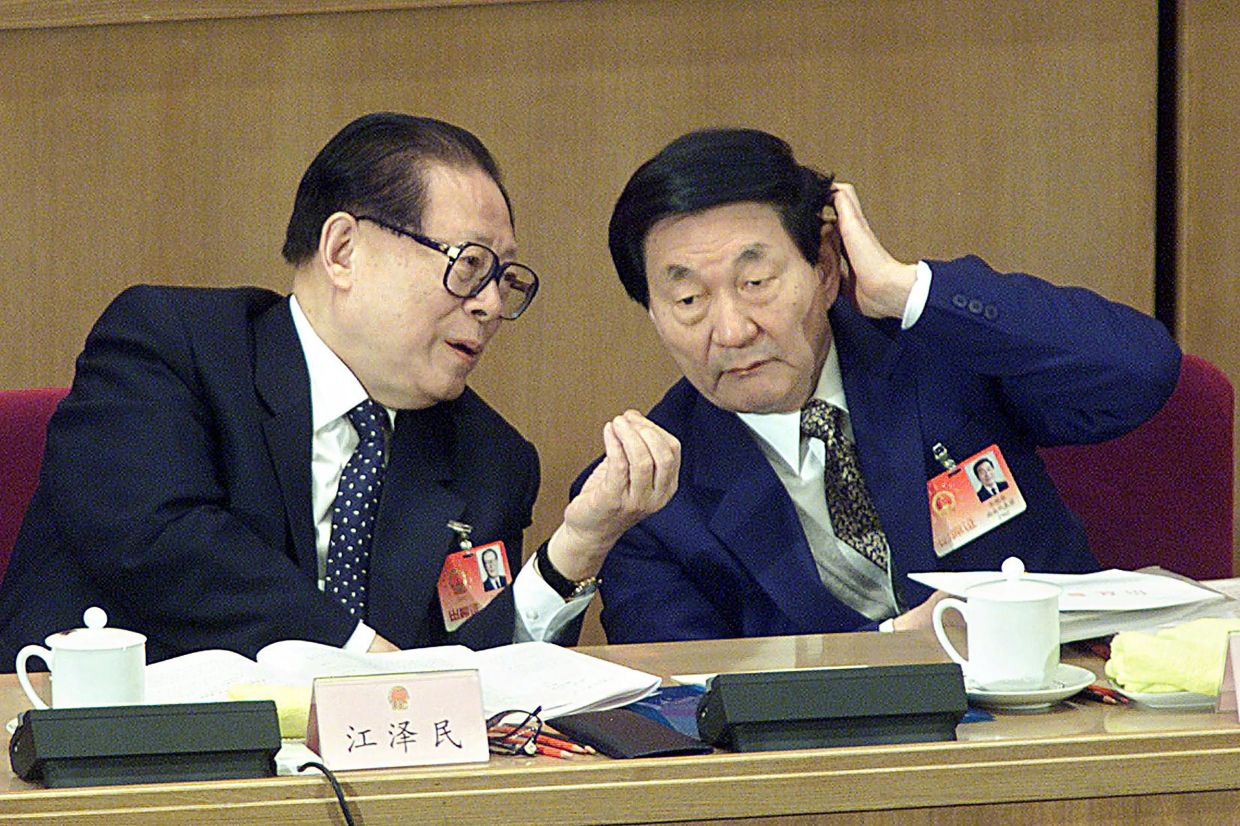
China has found itself caught between honouring the legacies of two pivotal late leaders whose deaths and commemorations within days of each other have dominated the political calendar. Former president Jiang Zemin's 100th birthday ceremony on August 17, attended by thousands at the Great Hall of the People, was followed immediately by the state funeral for former premier Zhu Rongji on August 18, after his death at age 97. President Xi Jinping's personal presence at both events underscored their significance, yet the twin memorials have opened a window onto deeper questions about how China remembers its recent past and what that nostalgia implies for the road ahead.
The official response to Jiang's centenary reflected established protocol for honouring former heads of state. Commemorative stamps were minted, a twelve-episode television documentary chronicled his life, and flags descended to half-mast across the country for Zhu's funeral. Such ceremonies follow precedent—Deng Xiaoping's 100th birthday was similarly marked in 2004—yet the coincidental timing of Zhu's passing has given these tributes unexpected resonance. Jiang and Zhu governed together between 1998 and 2003, a period synonymous with rapid economic expansion, China's entry into the World Trade Organisation, and the nation's emergence as a rising global power. Their joint commemoration has inevitably prompted comparisons between that era's dynamism and today's slower growth trajectory.
Xi's forty-minute address at Jiang's ceremony articulated a carefully crafted narrative positioning the former leader not as an alternative vision but as a predecessor contributing to an unbroken continuum culminating in the present. Xi emphasised Jiang's political loyalty, strategic vision, and decisions during crises such as the 1998 floods and Asian financial downturn. These qualities were explicitly framed as lessons for China's current "new journey"—a political slogan emphasising national rejuvenation and Chinese-style modernisation that gained prominence as Xi began his third term in 2022. The message was unmistakable: Jiang's legacy validates Xi's authority rather than challenging it, a framing reinforced by official obituaries noting Zhu's steadfast support for each successive leadership, including Xi's.
Yet beneath the state apparatus's carefully managed messaging, public sentiment tells a more complicated story. Chinese social media has been awash with nostalgic content featuring photographs and videos of Jiang and Zhu, often depicting them leaning toward each other in animated conversation or highlighting Jiang's charismatic public persona and Zhu's candid speaking style. These images evoke affection for leaders perceived as more approachable than their successors. However, the political sensitivities surrounding such displays have necessitated circumvention of internet censors. Commentators have resorted to coded language and nicknames—Jiang as "the Elder"—to pay tribute without triggering automated content removal. A poignant essay by economist Zhao Jian lamenting the loss of security and hope he associates with three decades ago was swiftly removed from the WeChat messaging platform within twenty-four hours, illustrating Beijing's vigilance against comparisons that might implicitly critique the present.
Jiang's actual tenure yielded decidedly mixed results, even as it delivered transformative change. Having been elevated by Deng Xiaoping after the 1989 Tiananmen crackdown to succeed purged party chief Zhao Ziyang, Jiang extracted China from diplomatic isolation and stabilised the frequently turbulent relationship with the United States. Domestically, his "Three Represents" doctrine expanded Communist Party membership to include private entrepreneurs, reshaping the party's ideological foundation. Yet his fourteen-year rule also witnessed pervasive corruption, aggressive suppression of religious movements such as Falun Gong, and restricted political freedoms. This duality remains largely unacknowledged in official discourse, which emphasises only contributions aligned with the party's historical mission.
Zhu's legacy carries similarly paradoxical dimensions. As premier, he spearheaded sweeping structural reforms that positioned China for decades of growth. His administration secured China's World Trade Organisation accession, dismantled inefficient state-owned enterprises, and modernised fiscal systems. Yet these achievements exacted substantial costs. Over thirty million workers lost employment during his restructuring drive. More significantly, his 1994 tax-sharing reform, which redirected revenue toward Beijing, forced local governments to increasingly rely on land sales as a revenue source. This dependency established the foundation for the property speculation and municipal debt crises that now constrain China's economic flexibility, a long-term consequence barely mentioned in recent commemorations.
The timing of these memorials carries particular weight given China's current economic predicament. The nation confronts persistent property sector difficulties, mounting local government debt, youth unemployment, and sustained geopolitical tensions with Western powers. Growth rates have moderated sharply from the double-digit expansion of the Jiang-Zhu era. For many Chinese citizens, public mourning for these leaders carries implicit comparison—a quiet yearning for an era perceived as more open and optimistic, when economic opportunity seemed boundless rather than constrained. Lee Jong-hyuk, an associate professor of Chinese politics at South Korea's Sungkyunkwan University, observed that while the two leaders' legacies differ substantially, their temporal overlap "will inevitably encourage reflection on the broader reform era they represented," potentially problematic given contemporary economic headwinds.
Observers detect genuine anxiety within Beijing's leadership regarding the political implications of public nostalgia for the Jiang-Zhu period. Daria Impiombato, a senior analyst at the Mercator Institute for China Studies in Berlin researching Chinese elite politics, emphasised that the government remains acutely conscious of image management as the Communist Party approaches its next major congress in late 2027, when significant leadership reshuffles are anticipated. "At this moment in particular, it's all about party-building. It's all about loyalty," Impiombato noted, underscoring official preoccupation with maintaining internal cohesion rather than tolerating comparisons that might undermine confidence in the current administration's direction.
The restrictions placed on public remembrance—requiring citizens to employ euphemisms and coded references—reflect Beijing's deeper concern that unfiltered nostalgia for the reform era could metastasise into implicit criticism of Xi's governance model. The censoring of Zhao Jian's article exemplifies this sensitivity. The economist's contrast between contemporary anxiety and historical security threatened to transcend acceptable commemoration and verge into political commentary. This impulse to police mourning demonstrates how thoroughly politics permeates even ostensibly ceremonial occasions in contemporary China.
For observers across Southeast Asia, the Jiang-Zhu memorials illuminate the tensions embedded within Chinese governance. A nation widely perceived as economically dynamic and strategically ascending is simultaneously haunted by recollection of a period it considers more prosperous and less fraught. The official insistence on presenting Jiang and Zhu as loyal predecessors rather than alternative models underscores Xi's determination to frame his authority as the natural continuation of history. Yet the public's surreptitious circulation of these leaders' images and carefully disguised tributes suggests significant portions of the population view the reform era through a markedly rosier lens. This gap between official narrative and popular sentiment, evident in the simultaneous celebration and suppression of recent memorials, may foreshadow persistent questions about whether China's current trajectory aligns with citizens' aspirations for prosperity and openness.

