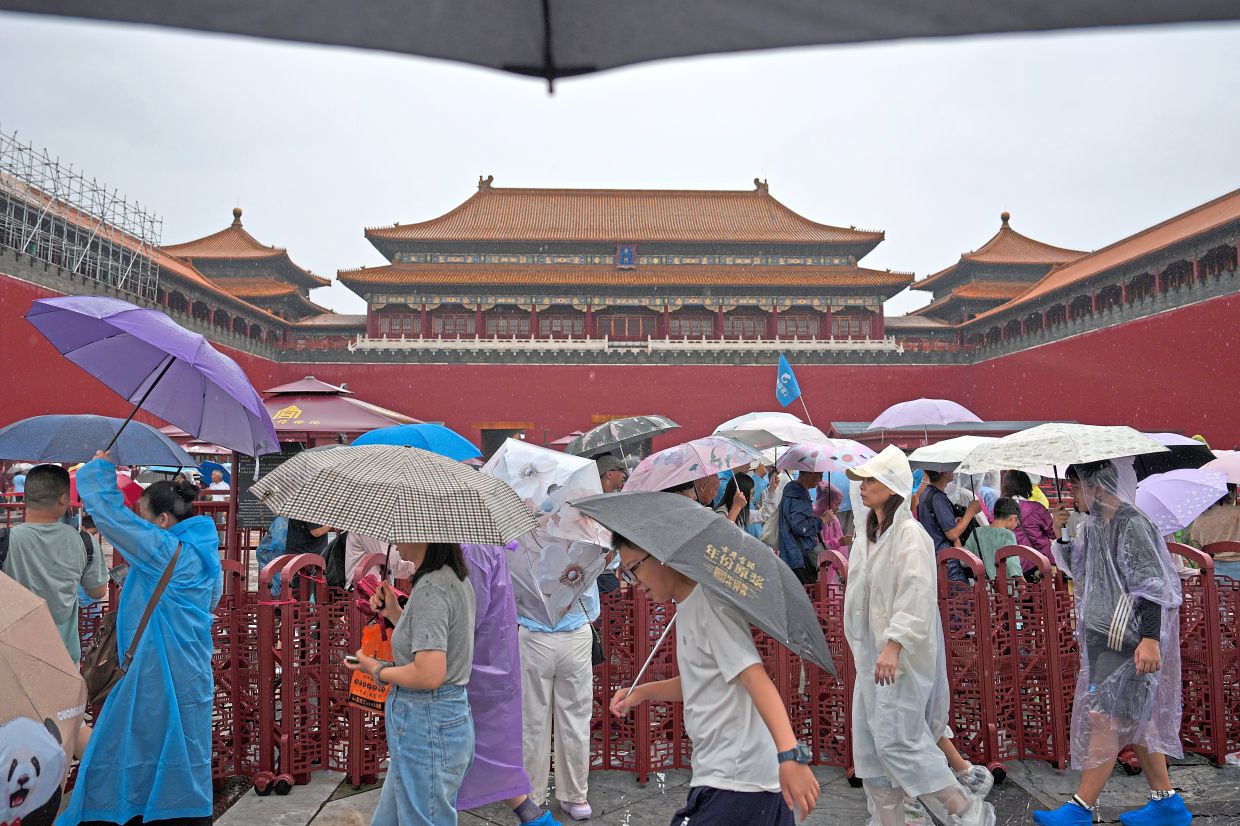
China's concerted push to reinvigorate its tourism sector has finally achieved critical mass, with international visitor numbers and spending now exceeding pre-pandemic levels for the first time. The turnaround marks a significant shift in the region's tourism hierarchy, as the world's second-largest economy reclaims its position as a premier destination for travellers worldwide. This recovery has profound implications not only for China's economy but also for neighbouring Southeast Asian nations that depend on tourism revenues, as travellers now have a compelling alternative drawing them northward.
The country welcomed approximately 35 million foreign tourists during 2025, according to official statistics from the National Bureau of Statistics, placing it alongside Thailand and nearly matching Japan and Malaysia in visitor volumes. This achievement represents vindication for Beijing's multiyear effort to reverse the reputational damage inflicted by years of strict pandemic restrictions that had deterred potential visitors. The recovery has been turbocharged by a sophisticated digital marketing campaign that leveraged social media platforms including TikTok and X, channels ironically banned within China itself, demonstrating how authorities have pragmatically adapted their outreach to international audiences.
At the centre of this revival lies a decisive policy shift initiated in 2023 when China introduced visa-free travel arrangements for citizens of 50 nations. While the programme started slowly as pandemic memories and depleted flight routes hampered momentum, recent data reveals an accelerating curve. Visa-free arrivals now constitute over 70 percent of all foreign visitors, up significantly from 50 percent in 2024, with the first half of 2026 alone attracting 18 million people from visa-exempt countries. Leading sources include South Korea, Russia, Malaysia and Thailand, signalling that Asia-Pacific residents are particularly responsive to the streamlined entry requirements.
The renaissance of Chinese tourism carries broader geopolitical undertones. Favourable international perceptions of China reached record highs across multiple countries during 2025, partly reflecting a global recalibration of attitudes following the election of Donald Trump in the United States. Marketing consultancy founder Olivia Plotnick observed that the inbound tourism expansion delivers the soft power benefits Beijing has pursued for years, noting that recent visitors increasingly regard Shanghai as the new centre of Asian cosmopolitanism, supplanting Tokyo in aspirational value. This repositioning of China within global consciousness represents a strategic victory for Beijing's influence operations.
Social media trends have amplified the appeal substantially. The viral phenomenon of "Chinamaxxing"—where Western citizens emulate Chinese lifestyle habits such as drinking hot water and adopting wellness routines—has accelerated cultural interest across demographics. Travellers such as Claire Thum, a 28-year-old Singaporean, explicitly credited Instagram content featuring China's architectural and natural wonders with inspiring her initial visit. What began as curiosity about iconic sites like the terracotta warriors evolved into exploration of contemporary urban attractions including viral perfumeries, shopping districts and entertainment venues.
Government investment in tourism infrastructure and promotion has been substantial despite broader fiscal constraints. Beijing allocated an additional CNY2.64 million (RM1.26 million) in 2026 specifically for managing increased tourist flows and launching digital marketing initiatives. Shanghai committed at least CNY1.6 million toward promotional campaigns on international hotel booking platforms Expedia and Booking.com. These expenditures underscore how seriously municipal authorities treat tourism recovery, viewing it as essential for stimulating consumer spending amid sluggish domestic demand and a troubled real estate sector.
Municipal officials have demonstrated remarkable entrepreneurialism in capitalising on social media influence. Officials in Chongqing, for instance, have established accounts on X and TikTok to bypass the Great Firewall and reach foreign audiences directly. The city's deputy director general of tourism, Zhu Mao, explicitly stated his determination to render Chongqing "Internet famous" through influencer partnerships and celebrity endorsements such as basketball star Stephen Curry. This represents a significant departure from traditional tourism promotion, acknowledging that foreign travellers increasingly discover destinations through digital channels rather than conventional advertising.
The tourism recovery has catalysed broader consumer spending patterns that benefit retail and hospitality sectors. Miniso's flagship Shanghai store attracts international tourists representing up to 70 percent of daytime foot traffic, driven by collaborative product lines featuring popular characters from Chiikawa, Sanrio, Harry Potter and Disney franchises. Chinese brands including beauty companies Judydoll and Joocyee have leveraged social media exposure from international visitors to expand dramatically overseas, with Judydoll achieving over tenfold growth within two years, particularly in Vietnam and Japan markets. This momentum has extended to Chinese airlines, which have captured increased passenger volumes as geopolitical disruptions in the Middle East redirect transit traffic through Chinese hubs rather than Gulf airports.
However, structural limitations constrain China's capacity to maximise tourism revenues. Per-capita international tourist spending in China stands at approximately US$2,240 (RM9,163), roughly 40 percent of comparable economies and substantially below the United States. International tourism contributed less than 0.5 percent to China's national GDP in 2025, dramatically lower than mature tourism economies such as Spain and Thailand where the sector comprises approximately 8 percent of economic output. These disparities indicate significant room for expansion if China can address infrastructure and accessibility challenges.
Practical barriers remain substantial obstacles to enhancing visitor experiences. China's cashless payment systems require tourists to possess local bank accounts, digital wallets or local mobile numbers, creating friction for spontaneous purchases and transactions. The absence of access to global applications including Google, Instagram and WhatsApp—available only through VPNs, which technically violate Chinese regulations—complicates navigation and communication for international visitors. Language support gaps further compound these difficulties, particularly outside major metropolitan centres.
Entrepreneurial responses are emerging to address these friction points. Companies including Kora, an artificial intelligence-powered tourist assistant, have developed chatbots and applications simplifying ride-hailing reservations, restaurant bookings and cultural information access. Since launching in early 2026, Kora has served tens of thousands of visitors, indicating substantial demand for digital intermediaries that bridge the gap between international expectations and Chinese infrastructure realities. Founder Bobo Rok emphasised that enabling tourists to experience authentic local life rather than curated attractions encourages deeper cultural engagement and more favourable impressions.
For Malaysia and other Southeast Asian nations, China's tourism recovery presents both competitive opportunity and collaborative potential. The influx of visitors to Chinese destinations may generate substitution effects, diverting some traveller spending from regional competitors. Simultaneously, improved flight connectivity and airline competition driven by Chinese carriers could facilitate more efficient regional travel circuits incorporating multiple destinations. Travel patterns already show sophistication, with visitors like French student Virgile Kebaili combining city exploration across multiple provinces rather than limiting visits to single locations. Such multi-destination journeys suggest opportunities for regional tourism partnerships that bundle Chinese attractions with Southeast Asian experiences.
The trajectory of China's tourism recovery demonstrates how strategic policy alignment with digital transformation can rapidly reshape international perceptions and travel behaviour. While structural challenges regarding spending intensity and sectoral GDP contribution persist, the momentum is undeniable. As Chinese cities compete intensely to capitalise on the tourism influx through social media innovation and visitor experience enhancement, regional neighbours must develop sophisticated strategies to benefit from increased tourist traffic flows while protecting their own market shares within the fiercely competitive Asian tourism ecosystem.

