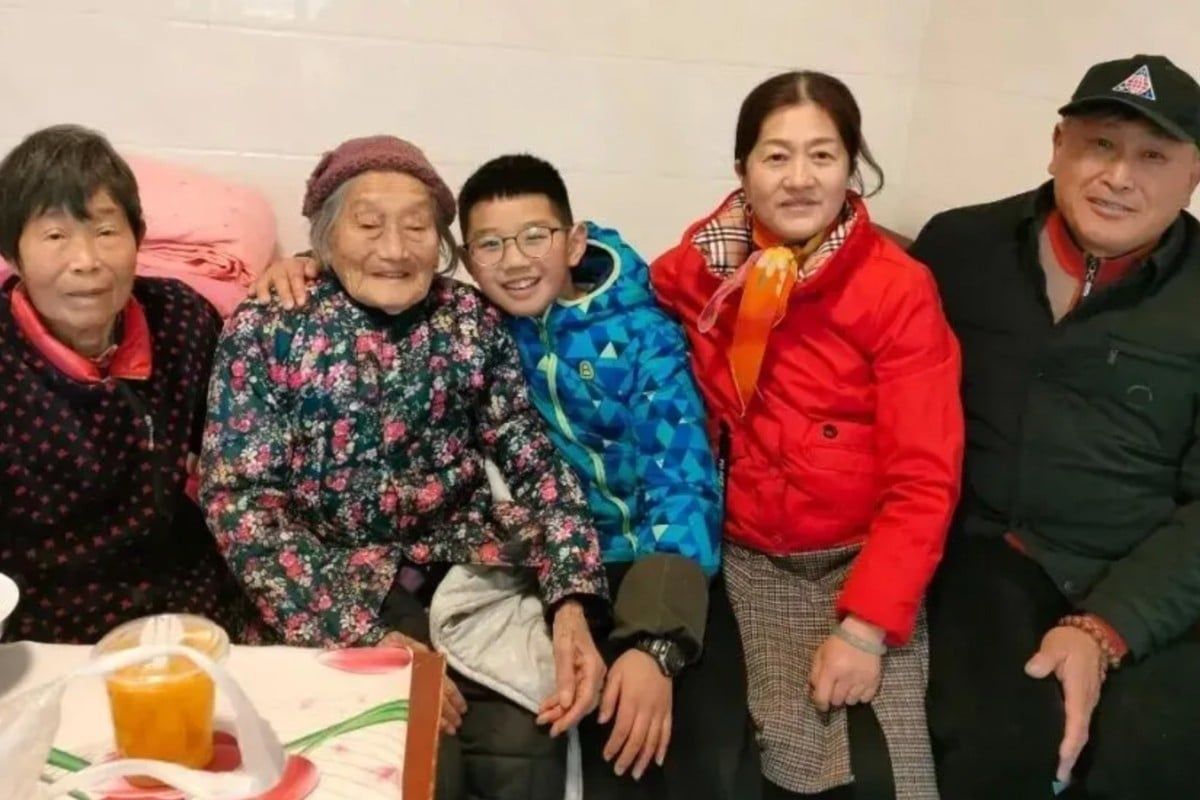
Wang Gaiying has become an unlikely sensation on Chinese social media, not through entertainment or controversy, but through the simple testimony of her 111 years. Living in Rugao, a county in Jiangsu province renowned across China as a "longevity capital," the grandmother has articulated a philosophy of ageing that stands in stark contrast to the complicated wellness industry dominating modern discourse. Her secret, she insists, lies not in expensive supplements or exotic regimens but in the mundane rhythms of housework, emotional discipline, and deliberate acts of compassion woven into each day.
Rugao itself holds particular significance in understanding Wang's longevity. The region has become something of a demographic anomaly within China, boasting 672 centenarians as of February according to local media reports—a concentration that has attracted scientific scrutiny. Researchers from the Chinese Academy of Sciences' Institute of Soil Science in Nanjing have identified a compelling environmental factor: the mineral-rich composition of Rugao's soil produces crops abundant in trace elements that support human health. This geological advantage has likely created generational exposure to nutrient-dense foods, establishing a foundation upon which individual lifestyle choices can compound. For Malaysian readers accustomed to debates about traditional versus modern approaches to health, Rugao's example suggests that sometimes the most significant wellness advantages emerge from where we live rather than what we purchase.
Wang's household structure itself reflects values increasingly unfamiliar in contemporary Asia. She resides in a five-generation home, anchoring a family unit that spans more than a century of births and relationships. This multigenerational arrangement provides both practical support and constant social engagement—factors increasingly recognized by gerontologists as critical to cognitive and emotional wellbeing. Unlike the isolation many elderly experience in urbanized societies, Wang remains embedded within daily family life, her presence acknowledged and her participation valued. For Southeast Asian societies grappling with changing family structures and the challenges of caring for ageing populations, Wang's context offers a reminder of the health dividends that extended family systems provide almost automatically.
Yet what truly distinguishes Wang's approach is her reframing of housework as legitimate exercise rather than mere obligation. Even into her 100s, she was actively harvesting peanuts and watermelons in the fields, maintaining connection to productive labour. Now, in her current phase of life, she continues with lighter domestic tasks—wiping tables, folding clothes—not because family demands it, but because she has internalized the understanding that movement itself is medicine. When family members suggest rest, Wang explains that housework maintains limb mobility and circulatory function. This perspective transforms what many regard as burden into something closer to purpose, a daily practice that keeps body and mind engaged without requiring gym memberships or specialized equipment. Her philosophy has particular resonance in the Malaysian context, where many families still maintain traditional patterns of household work and might benefit from recognizing these activities as having legitimate health value.
Diet constitutes another pillar of Wang's longevity strategy, though her approach emphasizes balance and moderation rather than restriction or obsession. Her family deliberately varies her meals, rotating between dumplings, steamed buns, and other staples to prevent monotony and ensure nutritional diversity. Among her preferred foods is fish, which she values for its tenderness and digestibility—a preference that aligns with contemporary nutritional science regarding protein and cardiovascular health. Rather than following trending diets or eliminating entire food categories, Wang practices conscious moderation, actively resisting the impulse to overeat. This measured approach stands in contrast to both extreme indulgence and the punitive dietary regimens that have become fashionable among certain wellness circles. Her philosophy suggests that longevity stems not from deprivation but from thoughtful calibration of intake.
A notable adjustment in Wang's habits reflects evolving family wisdom regarding risk management. She formerly enjoyed rice soaked in baijiu, the traditional Chinese liquor, but her family discontinued this practice approximately five years ago, concerned about potential intoxication and the heightened risk of falls that alcohol consumption might precipitate in someone of her age. This modification demonstrates adaptive thinking rather than rigid adherence to tradition—a willingness to prioritize safety without abandoning connection to cultural practices entirely. For readers across Southeast Asia where traditional beverages and practices hold cultural significance, this example suggests ways families can honour traditions while making pragmatic adjustments based on changing health circumstances.
Beyond physical practices, Wang attributes considerable weight to psychological and emotional patterns. She maintains what amounts to an ethical micro-practice: performing one small good deed daily, whether offering a compliment to a family member or sending a greeting to an elderly friend. This disciplined kindness appears inextricable from her overall wellbeing, suggesting that intentional positive action creates psychological benefits alongside its social impact. Her approach to emotional regulation also merits attention. Known for maintaining emotional equanimity, Wang has developed a personal practice of refusing to carry frustration into sleep. She describes how sleeping resolves her perspective, allowing her to recognize that many perceived problems were not worth the emotional investment they initially seemed to demand. This practice—essentially a form of emotional compartmentalization—acknowledges that our capacity to process and metabolize psychological stress directly influences physical health.
Wang's sleep regimen reflects consistent discipline: she maintains a nightly sleep from 7pm until 7am, supplemented by one or two daytime naps. This structured approach to rest totals approximately nine to ten hours of sleep daily, significantly exceeding contemporary Western recommendations yet falling within ranges that research increasingly suggests may support cognitive preservation and emotional resilience, particularly in older populations. The regularity of her schedule—sleeping and waking at consistent times—likely contributes to stable circadian rhythms, the internal biological patterns that influence everything from hormone production to immune function. In societies like Malaysia where work pressure and social obligations often compress sleep time, Wang's unapologetic prioritization of rest offers implicit critique of cultural patterns that valorize constant activity.
The attention Wang has received through social media interaction, including a visit from influencer Yaoqing Ge last December, reflects broader hunger across digital networks for authentic narratives about ageing. Rather than pharmaceutical solutions or technological interventions, Wang's testimony emphasizes practices accessible to nearly everyone: movement through purposeful activity, emotional discipline, modest diet, intentional kindness, and adequate rest. Online responses to her story have ranged from personal aspiration—others hoping their own parents might achieve similar longevity—to more analytical observations that Rugao residents' exceptional lifespans likely result from convergence of favourable genetics, environmental factors, lifestyle practices, and cultural patterns that remain difficult to fully disentangle.
For Malaysian audiences, Wang's example carries particular relevance as the region confronts rapid ageing of its population. She demonstrates that remarkable longevity need not depend on expensive interventions or complex protocols. Instead, the components she emphasizes—staying physically active through daily work, maintaining social connection within family networks, eating varied but modest meals, managing emotions constructively, and prioritizing sleep—remain accessible regardless of income level or technology access. Her testimony suggests that some of the most significant determinants of healthy ageing may already exist within the cultural practices and family structures that persist across Southeast Asia, requiring less innovation than recognition and intentional preservation.
Yet Wang's particular context in Rugao—a region recognized for extraordinary longevity and studied by scientific institutions—reminds us that individual practices occur within environmental and genetic contexts that vary substantially. Her success reflects not only personal discipline but also fortunate circumstances: access to mineral-rich soil producing nutrient-dense foods, stable family structures that continue to provide multigenerational support, and community norms that value elder participation rather than marginalizing older members. Understanding Wang's longevity thus requires holding together both personal agency and environmental advantage, recognizing that healthy ageing emerges from interaction between what individuals choose to do and the circumstances into which they are born. As Malaysia develops policies and practices around ageing populations, attending to both individual capacity for disciplined living and structural support systems becomes essential.

