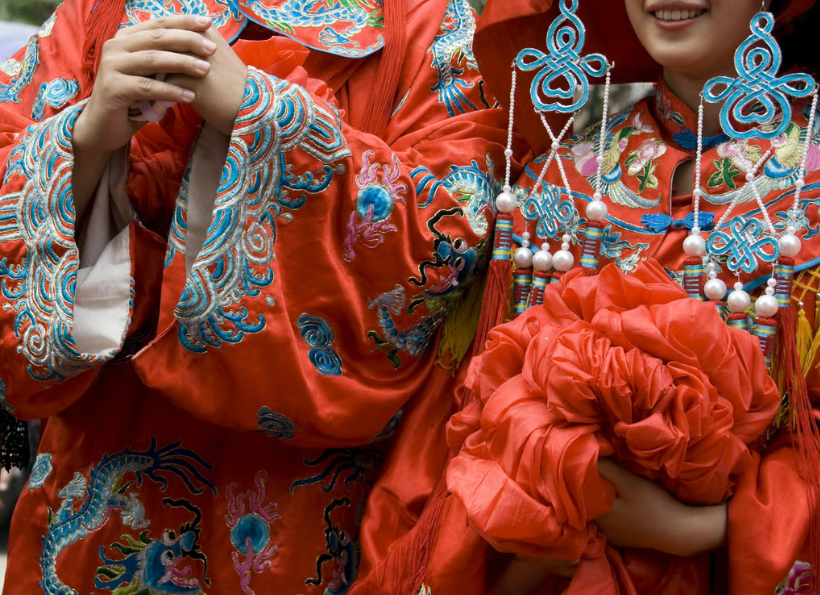
A court in Ruyang county, Henan province, has handed down a judgment with significant implications for how wedding traditions are conducted across China. The verdict, announced publicly in early July, centres on the case of Zhang, a bridesmaid who sustained severe injuries during a wedding celebration that spiralled dangerously out of control. The court's decision to order the newlyweds and nine others to pay a combined 230,000 yuan—approximately US$34,000—underscores a growing legal reckoning with practices that blur the line between festive custom and dangerous misconduct.
The incident that led to this judgment occurred on October 4, 2023, when Zhang attended her friend Li's wedding as a bridesmaid. What unfolded in the wedding room that evening demonstrates how traditional customs, when taken to extremes, can result in lasting harm. Zhang initially hid inside a cabinet for reasons not disclosed in court records, but was forcibly removed by Wang Moubing, one of the groomsmen. Rather than allowing her to retreat, Wang then orchestrated what began as playful horseplay but quickly escalated into a life-altering event: with approximately ten men surrounding her, including most of the groom's attendants, Zhang was hoisted onto a bedsheet held at its four corners.
The first elevation and catch proceeded without incident, but catastrophe struck during the second attempt. When the men failed to maintain their grip and catch her properly, Zhang plummeted to the floor below. The impact was devastating. A warning from the groom's aunt, who briefly passed through the room and cautioned them against letting the situation spiral out of hand, had been disregarded. One man present, surnamed Hu, demonstrated the restraint that others lacked by refusing to participate in the hazing. After witnessing the fall, Hu carried the injured Zhang downstairs before medical personnel arrived at the scene.
At the hospital, Zhang's diagnosis confirmed the severity of the fall: a lumbar vertebral fracture requiring eighteen days of intensive treatment. The injury's long-term consequences became evident months later when a forensic judicial institution assessed her condition and assigned her a ninth-grade disability rating—classified as serious under China's disability framework. This assessment fundamentally altered Zhang's life trajectory and formed the foundation of her legal claim. She subsequently filed suit against the newlyweds and the nine men involved in the hazing, seeking compensation of 270,000 yuan, equivalent to approximately US$40,000.
The court's liability determination reveals a nuanced approach to assigning responsibility in cases where multiple parties contribute to an injury. The newlyweds themselves bore direct responsibility as wedding organisers who, the court determined, had knowledge of the hazing activities but failed to intervene in time to prevent harm. This principle holds event hosts accountable not merely for their direct actions but for their passive tolerance of dangerous conduct occurring under their roof. Wang Moubing, who initiated the bridesmaid's removal from the cabinet and proposed the dangerous bedsheet toss, was identified as bearing particularly significant culpability. The eight other men involved faced joint and several liability under a legal doctrine that placed the burden on them to prove they did not actively participate—a standard they could not meet.
The financial settlement the court imposed distributed responsibility proportionally: the newlyweds were ordered to pay 40 percent of the total, amounting to 90,000 yuan; Wang was assigned approximately 50,000 yuan; and the remaining eight participants were collectively liable for 90,000 yuan. This allocation reflects the court's assessment of each party's degree of fault, though the final award of 230,000 yuan still fell short of Zhang's original demand for 270,000 yuan, suggesting the court considered some mitigation of the liability.
The practice at the heart of this case, known as hun nao in Mandarin Chinese, carries a history stretching back millennia. Originally conceived as a mechanism to foster celebratory atmospheres at weddings and ward off malevolent spirits according to traditional belief, hun nao has become embedded in regional wedding customs across China. However, the ritual's evolutionary path in contemporary society has become increasingly problematic. While many regions continue observing it, the boundary between spirited teasing and humiliating or violent conduct has become dangerously blurred in numerous instances, drawing sustained criticism from advocates for personal safety and dignity.
The victims of hun nao have traditionally been newlywed couples and their wedding attendants, particularly bridesmaids and groomsmen. Yet the consequences have escalated in severity and frequency over recent years. The Ruyang court's public announcement of its verdict in early July appears deliberate—a judicial effort to raise societal awareness regarding the hazards inherent in unconstrained wedding hazing. This institutional intervention suggests recognition that media coverage and informal social pressure have proven insufficient to curb dangerous practices.
Zhang's case is not an isolated incident within a broader pattern of hun nao-related injuries that regularly surface in Chinese media. In 2018, a bridegroom in Guizhou province suffered multiple traumatic injuries after becoming involved in a hazing ritual that culminated in him being struck by a vehicle on an expressway as he fled the proceedings. More recently this year, another Guizhou bridegroom fractured his leg attempting to escape wedding hazing and subsequently pursued legal action, winning a court order for 50,000 yuan in compensation from those responsible. These recurring incidents suggest a systemic problem that individual cases and settlements alone have not resolved.
For readers across Southeast Asia, particularly in Malaysia and other nations with diverse ethnic and religious communities, the Ruyang case offers instructive lessons about regulating cultural practices that carry inherent risks. While hun nao remains distinctly Chinese in origin and practice, many cultures worldwide maintain traditions involving ritualistic testing or hazing of wedding participants. The challenge confronting societies and legal systems involves distinguishing between consensual, reasonably safe cultural expression and conduct that crosses into dangerous or abusive territory. Courts increasingly shoulder the burden of defining these boundaries, as illustrated by the Henan judgment.
The broader implications of this verdict extend beyond the specific parties involved. By holding event organisers responsible for failing to prevent dangerous hazing, the court establishes a precedent that incentivizes active intervention during wedding celebrations. Newlyweds and their families now face potential legal and financial consequences if they remain passive witnesses to escalating pranks, effectively conscripting them into the role of safety monitors. Simultaneously, by assigning liability to individual participants who cannot prove their non-involvement, the court creates pressure for transparent, documented consent to any activities involving physical risk.
Looking forward, the Ruyang judgment may accelerate discussions within China regarding the modernisation of hun nao or its replacement with alternative wedding customs that capture celebratory elements without the inherent dangers. Some regions have already begun experimenting with modified versions involving less physical risk, such as games and challenges that maintain the spirit of playful tradition while eliminating opportunities for serious injury. Whether courts will continue expanding liability frameworks to discourage dangerous practices, or whether cultural adaptation will occur organically within communities, remains to be seen. What is clear is that the age of legal tolerance for hazing that results in disability-level injuries has ended in Chinese jurisprudence.

