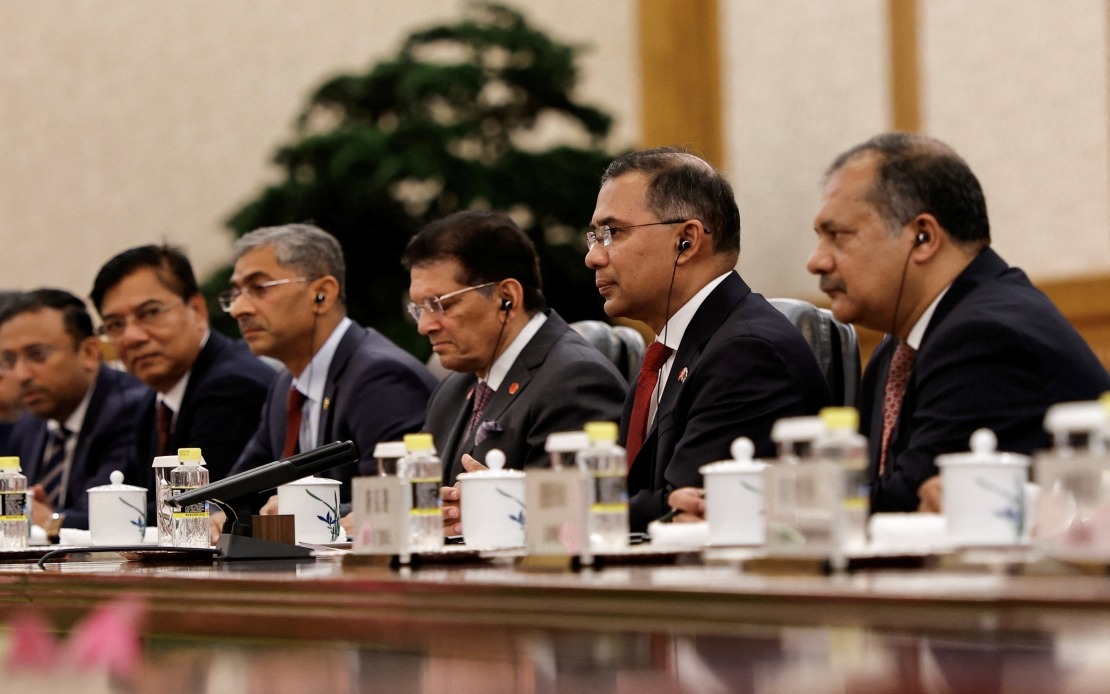
Bangladesh is positioning itself as an increasingly attractive destination for Chinese capital, with twelve major companies putting forward investment proposals totalling US$9.2 billion following Prime Minister Tarique Rahman's recent visit to China. The proposals, announced through Bangladesh's state media, reflect Beijing's strategic interest in deepening economic engagement across South Asia and underscore the country's role as a crucial partner in China's regional infrastructure and supply-chain ambitions.
The scale and diversity of these proposed ventures reveal a comprehensive approach to economic collaboration. Energy development, port modernisation, manufacturing, and waste management feature prominently among the planned projects, suggesting China is pursuing a coordinated investment strategy rather than isolated commercial ventures. For Bangladesh, these initiatives promise to address longstanding infrastructure gaps while simultaneously generating substantial employment opportunities across multiple sectors—a critical consideration for a nation managing significant demographic pressures.
A cornerstone of the bilateral economic framework is the modernisation and expansion of Mongla Port, Bangladesh's second-largest seaport located approximately 230 kilometres from Dhaka. China Civil Engineering Construction Corporation has committed US$650 million specifically for developing an economic zone around the port, complete with warehousing and logistics infrastructure. This investment underscores China's strategic focus on maritime connectivity within the Bay of Bengal, offering Bangladesh improved access to international trade networks while simultaneously positioning Chinese enterprises for enhanced regional commercial reach.
The transport corridor linking Dhaka and Chattogram represents another transformative undertaking. Sichuan Road and Bridge Group's US$4.5 billion proposal to upgrade this critical highway through a public-private partnership would address a significant bottleneck in Bangladesh's domestic logistics network. The corridor's importance cannot be overstated—it connects the capital to the country's primary seaport and represents vital infrastructure for sustaining industrial growth and urban integration. Enhanced connectivity along this route would facilitate substantially more efficient movement of goods and people, with multiplier effects across the broader economy.
Environmental remediation and renewable energy initiatives form a substantial component of the investment package, reflecting contemporary global priorities around sustainability. Shanghai SUS Environment Company's US$890 million waste-to-energy project addresses a mounting challenge in rapidly urbanising Bangladesh, converting municipal and industrial waste into electricity while simultaneously reducing environmental contamination. Complementing this, Huaxin Textile Industry's US$190 million commitment to establish a 200 megawatt solar power installation in the Payra economic zone demonstrates commitment to clean energy transition, particularly for energy-intensive manufacturing operations.
Electronics recycling and advanced manufacturing capabilities feature prominently in the proposed ventures. Zhongxin Environmental Protection Group's US$1.65 billion investment in electronic waste processing at the Payra Port Industrial Zone addresses both environmental necessity and resource scarcity, enabling Bangladesh to manage growing e-waste streams while recovering valuable materials. Similarly, Shenzhen Kaifa Technology's US$250 million manufacturing facility for smart metres supports Bangladesh's ongoing electrical infrastructure modernisation, a prerequisite for expanded industrial capacity and improved urban service delivery.
Cold-chain logistics infrastructure, proposed by SF Express at US$180 million, reflects an increasingly sophisticated understanding of Bangladesh's development requirements. Modern cold-chain facilities enable the country to enhance agricultural value-addition, support pharmaceutical distribution, and facilitate food security improvements—sectors with substantial employment and developmental implications for both urban and rural populations. Energy exploration ventures, including China Future Energy Group's US$250 million gas-field development programme, address Bangladesh's persistent energy security challenges and could reduce the country's reliance on imported fuels.
The bilateral relationship extends beyond discrete commercial transactions to encompass structural economic collaboration. Following Prime Minister Tarique Rahman's June 22-26 visit to China, both nations issued a joint communiqué committing to strengthen cooperation across trade, e-commerce, industrial and supply chains, and investment frameworks. They specifically pledged to upgrade Bangladesh's export capacity and jointly support the multilateral trading system—language suggesting coordination on broader regional and global economic governance issues. Bangladesh's Commerce Minister Khandakar Abdul Muktadir publicly characterised these investments as instrumental in redressing the country's persistent trade deficit with China, a concern long voiced by Bangladeshi policymakers seeking more balanced commercial relationships.
The proposed creation of a Chinese industrial park in Chattogram represents a more integrated approach to manufacturing ecosystems, potentially facilitating technology transfer and skills development while embedding Chinese enterprises within Bangladesh's industrial structure. Such parks typically generate agglomeration effects, attracting complementary suppliers and service providers and creating competitive advantages for resident firms. For Bangladesh, the presence of a dedicated Chinese industrial zone could accelerate industrialisation, though policymakers must carefully manage terms of engagement to ensure knowledge transfer and local capacity development occur alongside production activities.
These investment proposals carry significant implications for Malaysia and broader Southeast Asia. Bangladesh's successful attraction of Chinese capital may intensify competitive dynamics for manufacturing investment and supply-chain positioning across the region. As Bangladesh develops enhanced infrastructure, manufacturing capabilities, and logistics networks with Chinese support, it could emerge as an alternative to existing Southeast Asian investment destinations, particularly for labour-intensive sectors and export-oriented manufacturing. Malaysian policymakers and businesses should monitor Bangladesh's development trajectory, as structural improvements in the country's competitiveness could reshape regional investment patterns and trade dynamics.
The timing and scale of these proposals also reflect China's strategic imperatives in a shifting geopolitical environment. As trade tensions persist with developed nations and Beijing seeks to diversify supply chains, South Asian markets offer substantial population bases, labour advantages, and positioning within Indian Ocean-centred trade networks. For Bangladesh, careful management of these relationships requires balancing the genuine developmental benefits of Chinese investment against potential concerns regarding debt sustainability, technology dependence, and strategic autonomy—considerations increasingly relevant across Southeast Asia as well.
Success in implementing these proposals will depend on Bangladesh's institutional capacity, regulatory clarity, and infrastructure readiness. Project execution challenges have historically complicated major investments in South Asia, and Bangladesh will need to ensure capable project management, transparent procurement processes, and effective coordination among multiple stakeholders. The employment opportunities promised by these ventures—potentially tens of thousands of new jobs—remain contingent on successful project completion and operational efficiency, making implementation performance crucial for realising the proclaimed developmental benefits.

