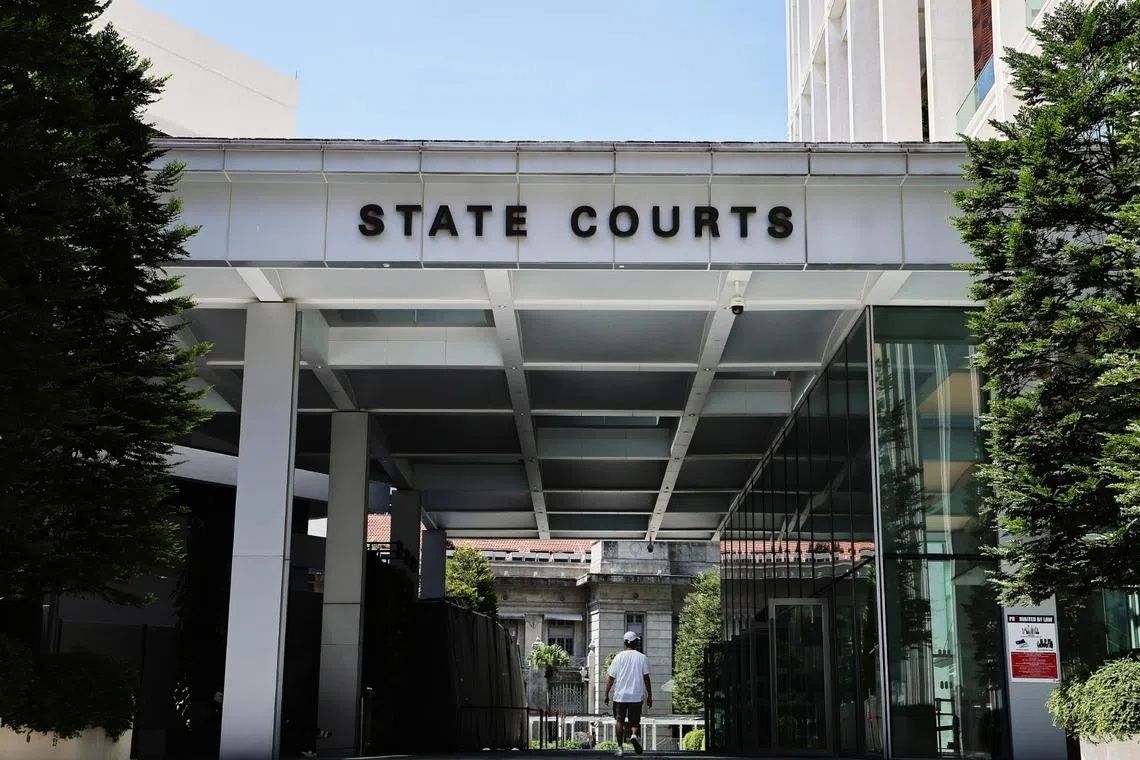
A Chinese national has pleaded guilty to orchestrating a calculated crime spree during his inaugural visit to Singapore, targeting wealthy neighbourhoods and making off with jewellery and accessories valued at S$105,000 within days of arriving in the city-state. Huang Xiaozong, 41, admitted to two counts of housebreaking in court on Friday, July 10, with sentencing now set for August 14. The case reveals how a first-time visitor conducted preliminary reconnaissance to identify affluent areas and properties likely to contain high-value items, then executed burglaries with methodical precision across Sentosa and Serangoon Gardens.
Huang arrived in Singapore on December 5, 2025, and checked into accommodation in Little India, already harbouring intentions to commit theft. According to court documents, he spent his initial days in the country researching which districts housed Singapore's wealthiest residents and contained properties that might yield substantial stolen goods. Rather than touring tourist attractions or exploring the city as a typical visitor might, Huang instead scoured these affluent enclaves searching for homes or hotel units that appeared unoccupied, demonstrating a deliberate criminal plan developed before or immediately upon arrival.
On December 6, just a day after settling into his hotel, Huang ventured to Sentosa and conducted what amounted to a reconnaissance mission through the island's upscale resort areas. He discovered a suite at a luxury hotel where the occupant, a resident who used the property intermittently, happened to be overseas at that precise moment. Observing no signs of habitation, Huang gained entry by forcing open the sliding door on the rear balcony, then systematically searched the unit for valuables. His haul from this first burglary proved substantial: a Chanel watch worth S$30,000, five rings valued at S$25,000 collectively, and a gold necklace priced at S$3,000. He transported these items back to his hotel in Little India, where they remained undiscovered for the time being.
The theft went undetected for two days until a housekeeper entered the suite and noticed Huang's footprints alongside missing items. By that time, however, Huang had already moved on to his second target. On December 7, he travelled to Serangoon Gardens, one of Singapore's most exclusive residential enclaves, arriving between 7pm and 8pm when darkness provided cover and residents were typically indoors. He identified a house with no lights illuminated and no apparent occupants, then climbed over the gate to gain access to the property. Inside, he located and stole jewellery worth over S$47,000, including multiple rings, gold necklaces, a diamond necklace, diamond earrings, and a pair of wedding rings.
With this cache secured, Huang continued his burglary spree on the same evening, spotting yet another apparently empty Serangoon Gardens residence. He scaled the gate to this second property, but his luck ran out when a domestic helper spotted him on the grounds and questioned his presence. Faced with this unexpected confrontation, Huang fled immediately, carrying the stolen jewellery back to his hotel. The homeowner of the second property returned that evening and contacted police after discovering evidence of the intrusion, initiating an investigation that would quickly lead to Huang's apprehension.
Singapore's law enforcement traced Huang to his Little India hotel on December 8, 2025, resulting in his arrest just three days after his first burglary. Police recovered the stolen items, which when combined totalled S$105,000. The speed with which authorities located and detained him demonstrated the effectiveness of Singapore's security infrastructure and investigative capabilities, despite Huang's apparent belief that the wealthy city-state presented easy criminal opportunities.
The case underscores vulnerabilities that continue to affect Singapore's affluent residential areas and luxury properties despite the nation's reputation for low crime rates. Wealthy households and hotel operators, while generally vigilant, may not sufficiently harden security measures such as ground-floor balcony doors, gate locks, or perimeter defences against determined burglars willing to climb or force entry. For Malaysian readers accustomed to gated communities and security concerns, Huang's methods—scaling gates, forcing sliding doors, targeting apparently unoccupied properties—represent tactics familiar from regional crime trends. The incident also illustrates how Singapore's cosmopolitan nature attracts individuals from across the region and beyond, not all with honourable intentions.
Huang's actions and apparent motivation provide insight into the criminal calculus of transnational property crime. He arrived with a predetermined plan, conducted research into target areas, and executed his crimes with relative organisation before being apprehended. His stated reasoning—that Singapore appeared prosperous and burglary offered quick earnings—reflects how some visitors may view wealthy enclaves as targets rather than communities deserving respect. This mindset places responsibility on Singapore's hospitality and tourism sectors to balance welcoming international visitors with robust security protocols that protect residents and guests.
The sentencing on August 14 will determine the consequences Huang faces under Singapore's criminal justice system, where housebreaking offences carry substantial penalties. Depending on the court's assessment of his culpability and circumstances, he could face imprisonment terms that extend significantly. The case will likely be monitored closely by Singapore's security community as an instructive example of how first-time visitors with criminal intent may target properties, and what investigative methods prove effective in rapid apprehension. For the Malaysian region, the incident serves as a reminder that organised theft affecting high-value properties transcends borders and requires cooperation between neighbouring jurisdictions to identify and apprehend perpetrators who may flee across regional boundaries.

