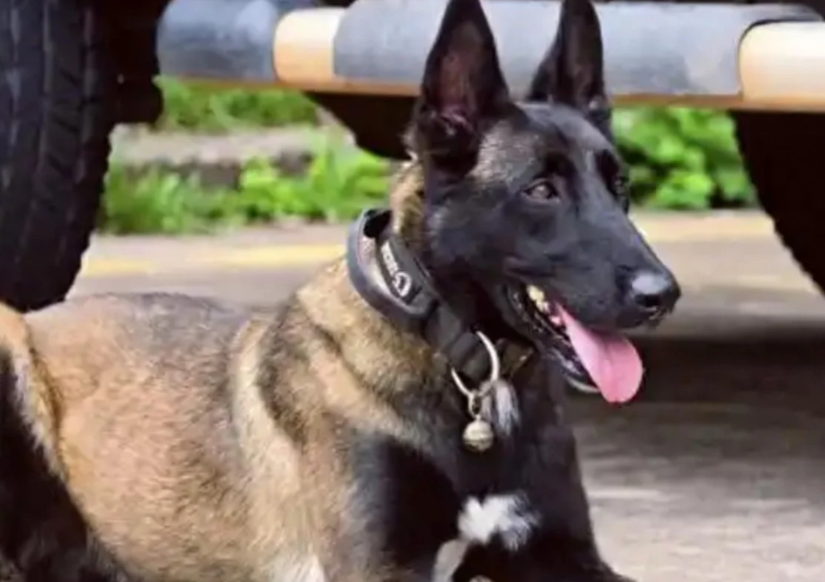
An extraordinary tale of canine loyalty has captured the imagination of millions across China, shedding light on the deep bonds forged between working dogs and their handlers in law enforcement. The story centres on Bulu, a four-year-old German shepherd trained in narcotics detection, and his handler Awei from Chuxiong in Yunnan province, whose separation and eventual reunion has resonated powerfully with audiences on mainland social media platforms.
The dramatic circumstances leading to their separation unfolded in November when the pair were assigned to conduct an operation targeting drug suspects at an abandoned building. During the mission, Bulu detected movement and pursued the fleeing suspects with Awei following closely behind. In the darkness and debris of a cramped corridor, the officer lost his footing and fell from a second-storey height, a devastating accident that immediately threatened the partnership these two had built through years of training and deployment. Officers at the scene were captured on camera urging Awei to remain conscious, with one heard saying "Hold on. We still have battles to fight together," a poignant reminder of the camaraderie that extends beyond human bonds in police operations.
Awei's condition upon discovery was critical. He was found convulsing, coughing up blood, and drifting between consciousness and unconsciousness. Emergency responders transported him to hospital where he fell into a coma lasting five days. Medical staff subsequently determined he had sustained multiple fractures affecting both his head and chest—injuries that demanded extensive recovery time and raised serious questions about whether he would ever return to active duty. During his hospitalisation and the months of rehabilitation that followed, Awei's physical recovery remained uncertain, and the timeline for his return to work appeared indefinite.
While Awei fought to recover in a medical setting, Bulu was placed at a police training base where officers attempted to manage the German shepherd's obvious distress. The dog's response to the separation was visceral and unmistakable. Bulu refused to eat or drink normally, ceased participating in regular training activities, and displayed growing restlessness that concerned handlers. Surveillance recordings documented the dog's desperate search for his missing partner, showing Bulu repeatedly returning to locations where Awei might reappear—the dormitory, the base entrance, and the familiar training routes they had traversed together. On multiple occasions, Bulu rushed toward returning police vehicles in hopes of finding his handler, only to experience the disappointment of discovering Awei was not aboard.
The separation stretched across approximately six months, an eternity in a working dog's service life. During this period, colleagues of Awei continued the drug investigation that had resulted in his injury, ultimately achieving significant operational success. The investigation concluded with the arrest of eleven suspects, the seizure of 4.4 kilos of narcotics, and the recovery of more than 500,000 yuan in illicit funds that authorities had been pursuing. These results represented vindication of the operation's strategic importance, though the human and canine cost of that success weighed heavily.
When Awei finally cleared medical restrictions and received clearance to return to duty, authorities orchestrated an emotional reunion with Bulu. The moment proved as powerful as anticipated. Bulu immediately recognised his handler and erupted into excited barking before sprinting toward him. Awei, moved by the reunion, dropped his luggage and knelt down to embrace the German shepherd, a gesture captured in footage that quickly ignited massive engagement across Chinese social media platforms. The video accumulated more than 10 million views and attracted over 580,000 likes, becoming a phenomenon that transcended the typical police department internal communications.
The viral success of the reunion reflects something fundamental in human and animal relationships. Online commenters responded with profound emotional reactions, with one observation capturing the broader significance: "What Bulu was waiting for was not just its handler, but a comrade-in-arms. I am deeply moved by the bond between humans and animals." This sentiment underscores how audiences recognise the professional partnership between handler and dog extends beyond simple employment or utility—it represents a genuine companionship forged through shared danger and collaborative work.
The story has prompted broader examination of police dog programmes in China and the demanding nature of their service. According to reporting by CCTV News, the country maintains more than 29,000 active police dogs as of 2024, making canine units integral to law enforcement operations nationwide. However, these animals pay a substantial physical cost for their dedicated service. The typical police dog serves an average of eight years, but intensive deployment in challenging operational environments frequently results in degenerative joint and spinal injuries that can end careers prematurely. These injuries parallel the occupational hazards faced by human officers, though animals cannot voice their suffering in the same manner.
Police dog retirement practices in China vary considerably depending on individual circumstances. Most retired canines remain with their original units and handlers, essentially pensioned within the organisations they served, maintaining their partnership through the dog's remaining years. This arrangement provides continuity and familiarity for animals that have formed deep attachments to particular handlers. Some police dogs eventually become available for public adoption, though the transition to civilian life can prove challenging for animals trained exclusively for law enforcement work. These policy frameworks reflect growing recognition that police dogs merit dignity and care beyond their working years, acknowledging their contributions to public safety.
For Malaysia and Southeast Asia, Bulu's story carries particular resonance as regional police forces increasingly incorporate canine units into drug enforcement, bomb detection, and search-and-rescue operations. The emotional and operational value of handler-dog partnerships demonstrated in Awei and Bulu's case illustrates why proper care, training infrastructure, and retirement provisions deserve serious policy consideration. The narrative also highlights how animal welfare within law enforcement agencies connects to operational effectiveness—a dog distressed by separation from its handler becomes less reliable for detecting drugs or explosives, directly impacting public safety outcomes.
The wider implications extend to how societies value the contributions of working animals. Unlike human officers who can articulate their experiences and advocate for their interests, police dogs depend entirely on their handlers and agencies to ensure fair treatment and appropriate care. Bulu's six-month vigil, documented through surveillance footage and crystallised in a moment of reunion, became a window into the interior emotional lives of animals we often view primarily through a utilitarian lens. This recognition may gradually shift how law enforcement agencies across the region approach recruitment, training, deployment, and retirement of their canine personnel, acknowledging that these animals deserve consideration as sentient beings invested in their work, not merely tools to be used and discarded.

