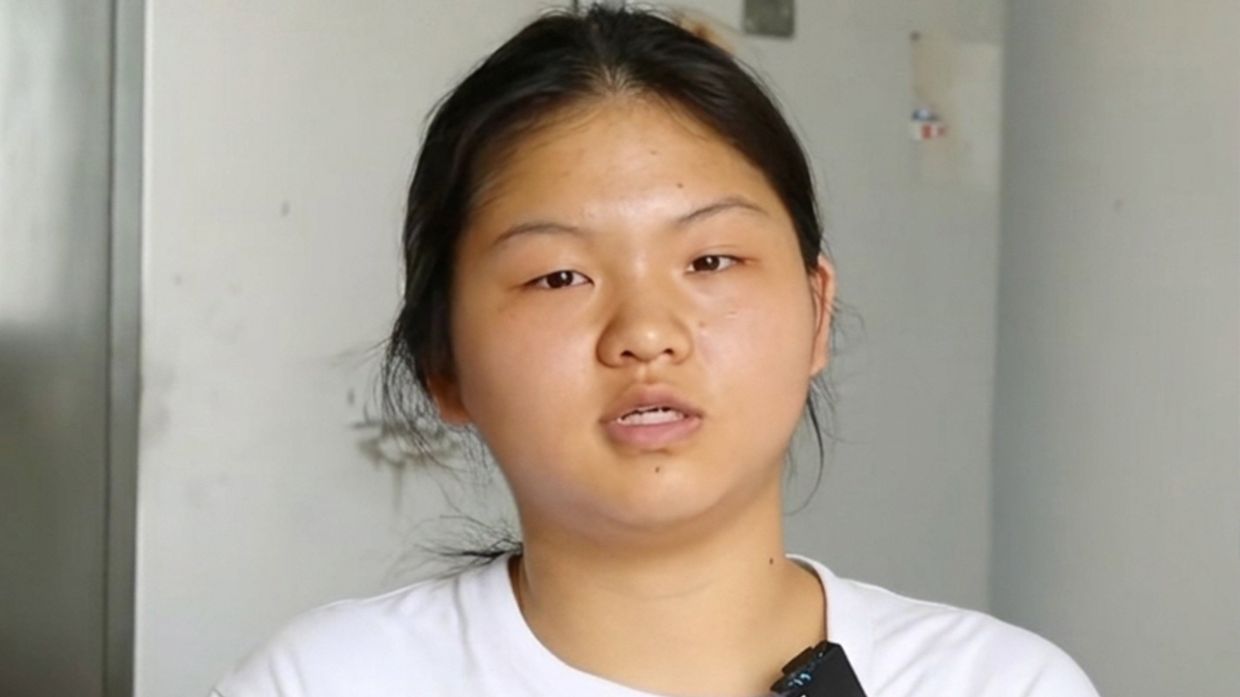
Zeng Zixuan, an 18-year-old student in China, has captured public attention not for academic achievement alone but for a gesture of compassion that defies conventional expectations of someone facing profound personal loss. Having just scored 564 points out of 750 on this year's gaokao—the gruelling national university entrance examination—Zeng has declined mounting donations from strangers after the death of her grandmother, the last family member she had relied upon. Her request that sympathetic donors redirect their generosity towards others in more desperate circumstances has struck a chord across China, prompting reflection on character, resilience, and social responsibility among younger generations.
The tragedy that has defined Zeng's young life began years before this pivotal summer. She was raised almost entirely by her grandmother after her parents separated during her childhood, an experience that set the trajectory for her upbringing. Her mother remarried and departed from her life, while her father found work in Guangdong province, leaving her in the care of her ageing grandmother in their home village. This arrangement might have continued indefinitely had fortune not intervened with devastating consequence. During her senior secondary school years, Zeng's father died in an accident—a loss that severed not only her emotional anchor but also the family's primary source of income. From that moment, she and her grandmother survived on government assistance and educational subsidies provided by her school, a precarious existence that tested both their resilience and their dignity.
Despite these circumstances, Zeng established herself as an exemplary student, consistently achieving top marks in her classes. Yet the psychological toll of such accumulating loss proved difficult to hide. Teachers and school officials noticed a marked change in her demeanour following her father's death; the once-spirited girl became withdrawn and introspective, burdened by grief and responsibility beyond her years. Her teachers recognised the signs of a child struggling beneath an enormous weight, and one supervising educator took particular care to mentor her through the crisis. The school's intervention extended beyond pastoral support; officials arranged for local government representatives specialising in women's welfare to ensure that Zeng and her grandmother received whatever institutional assistance was available to them.
As Zeng navigated her final years of secondary education, her supervising teacher offered counsel that became a driving force in her academic pursuit. The educator emphasised that attending a quality university represented not merely a pathway to economic security but an opportunity to honour the memory of both her father and grandmother. This framing transformed education from a distant aspiration into a moral obligation, a way to transform grief into purpose. Zeng channelled her determination into her studies, working towards the gaokao with a clarity of purpose that many students lack. She carefully selected a university close to her village specifically to maintain regular contact with her grandmother, a decision reflecting both filial devotion and practical concern for her ailing relative.
Her plans for university life were shattered in early July when her grandmother fell seriously ill and subsequently passed away. With this death, Zeng became an orphan at 18, losing not only the person who had raised her but also the emotional centre of her existence. The timing was particularly cruel, coinciding with what should have been a period of optimism and transition. In the wake of this latest catastrophe, news of Zeng's circumstances spread through her village and beyond, prompting an outpouring of public sympathy. Kind-hearted strangers, moved by her story of unrelenting hardship coupled with academic achievement, began offering financial assistance through village government channels.
The donations accumulated rapidly, eventually totalling more than 60,000 yuan—equivalent to approximately US$8,800—a substantial sum in rural China that would easily cover tuition, accommodation, and living expenses for several years of university study. Rather than accept this windfall with resignation or relief, however, Zeng took the striking step of contacting her village office to request that donations cease. In a statement remarkable for its grace and social consciousness, she thanked all those who had contributed, acknowledging their generosity explicitly. Yet she articulated a conviction that her needs, while genuine, paled in comparison to those of others struggling in even more desperate circumstances.
Zeng's words carried weight precisely because they were not merely polite demurrals but reflected genuine philosophical perspective. She noted that earning money is difficult and that many individuals in her community faced challenges more severe than her own. She urged donors to redirect their generosity towards those whose circumstances offered fewer resources and less hope. This appeal transcended conventional narratives of victimhood or gratitude; instead, it suggested a young person possessed of moral clarity and an understanding of collective responsibility. Zeng indicated that the funds already received would adequately cover her essential educational expenses, and that she intended to support herself through part-time employment during her university years.
The village government, recognising both Zeng's needs and her character, identified suitable part-time work that would accommodate a student's schedule while providing income for daily expenses. This arrangement allowed her to maintain her dignity and autonomy—critical psychological elements for someone who has endured such loss—while ensuring she possessed the material foundation necessary for academic success. The approach also reflected local officials' understanding that genuine support sometimes means facilitating self-sufficiency rather than simply providing charity, an insight that speaks to broader questions about social policy and human development in contemporary China.
Zeng's story resonates particularly within the context of China's competitive education system and the premium placed on gaokao performance as a determinant of social mobility. Her achievement in scoring 564 points while managing grief, poverty, and institutional invisibility represents an accomplishment that transcends the numerical score itself. Yet it is her subsequent behaviour—the deliberate rejection of unneeded assistance in favour of others—that has captured imaginations. Online observers have offered commentary ranging from encouragement to philosophical reflection. Some emphasise that while Zeng has faced disadvantage, she exists within a social moment characterised by increasing solidarity and institutional support, a phenomenon she herself seemed to recognise and appreciate.
The broader implications of Zeng's story extend beyond individual inspiration to questions about social safety nets, intergenerational trauma, and the mechanisms through which societies support vulnerable young people. Her experience illustrates how multiple systems—family, education, local government, and community—can combine either to support or compound vulnerability. In her case, despite losing both parents and her grandmother while remaining economically marginalised, Zeng benefited from teacher mentorship, institutional subsidy, government welfare support, and ultimately community generosity. This layered approach to social support, while imperfect and by no means universal across China, enabled her to reach university entrance.
For Malaysian and Southeast Asian readers, Zeng's narrative offers particular resonance given regional patterns of rural-urban migration, extended family dependency, and education as a pathway for upward mobility. Many families across Southeast Asia face similar circumstances where a single relative—often a grandmother—becomes the primary caregiver following parental separation or economic migration. The pressures upon young people in such situations, combined with the high stakes surrounding university entrance in competitive education systems, create psychological and material stresses that frequently go unacknowledged. Zeng's story validates both the reality of such hardship and the possibility of resilience, while her conscious decision to decline further aid challenges assumptions about how vulnerable individuals should relate to assistance.
As Zeng embarks upon her university journey, her story continues to evolve. Her transformation from a grieving, withdrawn adolescent into a young adult possessed of sufficient wisdom to redirect charity towards others represents a trajectory that many will follow with interest. Whether she maintains the level of support available to her, whether she successfully balances part-time work with rigorous academic demands, and whether she ultimately achieves the professional success that would honour her family's memory remain to be determined. What seems certain, however, is that her character and the values she has articulated—compassion, responsibility, resilience—will serve her well regardless of the specific outcomes she encounters.

