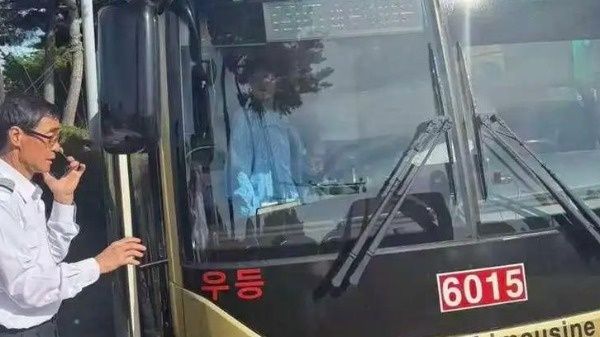
A routine airport transfer in Seoul became an emergency intervention last Saturday when a bus driver suddenly lost consciousness, prompting quick thinking and coordinated action from a group of Chinese tourists aboard. The incident on the No 6015 service travelling from central Seoul to Incheon International Airport might have ended in multiple fatalities had the passengers not responded with such composure and determination during those critical moments on the highway.
The driver's collapse triggered an immediate loss of control, causing the bus to scrape against a roadside guardrail as it veered across its lane. Most of the more than a dozen passengers on board were Chinese visitors, placing them in an unfamiliar environment and facing a language barrier at a moment when clear communication could have been the difference between containment and catastrophe. Sun Qian, a health sector professional from Nanjing in Jiangsu province, was positioned in the second row directly behind the driver and quickly assessed the severity of the situation. Recognising that the bus was becoming increasingly unstable, she moved decisively toward the controls, reaching for the steering wheel to arrest the vehicle's dangerous trajectory across the highway.
Simultaneously, another female passenger sprang into action by locating and attempting to engage the brake system. The coordination between these two women proved essential, as they managed to bring the large coach under control within seconds of the driver's incapacity. Sun acknowledged the psychological challenge of handling an unfamiliar steering mechanism while managing panic and maintaining focus on the immediate objective. The passengers activated the emergency brake button and pulled the handbrake in sequence, each action adding to the cumulative effect that finally brought the vehicle to a safe stop before any secondary collision could occur.
Du He, 33, Sun's companion from the same city, positioned herself closer to the driver and attempted traditional first-aid interventions. Observing that the driver's condition had deteriorated rapidly—his face darkening and his respiratory function visibly compromised—she shifted focus toward cardiopulmonary resuscitation. The passengers rotated through chest compression rounds, attempting to restore circulation while Sun utilised her fluent Korean language skills to contact emergency responders using the driver's mobile phone. This multi-layered response, combining physical intervention with communication to professional emergency services, represented a textbook example of civilian crisis management under extreme pressure.
The situation deteriorated despite their sustained efforts. Within one to two minutes, the driver presented no pulse and no spontaneous respiration, leading the passengers to suspect acute cardiac failure. By the time paramedics arrived and transported him to hospital, emergency medical treatment continued for approximately two hours before clinical death was confirmed. Police subsequently initiated an investigation to determine the precise medical cause of the incident, though the symptoms described are consistent with sudden cardiac arrest. The rapid onset and severity of the condition meant that even with immediate professional intervention, survival outcomes appeared limited from the outset.
The gravity of what could have transpired had the bus not been brought under control weighed on Du's analysis of the incident. She noted that highway traffic conditions at that particular afternoon hour were relatively light, a circumstance that eliminated the risk of multi-vehicle collision. Had the bus collided with other vehicles or crossed opposing lanes, the death toll could have extended far beyond the driver. The presence of mind displayed by the passengers in recognising this broader danger and their determination to prevent secondary accidents reflected maturity in crisis response that transcended basic first aid.
Both women described the emotional sequencing of the experience as remarkable. During the immediate crisis itself, adrenaline and necessity suppressed fear and trembling. Only upon arrival at Incheon International Airport, when normalcy resumed and the situation could be processed intellectually rather than managed physically, did the psychological weight of the ordeal descend upon them. Du recalled feeling terrified in hindsight, recognising the proximity to disaster and the consequences that could have unfolded. Yet this delayed emotional response did not diminish her sense of having acted appropriately in the moment, when deliberation would have been counterproductive.
On social media platforms in both China and South Korea, the story generated considerable admiration and discussion. South Korean observers noted the remarkable composure displayed by people facing a language barrier in a foreign country, executing decisive physical actions at speed. Chinese social media users who encountered the account on platforms such as Xiaohongshu expressed pride in the conduct of their compatriots and the cultural values of mutual assistance that motivated their intervention. International press coverage reinforced the narrative of ordinary citizens performing extraordinary acts during moments of crisis.
When confronted with praise and recognition, both women deflected with characteristic modesty, reframing their actions as natural responses that others would similarly have undertaken in equivalent circumstances. Sun emphasised the collective nature of the rescue, noting that success derived from multiple passengers contributing different elements—brake identification, steering stabilisation, CPR rotation, and emergency communication. Du articulated a philosophy of social responsibility and cultural identity, suggesting that such mutual aid among fellow nationals in distress represents a fundamental aspect of Chinese character and values. Neither woman sought personal credit, instead attributing the positive outcome to teamwork and the instinctive human impulse to protect others during danger.
The incident highlights the unpredictability of transportation safety and the importance of passenger awareness and readiness during emergencies. While bus drivers undergo rigorous training and vehicle systems include multiple safety features, sudden medical events remain a potential threat that can only be mitigated through rapid passenger response. The story of Sun, Du, and their fellow passengers offers a model of effective civilian intervention in transportation emergencies—one combining swift risk assessment, coordinated action, and sustained effort despite uncertain outcomes. Their experience resonates across Southeast Asia, where tourism volumes continue to grow and cross-border travel increasingly places citizens in situations where they might need to respond to emergencies alongside strangers from different cultural backgrounds.

