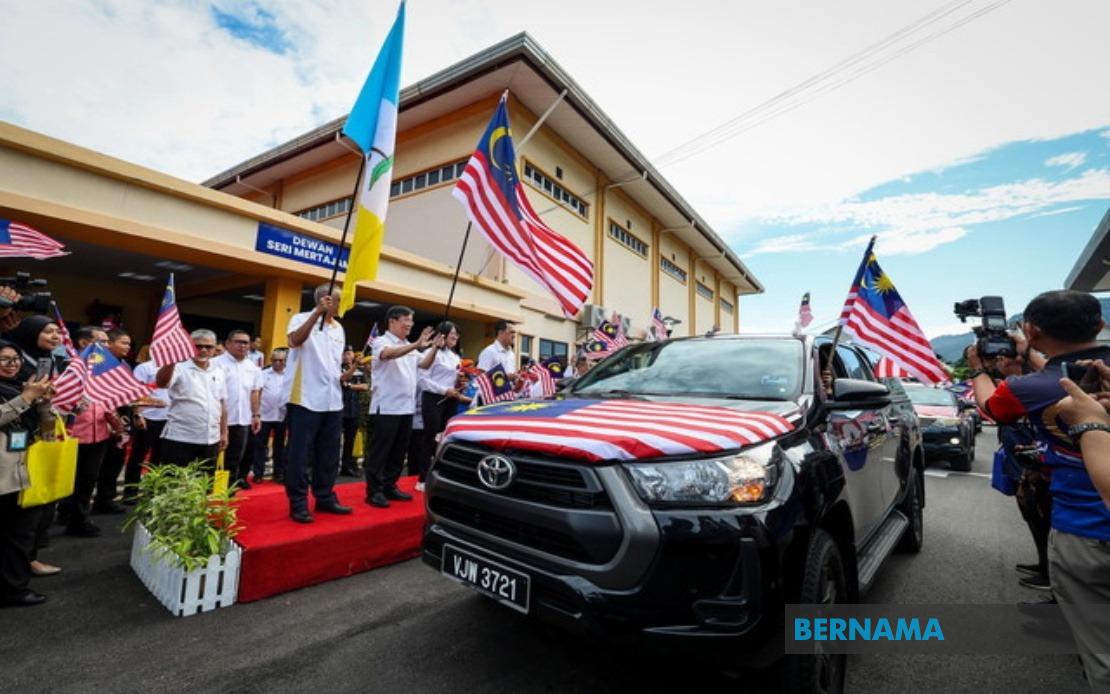
Penang Chief Minister Chow Kon Yeow has urged the people of the state to harness the National Month celebrations as a platform for deepening social cohesion and demonstrating unwavering commitment to the nation. Speaking at the launch of Penang's state-level National Month festivities in Bukit Mertajam on July 31, Chow emphasised that this annual observance represents far more than symbolic gestures—it embodies a collective opportunity for Malaysians to reaffirm their identity and recommit to shared national objectives.
Chow framed the National Month and its accompanying Fly the Jalur Gemilang campaign as occasions of profound significance, extending beyond ceremonial displays to encompass genuine expressions of Malaysian pride. He contended that these celebrations serve multiple purposes: reinforcing the bonds of unity that hold the diverse nation together, cultivating patriotic sentiment among citizens, and galvanising collective determination to propel the country forward. The Chief Minister's remarks suggest an understanding that national symbols and commemorative periods carry weight in shaping civic consciousness and social cohesion.
Central to Chow's message was a cautionary directive aimed at all stakeholders, particularly political figures and institutional leadership. He stressed that national unity must supersede other considerations and take priority in public discourse and decision-making. The Chief Minister specifically called for restraint in public utterances and institutional conduct, warning that careless or divisive statements risk eroding public confidence in national institutions and loyalty to the state. This admonition reflects growing concerns about polarising rhetoric in Malaysian public life and its potential to fracture the carefully maintained equilibrium underpinning the nation's diverse society.
The Chief Minister articulated a broader principle regarding Malaysia's vulnerability to discord. He argued that the nation cannot tolerate actions or attitudes that jeopardise its foundational unity, asserting instead that all segments of society must concentrate their energies on fortifying social bonds, deepening attachment to national institutions and the monarchy, and directing resources toward developmental initiatives that benefit the entire population. This framing positions national cohesion not merely as a desirable outcome but as an essential prerequisite for meaningful progress.
Chow extended his appeal to individual citizens, encouraging households and businesses throughout Penang to display the national flag prominently during the month. By suggesting that flags be flown at residential properties, commercial establishments, government offices, and private vehicles, the Chief Minister sought to translate abstract patriotism into visible, tangible expressions recognisable across communities. This call for widespread flag displays aims to create visual reinforcement of national identity throughout the state's public and private spaces.
However, Chow also articulated a philosophical perspective on patriotism that extends beyond seasonal observances. He contended that genuine love of nation must manifest continuously through daily conduct, integrity in professional responsibilities, commitment to social harmony, and active participation in state and national development. This conception rejects the notion that patriotism can be confined to designated months or formal occasions, instead presenting it as an ongoing orientation toward public service and collective welfare that should inform behaviour throughout the year.
The Chief Minister used the occasion to connect National Month celebrations to Penang's broader development agenda. He outlined the state government's commitment to pursuing growth strategies centred on innovation, digital infrastructure advancement, artificial intelligence adoption, and smart technology implementation. Framed within the Penang2030 Vision framework, these initiatives aim to generate employment opportunities in high-value sectors while ensuring that economic benefits reach across the population. The linkage between patriotic sentiment and economic development suggests Chow's view that national pride and prosperity are mutually reinforcing objectives.
The formal proceedings included symbolic gestures designed to reinforce the messaging around national unity. Chow presented the Jalur Gemilang to representatives of state and federal government agencies alongside private sector organisations, formalising the launch of Penang's National Month programme. This distribution of flags served both practical and ceremonial functions, signalling official endorsement of the patriotic campaign across institutional boundaries and private enterprise.
Following the official launch, a coordinated convoy involving eighteen participating agencies traversed a significant route from the Central Seberang Perai District and Land Office across the Sultan Abdul Halim Mu'adzam Shah Bridge, commonly known as the Second Penang Bridge. The convoy's composition, drawing representatives from multiple governmental tiers and private organisations, symbolised the inclusive and state-wide nature of the patriotic endeavour. The journey across one of Penang's major infrastructure symbols itself carried implicit messaging about connecting communities and transcending divisions.
The timing and content of Chow's remarks reflect the recurring Malaysian experience of balancing unity promotion with underlying social tensions. National Month celebrations historically serve as institutional reminders of shared identity in a nation where religious, ethnic, and political differences occasionally generate friction. By positioning the month as an opportunity for leaders to demonstrate restraint and citizens to visibly express allegiance, the Chief Minister articulated a conventional but important response to periodic concerns about social fragmentation.
Chow's emphasis on leadership responsibility deserves particular attention within Malaysia's political context. By specifically directing his calls for restraint toward political figures and organisational leaders, the Chief Minister acknowledged that statements from influential figures carry disproportionate weight in shaping public sentiment and behaviour. This targeted appeal suggests awareness that institutional leadership bears special responsibility for either moderating or exacerbating social divisions through their public conduct and rhetoric.

