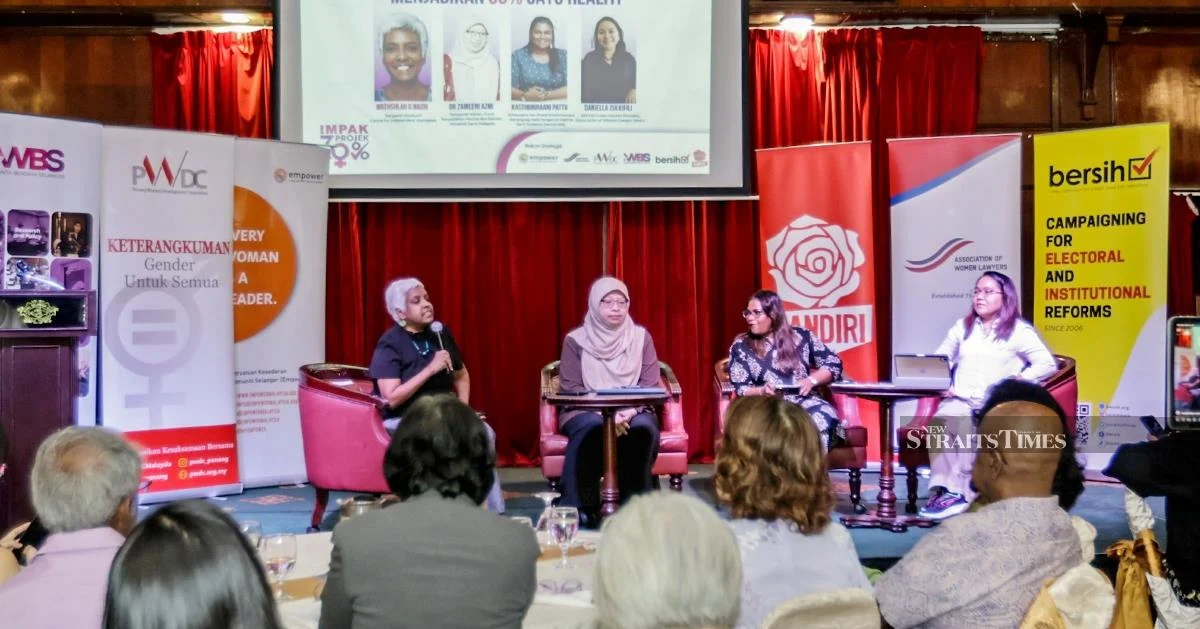
A broad alliance of civil society organisations has escalated efforts to boost women's participation in Malaysian electoral politics by formally presenting lawmakers with both a memorandum and draft bill that would mandate political parties to nominate at least 30 per cent female candidates when contesting the next general election. The submission, delivered in Kuala Lumpur, represents a coordinated advocacy push by advocates concerned that progress toward gender parity in elected office remains far too gradual without legislative intervention.
The proposed framework targets General Election 16 as the implementation deadline, signalling that women's rights advocates view the upcoming electoral cycle as a critical moment to lock in meaningful reform. Currently, female representation in the Dewan Rakyat falls considerably short of the 30 per cent threshold that international development organisations and local civil society groups argue is essential for ensuring women's voices shape policy decisions affecting households, workplaces, and communities across Malaysia. The activists behind this initiative contend that voluntary commitments by parties have failed to produce sufficient change, necessitating a binding legal requirement.
The timing of this submission carries particular strategic significance within Malaysia's political calendar. By presenting the draft legislation well ahead of the election campaign cycle, proponents seek to embed the discussion into broader policy conversations and potentially secure cross-party endorsement before electoral competition intensifies. This approach reflects lessons learned from previous attempts to advance women's representation, where last-minute policy proposals often become casualties of political calculation and competing campaign priorities.
Gendered distribution of candidacies remains a persistent challenge across most democracies, yet Malaysia's record trails behind many regional peers in Southeast Asia. When researchers examine nomination patterns across electoral cycles, Malaysian political parties have typically reserved single-digit or low double-digit percentage shares of nomination spots for women, whether contesting parliamentary seats or state assembly positions. This structural disadvantage cascades into legislative representation, where women comprise approximately 16 per cent of Parliament—a figure that observers note has remained essentially stagnant despite incremental improvements in women's educational attainment, professional qualifications, and political activism.
The 30 per cent benchmark itself emerged from international consensus-building around gender representation thresholds. Major development institutions, regional organisations, and academic research suggest that women need to constitute at least this proportion of elected bodies before they achieve meaningful influence over agenda-setting and policy outcomes. Below this critical mass, female elected representatives often find themselves marginalised on committees and sidelined from substantive decision-making, regardless of their individual competence or commitment. For Malaysian civil society, endorsing the 30 per cent target positions the campaign within global best practice rather than presenting it as a locally contentious or radical demand.
Political parties have historically resisted binding quotas, arguing that candidate selection should prioritise merit and local organisational preference rather than demographic targets. However, advocates counter that the concept of pure meritocracy obscures how informal networks, gatekeeping by party elders, and subtle bias in evaluating candidates' viability systematically disadvantage women from accessing nomination. They further observe that numerous democracies—from Scandinavian nations to neighbouring Indonesia—have successfully implemented quotas without evidence that representational quality suffered. Empirical research from these jurisdictions suggests that mandated increases in female candidates often correlate with competitive elections and better legislative engagement on issues from education to healthcare.
The strategic submission to government rather than to individual parties reflects hope that legislative action could transcend the fragmented landscape of Malaysian political competition. When quotas apply uniformly across all recognised political parties through statute law, no single party faces competitive disadvantage through unilateral implementation. This framingpotentially makes the proposal more palatable to party leadership, even those traditionally sceptical of women's advancement initiatives, by emphasising level-playing-field logic rather than demographic principle alone.
Implementation mechanisms outlined in the draft legislation merit close examination, as they will determine whether the quota functions as genuine reform or becomes subject to evasion. Careful drafting could address common workarounds, such as parties nominating women primarily in unwinnable constituencies or relegating them to list positions unlikely to translate into parliamentary seats. Malaysian advocates appear attentive to international experience showing that the most effective quota systems include provisions specifying alternating gender placement on candidate lists, requirements for balanced representation across geographic regions and safe versus marginal seats, and clear enforcement mechanisms with consequences for non-compliance.
The broader political economy context shapes receptivity to this initiative. Malaysia's government faces mounting pressure from civil society, international observers, and generational shifts within party memberships demanding greater inclusivity across multiple dimensions—ethnic relations, religious pluralism, and gender equity among them. Younger voters increasingly view women's representation as fundamental to democratic legitimacy rather than an optional enhancement. Political parties attentive to demographic trends understand that failing to substantially advance female candidates risks appearing obstructionist to emerging electoral cohorts.
Regional precedents provide both inspiration and cautionary lessons. Indonesia's quota system has expanded female legislative presence, though analysts note that progress remains uneven and that some gains reflect parties' instrumental use of women rather than genuine commitment to power-sharing. Thailand's quota mechanisms have been subject to manipulation and reversal through constitutional changes, illustrating that embedded quotas require sustained political commitment to endure. For Malaysian reformers, these regional examples underscore that legislative adoption represents necessary but insufficient progress—monitoring implementation, enforcing penalties, and sustaining advocacy pressure through subsequent election cycles will determine whether this draft law becomes transformative change or merely symbolic gesture.
The memorandum and draft bill now enter a critical phase of deliberation within government ministries and possibly parliamentary committees. Their reception will signal whether Malaysia's political leadership views women's electoral representation as a serious governance priority or prefers the status quo of glacial, organic change. Civil society groups appear prepared to maintain public pressure through media advocacy, engagement with sympathetic parliamentarians, and documentation of parties' responses, treating this submission as the beginning of a sustained campaign rather than a one-time appeal.