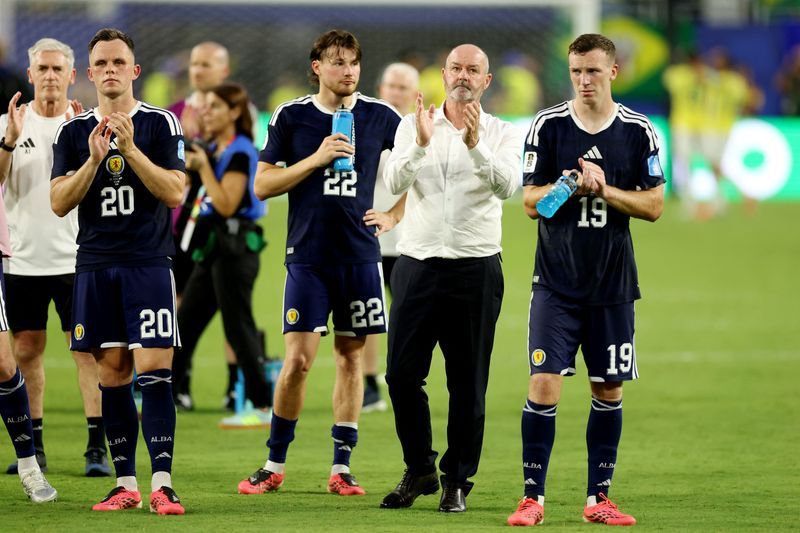
Scotland's World Cup dream appears to be slipping away following a damaging 3-0 loss to Brazil in Miami on Wednesday, with coach Steve Clarke expressing little optimism about their chances of progressing from Group C. Despite retaining a mathematical possibility of advancing as one of eight third-placed teams with the strongest records across the tournament's 12 groups, Clarke's assessment was brutally honest: his side gifted the five-time champions their victory through a series of tactical and positional mistakes. The Scots, who entered the fixture with three points from their opening two matches, needed a positive result against the tournament's defending champions but instead produced a performance that Clarke himself acknowledged handed Brazil the match on a plate.
The fundamental issue, as Clarke outlined in his post-match analysis, centred on Scotland's inability to contain Brazil's attacking prowess and their own defensive carelessness in crucial moments. The coach was unsparing in his criticism of how his team set up and executed their game plan, particularly in the middle and defensive thirds where Brazil's technical quality and pace proved devastating. Clarke pointed out that Scotland essentially manufactured the Brazilian goals rather than being overwhelmed by superior talent alone, suggesting that two of the three goals were direct consequences of Scottish errors rather than exceptional finishing by their opponents. This self-inflicted nature of the defeat stung particularly hard given that Scotland had fought back to parity in the group after their opening match, only to collapse when it mattered most.
While acknowledging Brazil's clinical finishing and the saves required from goalkeeper Angus Gunn to prevent an even heavier scoreline, Clarke made it clear that Scotland bore primary responsibility for their undoing. The team did create limited opportunities of their own, but none with the precision or conviction required to trouble Brazil's defence. This contrast—between the clinical nature of Brazil's attacks and the hesitant, disorganized nature of Scotland's forays forward—encapsulated the gulf in execution between the two teams. Clarke's frustration was evident not in anger at individual players but in the disappointment that his squad had failed to rise to the occasion and demonstrate the capabilities he believes they possess.
For Scotland's players, the defeat carries particular weight given the emotional investment from supporters and the historical significance of qualifying for their first World Cup in 28 years. Clarke was careful to acknowledge the contribution those who reached the tournament had made, noting that without their qualification efforts, Scotland would once again be absent from the global stage. His comments reflected an understanding that the squad had achieved something meaningful simply by ending the long wait to return to a World Cup, even if their tournament performance had fallen short of what many hoped. The coach rejected suggestions that his disappointment translated into anger toward the players, instead framing his feelings as regret that they had not performed to their full potential when it mattered most.
Beyond the immediate tournament context, Clarke used the Brazil defeat as a lens through which to examine deeper structural problems within Scottish football. Observing the physicality, athleticism, and technical proficiency displayed by both Brazil and Morocco—the other strong side in Scotland's group—Clarke identified deficiencies in how Scotland develops young talent for the world stage. This observation points to a systemic challenge that extends far beyond the current World Cup campaign and touches on academy development, coaching infrastructure, and the physical conditioning standards required to compete at the highest level. Clarke's acknowledgment of these issues suggests he views the World Cup experience as an opportunity to drive conversations about long-term improvement in Scottish football, even as the immediate prospect of advancing fades.
The coach's measured tone when discussing Scotland's elimination reflected perhaps a deeper realism about where his team stood relative to elite opponents. While Clarke avoided definitively pronouncing Scotland's exit, his assessment that they would likely be overtaken by at least two other third-place teams suggested he had already mentally moved beyond scenarios of last-16 qualification. His calculation was based on group matches still to be completed, with 20 games remaining across the tournament's various competitions. Scotland's current sixth-best record among third-place finishers, in Clarke's view, insufficient to guarantee progression given the quality of teams still playing. This pragmatic assessment, while cautious about the mathematical certainty, conveyed an acceptance that Scotland's World Cup return would end in the group stage.
For Malaysian and Southeast Asian observers, Scotland's struggles offer instructive lessons about the gap between aspiring football nations and established powerhouses. Like several Asian teams that periodically reach World Cups after qualification campaigns, Scotland demonstrated that simply reaching the tournament represents a significant achievement that should not be diminished. However, the performance against Brazil illustrated how brutal the competition becomes once a team arrives at football's premier event. The gulf in preparation, resources, and accumulated tournament experience between nations like Brazil and those returning after lengthy absences becomes starkly apparent in group matches where the stakes are highest and room for error minimal.
Clarke's emphasis on Scotland's supporters, described as excellent ambassadors despite the disappointing result, reflected an understanding that the World Cup experience extends beyond match outcomes. The Tartan Army's presence in America had generated positive headlines and created memories for a fanbase starved of World Cup football for nearly three decades. Yet the coach also gently reminded supporters that without the current squad's qualification achievements, the celebration would not have been possible at all. His comments carried an implicit message that perspective matters in football—acknowledging both the real achievement of returning to the World Cup and the genuine disappointment of exiting at the group stage.
The broader implications of Scotland's early exit will likely dominate discussions within Scottish football for months to come. Questions about coaching strategy, player selection, and whether Clarke remains the right figure to guide the team forward will emerge once the immediate sting of elimination fades. The tournament has exposed not just tactical vulnerabilities but deeper questions about how Scottish football can produce players capable of sustained excellence on the world stage. These conversations, initiated candidly by Clarke himself through his analysis of structural issues, will shape the development pathway for Scottish talent in coming years. For now, however, the focus remains on the mathematical possibility, however slim, that Scotland might yet progress as third-place finishers—a prospect that Clarke himself seems skeptical will materialize but cannot officially rule out until the full group stage concludes.

