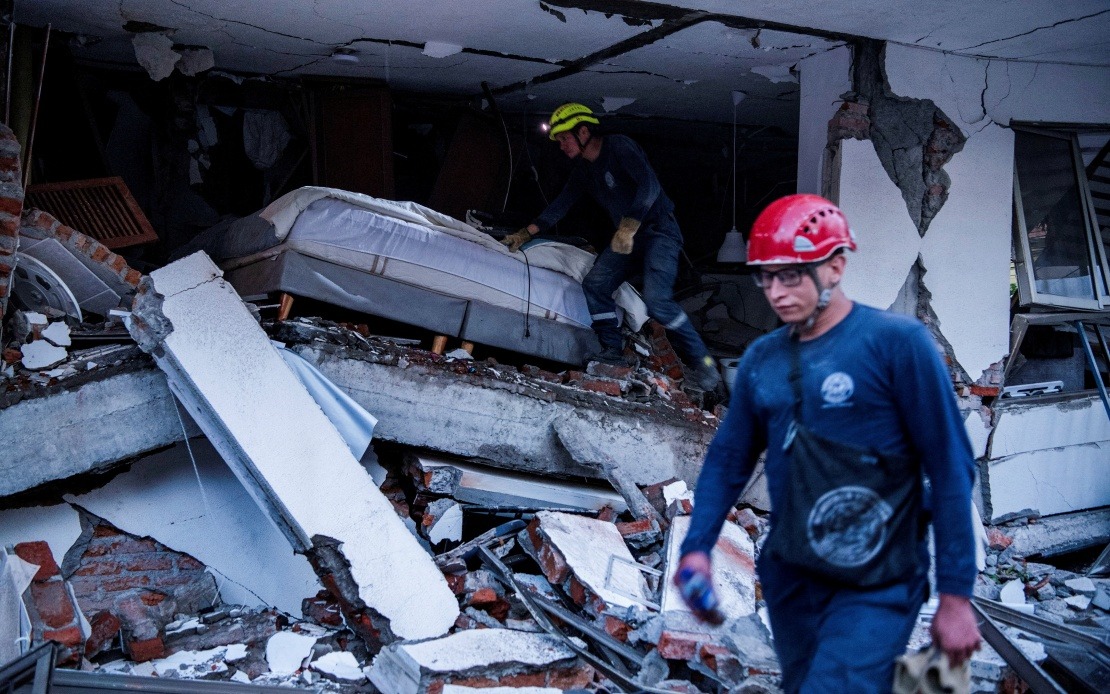
Western Colombia faces a mounting humanitarian crisis following a devastating 7.4-magnitude earthquake that struck on Monday morning, claiming 132 lives and leaving more than 570 people injured across the country. The Colombian government's latest assessment reveals the catastrophic scope of the disaster, which has triggered widespread structural damage and triggered emergency protocols nationwide.
The tremor, which originated near San Jose del Palmar in the Choco department at a depth of 96 kilometres, struck at 7.34 am local time, catching residents and workers unprepared for the violent shaking. The shallow-to-moderate depth and high magnitude combined to transmit destructive energy across a broad geographical area, affecting communities far beyond the epicentre. Preliminary data indicates that 32 cities across Colombia's western and central regions have suffered significant damage, demonstrating how the earthquake's impact rippled through densely populated and infrastructure-dependent zones.
The spatial distribution of casualties reveals the earthquake's particularly harsh toll in major urban centres. Pereira, the capital of Risaralda department, has recorded the heaviest losses with 60 confirmed deaths, representing nearly half of the national total. Cali, Colombia's third-largest city and an economic hub, has reported 15 fatalities, while Quibdo in the Pacific coastal region accounts for eight deaths and Manizales for four. These departmental capitals—Pereira, Cali, Quibdo, Manizales, and Armenia—have all been placed under red alert status, the highest warning classification that signals imminent danger and ongoing crisis conditions requiring maximum emergency response.
The physical destruction underscores the earthquake's violence and the vulnerability of existing building stock. Rescue teams have documented 86 building collapses across affected municipalities, a figure that continues to rise as search and rescue operations penetrate deeper into damaged neighbourhoods. Each collapsed structure represents not only lost lives and injuries but also displaced families and destroyed livelihoods, compounding the immediate humanitarian emergency with longer-term recovery challenges. The collapsed buildings span residential, commercial, and public facilities, suggesting that no sector of society has been spared from the earthquake's wrath.
Critical infrastructure has also sustained serious damage, with operations suspended at seven airports serving the affected region. This suspension severely hampers the government's ability to transport emergency personnel, medical supplies, rescue equipment, and food aid into affected zones. Road damage and infrastructure degradation further isolate communities, making ground-based relief operations slower and more difficult. These logistical constraints mean that remote or mountainous areas may face extended delays in receiving assistance, potentially worsening the humanitarian situation in the coming days.
President Abelardo de la Espriella swiftly declared a state of national disaster, a legal framework that enables the government to mobilise additional resources, override normal bureaucratic procedures, suspend certain regulations, and coordinate across federal, departmental, and municipal authorities. This declaration signals the severity of the situation and unlocks emergency funding mechanisms, allows the military to support civilian rescue operations, and facilitates the deployment of additional personnel and equipment from across the country. The declaration also enables international assistance to flow more readily, a crucial consideration given Colombia's resource constraints for responding to a disaster of this magnitude.
The Chinese Embassy in Colombia activated its emergency response protocol immediately after receiving reports of the earthquake, prioritising verification of the safety status of Chinese nationals throughout the country. This rapid institutional response reflects standard diplomatic practice when natural disasters strike countries hosting significant Chinese populations or investment. As of the latest update, no casualties among Chinese citizens have been reported, though the embassy's work continues as rescue and damage assessment operations develop. The involvement of foreign missions underscores how major natural disasters transcend national boundaries and create international dimensions requiring coordination between governments.
For Malaysian and broader Southeast Asian audiences, the Colombia earthquake carries several important implications. First, it demonstrates the devastating consequences that major seismic events can inflict on even moderately developed nations with established emergency management systems. Colombia, though middle-income, possesses institutional capacity and resources far exceeding many regional competitors, yet still faces overwhelming challenges in responding to such a disaster. This underscores the necessity for Malaysia and other Southeast Asian countries to continuously upgrade earthquake preparedness, building code enforcement, and early warning systems, particularly given that several nations in the region sit within or near significant seismic zones.
Second, the case illustrates how earthquake-triggered infrastructure damage cascades through economies and disrupts supply chains far beyond the immediate disaster zone. The suspension of airport operations alone will damage tourism, trade, and business operations, while damage to telecommunications, port facilities, and transportation networks can reverberate throughout entire regions. Southeast Asian economies, increasingly integrated through trade, investment, and supply chains, should recognise their vulnerability to such disruptions even if earthquakes do not directly strike their territories.
Third, the Colombian response model offers valuable lessons in crisis governance and coordination. The swift declaration of national disaster status, activation of diplomatic protocols, and mobilisation of institutional resources represent best practices that regional governments can study and adapt. Malaysia's disaster management framework, though comprehensive, benefits from examining how other nations operationalise emergency protocols when facing catastrophic natural events. The involvement of multiple governmental levels, security forces, and international partners demonstrates the complexity of modern disaster response.
Finally, the humanitarian dimensions of the Colombia earthquake—mass casualty management, displaced persons, psychological trauma, and long-term reconstruction—reflect challenges that could face any major population centre in Southeast Asia struck by comparable seismic activity. The region's aging urban infrastructure, informal settlements, and population density in many areas mean that casualty figures could easily exceed Colombia's experience. Investment in resilience, from building standards to community preparedness, represents essential insurance against such scenarios.

