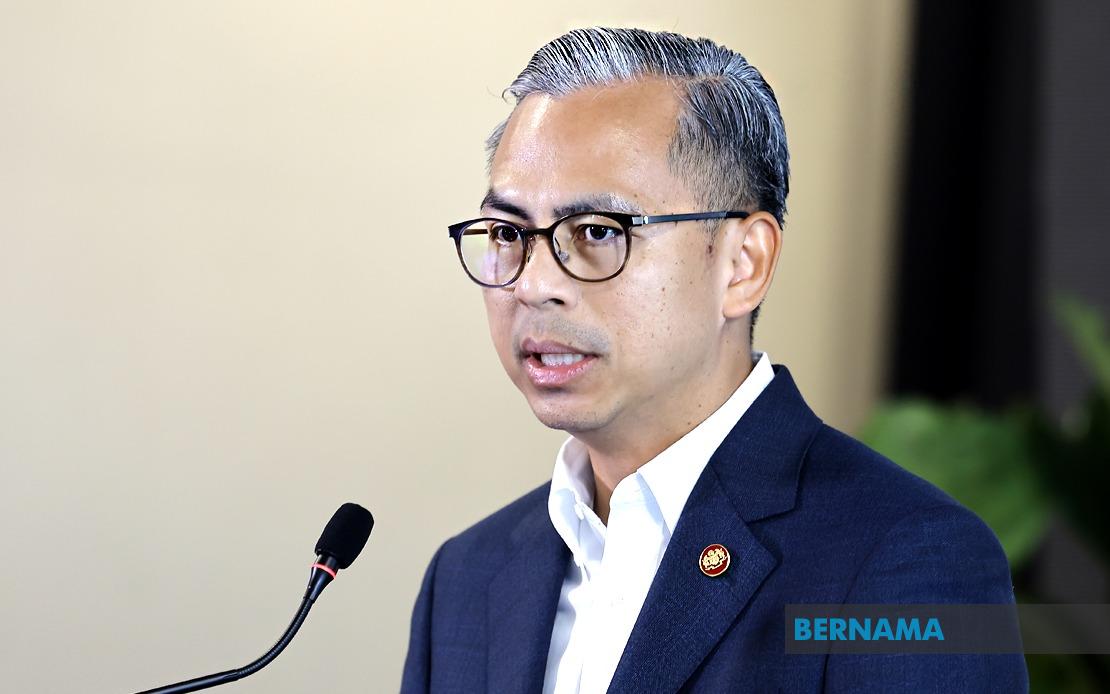
Communications Minister Datuk Fahmi Fadzil will top the distinguished list of 1,221 individuals recognised in Penang's state honours, awards and medals ceremony, which marks the 85th birthday celebration of Penang Governor Tun Ramli Ngah Talib. As the Unity Government's spokesman, Fahmi's elevation represents a significant recognition of his role in the current administration's communications strategy and public engagement efforts.
Fahmi is the sole recipient of the Darjah Panglima Pangkuan Negeri (DPPN) award, which confers the title Datuk Seri. This distinction underscores his standing within Malaysia's political hierarchy and reflects the premium placed on his contributions to national governance and communication matters. The elevation of the Communications Minister through such ceremonies reinforces the institutional importance placed on portfolio holders responsible for shaping public discourse and managing government narratives.
Beyond Fahmi's singular honour, the broader honours list reflects Penang's tradition of recognising achievement across multiple sectors. Nineteen individuals will receive the Darjah Gemilang Pangkuan Negeri (DGPN), also carrying the Datuk Seri designation. This cohort includes Chief Judge of Malaya Datuk Seri Hashim Hamzah, whose judicial contributions merit state recognition, alongside corporate and development leaders such as MARA Incorporated Sdn Bhd chairman Datuk Abdul Halim Mohammad and Invest Penang's chief executive Datuk Loo Lee Lian, acknowledging their roles in advancing the state's economic agenda.
The investment and business community features prominently in this year's honours, with figures like Tan Sri D. Murugan of Pelita Samudra Pertama and M Summit Group's Datuk Moh See Eng among the DGPN recipients. Their recognition highlights how Penang continues to honour those driving commercial development and infrastructure projects that shape the state's economic trajectory. This pattern demonstrates the state government's commitment to acknowledging business leaders whose enterprises contribute substantially to employment, innovation, and regional competitiveness.
The honours structure extends through several tiers of recognition. Nine individuals will receive the Darjah Yang Mulia Pangkuan Negeri (DMPN), including former Penang police chief Datuk Azizee Ismail and UEM Group's managing director, reflecting acknowledgement of security sector contributions and major infrastructure organisations. A broader cohort of 72 recipients will attain the Darjah Setia Pangkuan Negeri (DSPN) level, creating pathways for recognising substantial community and institutional contributions beyond the highest ranks.
Among DSPN recipients is the late Nordin Ahmad, the acclaimed filmmaker and scriptwriter associated with Cathay-Keris Film Productions, whose recognition preserves Malaysia's cultural heritage achievements within formal state honours. Alongside him are NADMA's director-general and Bank Rakyat's chairman, reflecting how the state honours encompass disaster management, financial inclusion, and development institutions. This diversity demonstrates that Penang's recognition system values contributions across governance, culture, commerce, and social welfare.
Infrastructure and development specialists occupy significant space in this year's honours. The Penang Development Corporation's CEO and the SRS LRT project director represent those directly involved in transforming the state's physical landscape and transport networks. Mohamed Abdul Rahman, serving as Deputy State Secretary for Development, exemplifies recognition of civil servants whose administrative roles support long-term state planning. These appointments signal how honours ceremonies acknowledge the institutional backbone enabling policy implementation.
The complete honours structure distributes recognition through ascending numerical bands, with 92 recipients of the Darjah Johan Negeri, followed by progressively larger groups receiving Bintang Cemerlang Negeri (31), Pingat Kelakuan Terpuji (194), Pingat Jasa Kebaktian (328), Pingat Jasa Masyarakat (463), and Pingat Bakti Setia (12). This tiered approach allows the state to honour 101 individuals with formal state honours while extending 1,120 awards and medals of merit to broader constituencies including civil servants, politicians, corporate figures, and non-governmental organisation members.
Penang State Legislative Assembly Speaker Datuk Seri Law Choo Kiang announced that the investiture ceremony will unfold across four days, commencing tomorrow and continuing through July 13 to 15. This extended schedule reflects the substantial scale of recognition being conferred and allows individual recipients to participate in formal ceremonies celebrating their achievements. The multi-day format provides necessary time to properly acknowledge each recipient class and create ceremonial occasions befitting the honour levels being granted.
The composition of recipients across state and federal civil services, political leadership, corporate sectors, voluntary bodies, and local entrepreneurs illustrates how Malaysia's honours system encompasses a deliberately broad cross-section of society. Rather than concentrating recognition among political appointees or corporate elites, the distribution reflects a state government committed to acknowledging contributions from teachers, healthcare workers, community activists, and small business owners alongside high-profile figures. This inclusivity strengthens social cohesion by validating diverse forms of public service and contribution.
For Malaysian observers and those monitoring governance trends, Fahmi's elevation carries implications extending beyond ceremonial recognition. As Communications Minister and a prominent Unity Government representative, his Datuk Seri status underscores the administration's commitment to elevating those managing public communication and inter-governmental coordination. The honours ceremony itself demonstrates how federalised Malaysia uses state-level recognition ceremonies to reinforce national narratives about meritocratic achievement and institutional respect.
The timing of these honours during a gubernatorial milestone ceremony adds symbolic weight to recognitions conferred. By anchoring the honours system to significant state dates, Penang positions achievement recognition within frameworks of institutional continuity and historical progression. This approach connects individual recipients to broader state narratives about progress, governance quality, and social development, ensuring that honours ceremonies serve functions beyond ceremonial recognition—they reinforce institutional values and celebrate the systems through which societies function.

