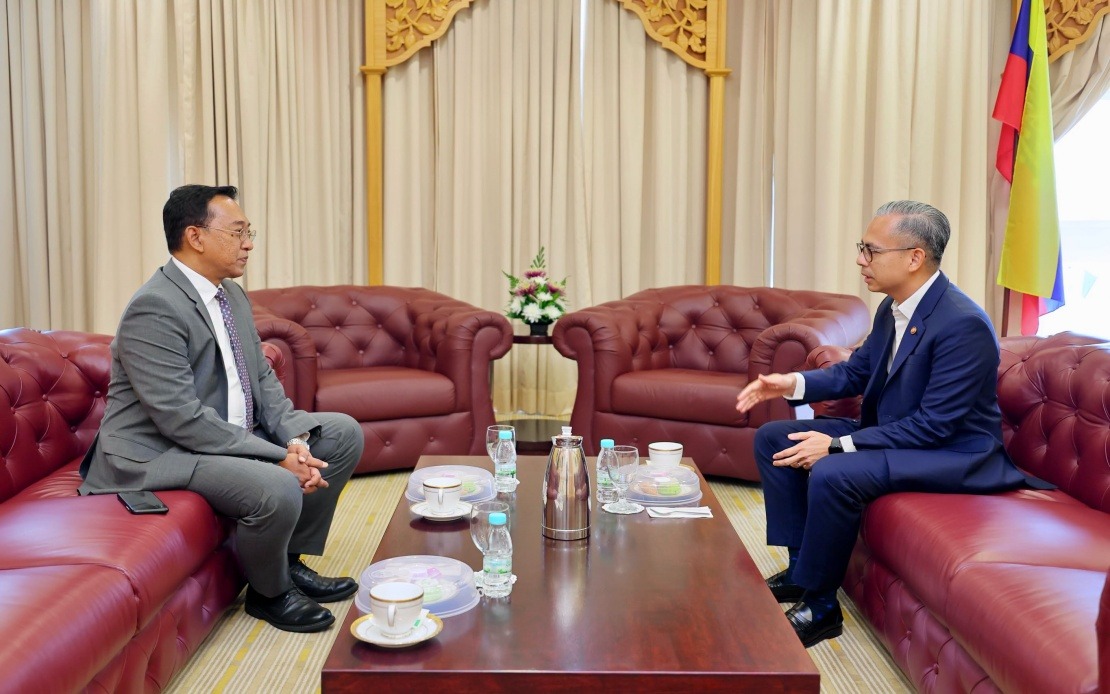
Communications Minister Datuk Fahmi Fadzil has met with Malaysia's Ambassador to Lebanon Anwar Udzir in what both sides described as an important engagement to deepen their working relationship and explore shared strategic interests at the international level. The courtesy call, held in Kuala Lumpur, provided an opportunity for the two officials to exchange perspectives on current developments affecting Malaysia's standing and involvement in global affairs.
Ambassador Anwar Udzir received his formal letter of appointment from His Majesty Sultan Ibrahim, King of Malaysia, on May 18, 2026, marking the beginning of his tenure representing Malaysian interests in Lebanon. His appointment comes at a time when Malaysia continues to strengthen its diplomatic presence across the Middle East and beyond. The meeting with Minister Fahmi reflected the government's commitment to ensuring that its diplomatic corps maintains close coordination with relevant domestic ministries on matters of mutual concern.
Fahmi, in remarks shared publicly via social media, expressed confidence in Anwar's ability to advance Malaysia's interests in the Lebanese capital. The minister commended the ambassador's dedication to his new posting and conveyed his expectation that the diplomat would achieve considerable success in his role. Such formal acknowledgement of newly appointed ambassadors underscores the importance Malaysian leadership places on its overseas representation, particularly in regions where the country has significant historical, cultural, and economic ties.
The working relationship between Minister Fahmi and Ambassador Anwar is not entirely new. The communications minister recalled that his first substantive encounter with the diplomat occurred during preparations for the Asia-Pacific Telecommunity Ministerial Meeting held in Tokyo, Japan, the previous year. During that event, Anwar and his team provided crucial logistical and organisational support that contributed to the successful execution of the ministerial gathering. This prior collaborative experience suggests an established foundation of mutual respect and professional understanding.
Lebanon represents a strategically significant posting within Malaysia's diplomatic network, particularly given the country's geopolitical position, its role as a bridge between different Middle Eastern communities, and its historical importance as a commercial and intellectual hub. Malaysia maintains longstanding ties with Lebanon, rooted in shared experiences and mutual interests in regional stability, development cooperation, and cultural exchange. The appointment of a seasoned diplomat like Anwar to this position reflects Malaysian recognition of Lebanon's importance to regional diplomatic architecture.
The timing of this meeting also carries broader implications for Malaysian foreign policy. The Ministry of Communications has increasingly become a key player in Malaysia's international engagement, particularly regarding digital connectivity, telecommunications governance, and information-related diplomatic initiatives. By ensuring that its ambassadors maintain direct lines of communication with relevant ministries in Kuala Lumpur, Malaysia enhances the coherence and effectiveness of its foreign policy implementation across different sectors and issue areas.
Diplomatic courtesy calls of this nature serve multiple functions within the machinery of government. They establish personal rapport between officials, clarify expectations and priorities, facilitate the flow of information between foreign missions and domestic agencies, and demonstrate at a symbolic level the Malaysian government's commitment to supporting its diplomatic representatives. For a newly appointed ambassador like Anwar, such engagement with senior ministers provides valuable perspective on how his work in Lebanon connects to broader governmental objectives and national priorities.
The mention of discussions concerning Malaysia's interests at the international level suggests that the meeting likely covered a range of topics extending beyond ceremonial acknowledgement. These could encompass Malaysia's positions on regional security issues, economic partnership opportunities in the Levantine region, bilateral relations between Kuala Lumpur and Beirut, and Malaysia's contributions to international diplomatic forums in which both countries participate. Such substantive dialogue ensures that ambassadors are well-informed about domestic governmental thinking and can represent Malaysia's positions with clarity and consistency.
For Malaysian readers, this development reflects the continuing importance of professional diplomacy in advancing national interests abroad. As Malaysia navigates an increasingly complex international environment characterised by competing regional powers, emerging security challenges, and rapidly evolving economic dynamics, the quality and effectiveness of its diplomatic corps becomes ever more consequential. Appointments like Anwar's and engagement protocols such as the meeting with Minister Fahmi demonstrate that the Malaysian government recognises this reality and is taking deliberate steps to ensure its overseas representation operates at high levels of professionalism and coordination with policymaking institutions at home.

