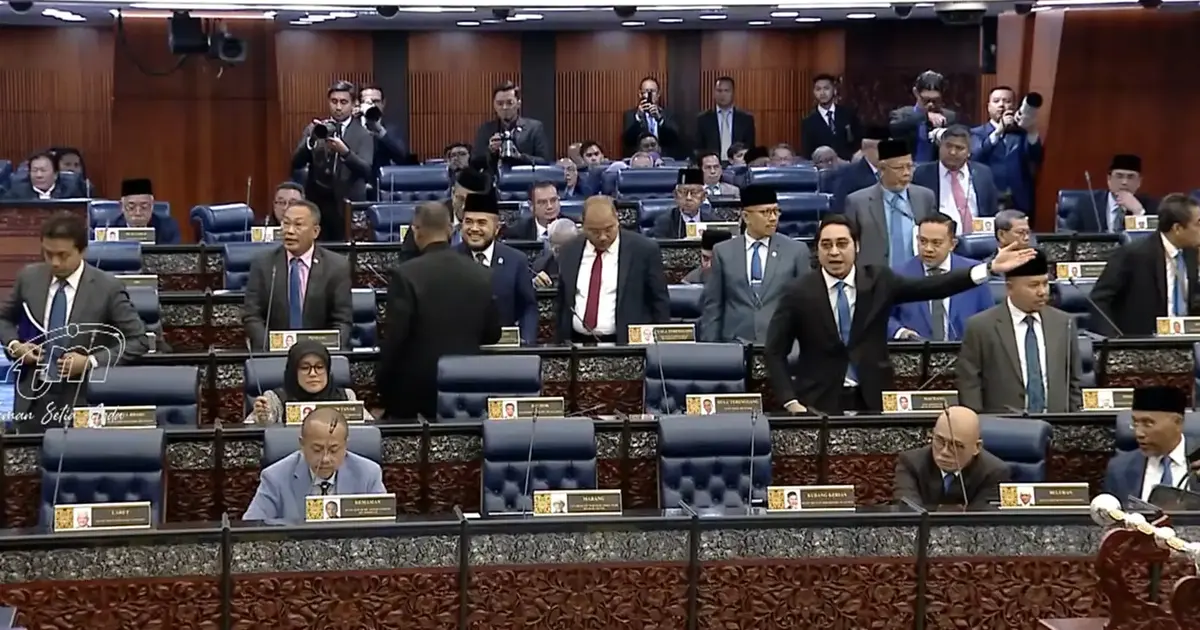
Communications Minister Fahmi Sidiq has publicly commended Bersatu members of parliament for their attendance at recent Royal Commission of Inquiry hearings examining the governance and operations of Tabung Haji, drawing a pointed contrast with the absence of other Perikatan Nasional legislators who chose to boycott the proceedings. The RCI, established to investigate matters surrounding the Islamic pilgrimage fund, has become a focal point of political tension, particularly given the institution's significant role in managing savings for Malaysian Muslims undertaking the Hajj pilgrimage to Mecca.
Fahmi's remarks underscore deepening fissures within the Perikatan Nasional coalition, the main opposition bloc that comprises Bersatu, PAS, and several other smaller parties. By publicly distinguishing Bersatu's cooperative stance from the walkout by other PN MPs, the communications minister has inadvertently highlighted internal disagreements about how the opposition should engage with government-initiated inquiries. This distinction carries particular weight in Malaysian parliamentary politics, where coalition cohesion is frequently tested by controversial investigations and commission hearings.
Tabung Haji, officially known as Lembaga Tabung Haji Malaysia, manages billions of ringgit in savings from millions of Malaysians preparing for their pilgrimage. The fund has periodically attracted scrutiny over investment decisions, financial management practices, and governance structures. The RCI's establishment reflects mounting public concern about how effectively the institution serves its stakeholders and whether proper oversight mechanisms exist to protect contributors' accumulated savings.
The decision by certain PN MPs to boycott the RCI hearings appears strategically motivated, potentially reflecting concerns about how the inquiry might implicate senior party figures or past decisions made during previous administrations. By contrast, Bersatu's willingness to participate suggests either greater confidence in the inquiry's impartiality or a calculation that engagement serves the party's longer-term interests better than confrontation. This divergence hints at potential vulnerabilities within the opposition coalition's unified messaging and parliamentary strategy.
For Malaysian observers following coalition politics, Fahmi's public commendation of Bersatu carries implications extending beyond mere courtesy. The communications minister, holding a position within the federal government, is effectively encouraging a particular form of political behaviour by praising one component of the opposition while implicitly criticising another. Such moves can either strengthen Bersatu's position as a more constructive force in parliament or be perceived as an attempt to drive wedges between PN partners.
The Tabung Haji RCI represents a broader pattern of post-2022 Malaysian governance involving multiple parliamentary inquiries and investigative bodies examining institutions and decisions from the Muhyiddin and Ismail Sabri administrations. These inquiries have become vessels for political contestation, with different coalitions viewing them through strategic rather than purely investigative lenses. Government-aligned parties typically advocate for thorough investigations, while opposition components oscillate between engagement and boycott depending on perceived partisan implications.
Bersatu's participation in the RCI hearings may also reflect the party's evolving positioning within Malaysian politics since its split from UMNO-led governance. As a party that has inhabited both government and opposition benches, Bersatu possesses flexible strategic options unavailable to ideologically more fixed parties. Mahathir Mohamad and his followers, who form Bersatu's core leadership, have historically demonstrated adaptability in responding to institutional inquiries, balancing the need to defend past decisions against the imperative to maintain political viability.
The broader Southeast Asian context adds layers to this Malaysian political drama. Across the region, coalitions face constant pressure from internal disagreements about strategy and tactics. Thailand's persistent coalition instability, Indonesia's complex multi-party negotiations, and the Philippines' fluid political alignments all demonstrate how opposition coalitions struggle to maintain cohesion when facing government-initiated investigations. Malaysia's PN coalition, with its ideologically diverse membership spanning Islamic conservatives, Malay-nationalist secular forces, and various regional components, faces similar pressures.
For ordinary Malaysians concerned with Tabung Haji governance, the political positioning around the RCI matters less than whether the inquiry genuinely improves institutional accountability and protects contributors' interests. However, the visible disagreements between PN components about whether to engage with the inquiry raises legitimate questions about whether opposition unity can function effectively around substantive policy issues requiring collective positions. If coalition members cannot agree on responding to investigative bodies, their capacity to present unified policy alternatives becomes questionable.
Fahmi's comments also reflect the government's evident interest in portraying this administration as committed to institutional accountability through independent inquiries. By highlighting Bersatu's cooperative participation, the communications minister attempts to demonstrate that serious investigations can proceed despite political opposition, reinforcing the government's narrative of institutional integrity. Simultaneously, the emphasis on other PN MPs' walkout permits an implicit criticism of certain opposition figures' willingness to obstruct transparency.
Moving forward, the RCI's findings and recommendations will likely become subjects of parliamentary debate and potential legislative action. Whether the inquiry ultimately strengthens Tabung Haji's governance framework depends on the quality of its investigation and the government's willingness to implement suggested reforms regardless of political considerations. The participation or boycott by various MPs today may shape public perceptions of individual legislators' commitment to institutional improvement, potentially influencing electoral calculations in future parliamentary sessions.
The episode ultimately demonstrates how Malaysian politics continues operating within a tension between institutional legitimacy and coalition competition. RCIs serve genuine investigative functions, yet simultaneously provide arenas for political actors to signal positions and allegiances. Bersatu's attendance and other parties' absence both communicate messages to internal constituencies, coalition partners, and potential future allies about priorities and principles. Understanding Malaysian politics requires reading such signals carefully, recognising that participation or boycott decisions rarely emerge from purely patriotic or accountability-driven motivations alone.

