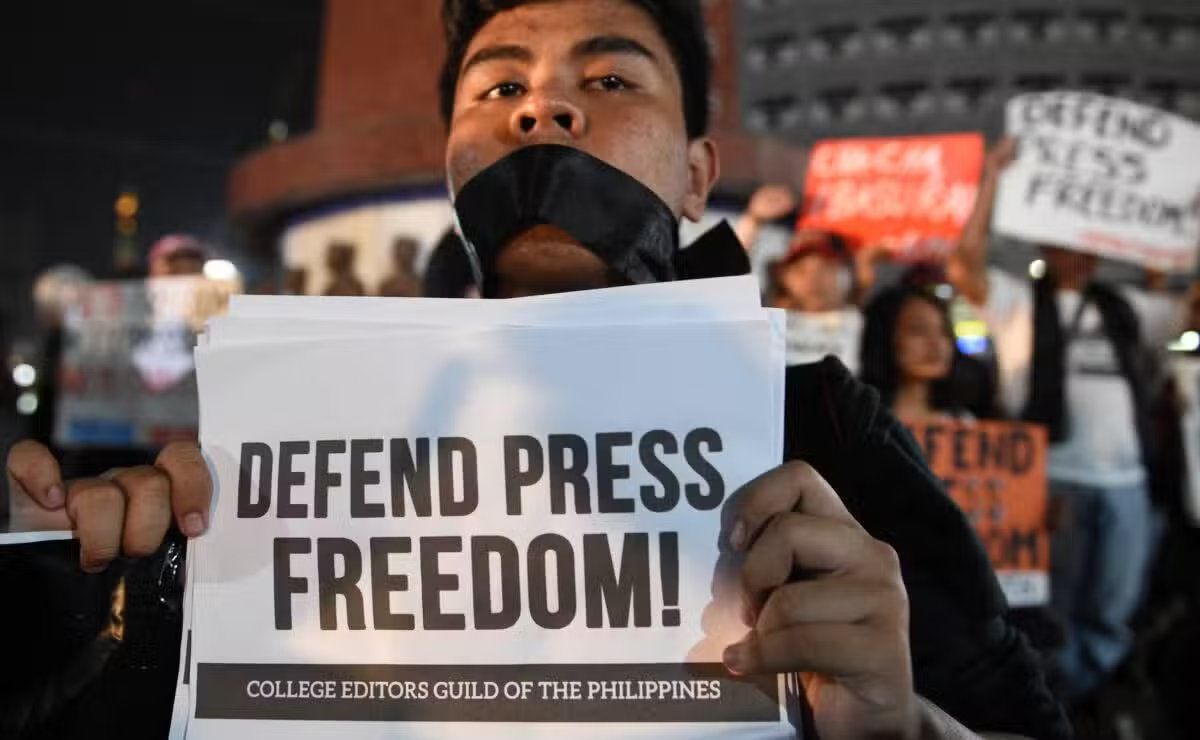
President Ferdinand Marcos Jr.'s administration has coincided with a documented surge in attacks against media workers in the Philippines, with the National Union of Journalists of the Philippines (NUJP) recording approximately 260 incidents since his assumption of office over four years ago. What distinguishes this troubling trend, however, is not merely the volume of incidents but a distinct and sobering pattern in who absorbs the brunt of these assaults. The data reveals a troubling asymmetry: journalists working for smaller outlets and local news organisations have become disproportionately vulnerable, bearing witness to an environment where press freedom appears to be eroding most visibly at the grassroots level.
The NUJP's findings indicate that more than 180 of the documented cases involved media workers employed by local newspapers, radio stations, alternative media outlets, and campus-based publications. This concentration underscores a critical vulnerability in the Philippine media landscape: smaller and independent news organisations, already constrained by limited operational budgets, lower staff compensation, and minimal institutional protections, find themselves on the frontlines of an increasingly hostile climate. For journalists working in these settings, the personal risks frequently exceed the modest remuneration they receive, creating a precarious situation where dedication to truth-telling must be weighed against genuine physical and legal jeopardy.
The experience of working outside metropolitan newsrooms introduces additional layers of exposure. Community journalists reporting from provincial areas often operate without the institutional safeguards available to their counterparts in major cities, while simultaneously navigating complex local political and economic dynamics where powerful interests can exert direct pressure. The irony is that these smaller outlets continue to perform essential journalism, covering stories about local governance, corruption, and community concerns that major national media may overlook. Yet they do so with dramatically fewer resources to shield their staff from repercussions, training them in security protocols, or providing legal support when faced with the mounting harassment campaigns increasingly common in the Filipino media environment.
Jay Lavapiez, station manager of Baskog Radyo in Roxas City, Capiz, embodies this vulnerability. The 48-year-old broadcaster's experience illustrates the distinctive challenges facing provincial journalism in the Philippines. Unlike journalists in Manila, Lavapiez and his colleagues navigate their work in communities where professional distance becomes impossible—the officials they scrutinise are neighbours, the corruption they expose affects people they know personally, and the consequences arrive at their doorstep, not in some distant political capital. The challenge is compounded by genuinely modest salaries that Lavapiez characterises as wholly disproportionate to the risks undertaken.
In June of the previous year, Lavapiez narrowly survived an assassination attempt when two assailants on a motorcycle fired four bullets from a 9 millimetre pistol at his vehicle. This attack did not emerge in isolation. Four months earlier, the NUJP had already raised alarms about cyberlibel and related legal cases filed against Lavapiez and his wife, India, who also works in journalism. According to their account, the harassment intensified following their reporting on a cemetery operated by a local official and allegations of broader systemic abuse and corruption. The couple subsequently faced multiple defamation suits filed across different jurisdictions—Manila, Muntinlupa, and Capiz—a legal harassment strategy designed to exhaust resources and silence critical reporting.
The array of weapons wielded against community journalists extends far beyond physical violence. Lavapiez identified a coordinated arsenal of intimidation tactics: cyberlibel complaints, online harassment campaigns, direct intimidation, threats, coordinated smear operations, and armed attacks. Each tool targets a different vulnerability, yet collectively they construct an environment where continued reporting becomes progressively costlier. The calculation becomes particularly acute for provincial journalists who lack the option of relocation or institutional protection. Unlike a journalist in Manila who might transfer newsrooms or seek international assignments, a community journalist remains embedded—the same streets, the same broadcast frequency, the same audience. Walking away means abandoning both livelihood and community responsibility.
The risks are not theoretical. In April of the previous year, community journalist RJ Ledesma was killed in Toboso, Negros Occidental while conducting community reporting and investigating renewable energy initiatives affecting agricultural communities. He became one of nineteen people killed in a military operation subsequently condemned by a fact-finding mission for serious violations, including alleged indiscriminate firing despite reportedly clear visibility. Ledesma's death represents not an anomaly but rather a stark demonstration of the consequences that can arise when journalists ask uncomfortable questions about power and resources in provincial settings where accountability mechanisms are weak.
Yet despite these formidable obstacles, community journalists in the Philippines continue their work, motivated not by financial reward but by commitment to serving communities that might otherwise lack access to truthful information. Lavapiez articulated this motivation clearly: community journalism has never been primarily financially driven. Rather, it stems from recognition that somebody must pose the difficult questions when public funds are involved and ordinary citizens feel voiceless before those in authority. In provincial contexts especially, journalism becomes a test of courage—a willingness to accept personal risk in service of public accountability.
The structural dynamics that make community journalism simultaneously vital and dangerous merit closer examination. Provincial journalists operate in environments where institutional checks on power often function less effectively than in metropolitan centres. Local officials, business interests, and political families wield considerable influence over both information flows and social dynamics. When journalists challenge these power structures, they encounter resistance from people who understand the community intimately and can calibrate responses—legal threats, economic pressure, social ostracism, and ultimately, physical threat—with precision born of proximity. The community journalist cannot escape or hide; they must continue appearing in the same spaces, addressing the same audiences, serving the same public.
The disparity in resources between metropolitan and provincial journalism amplifies these vulnerabilities. Major newspapers and broadcast networks can employ dedicated security staff, provide legal assistance, fund international reporting assignments that offer temporary respite, and offer compensation packages that approach international standards. Community journalists, by contrast, often work with skeleton crews, minimal protective infrastructure, and salaries that reflect local economic capacity rather than professional standards. When attacked, they cannot access the same legal resources or institutional support networks. They cannot easily hire security specialists or relocate families. They must negotiate with local authorities who may themselves represent the interests of those they are investigating.
This structural inequality intersects uncomfortably with the documented surge in press attacks under the Marcos Jr. administration. The rise in incidents targeting smaller outlets and independent media suggests that pressure on press freedom operates unevenly across the media landscape, with community and alternative media absorbing disproportionate impact. This pattern carries implications extending beyond the Philippines itself. Across Southeast Asia, similar dynamics emerge—attacks on press freedom often concentrate on local and community journalism rather than elite metropolitan outlets, precisely because these outlets operate with fewer institutional protections and greater vulnerability to intimidation. The Philippines thus serves as a concerning indicator of broader regional trends.
Lavapiez concluded his reflections with an appeal that transcends his specific circumstances. Community journalists, he noted, do not expect preferential treatment or special protections. They ask only for what journalists across democratic societies deserve: the freedom to conduct their work without facing threats, harassment, criminal prosecution designed to silence, or physical harm for posing legitimate questions. This seemingly modest demand—professional autonomy and personal security—has become increasingly difficult for Philippine journalists, particularly those working in communities beyond the national capital. As the NUJP observed, behind every documented statistic of press attack stands a journalist, a newsroom, and communities whose access to truth remains at stake. The challenge for the Philippine media landscape, and indeed for Southeast Asia more broadly, involves developing mechanisms to protect community journalism as a crucial element of democratic accountability, even as external pressures intensify.

