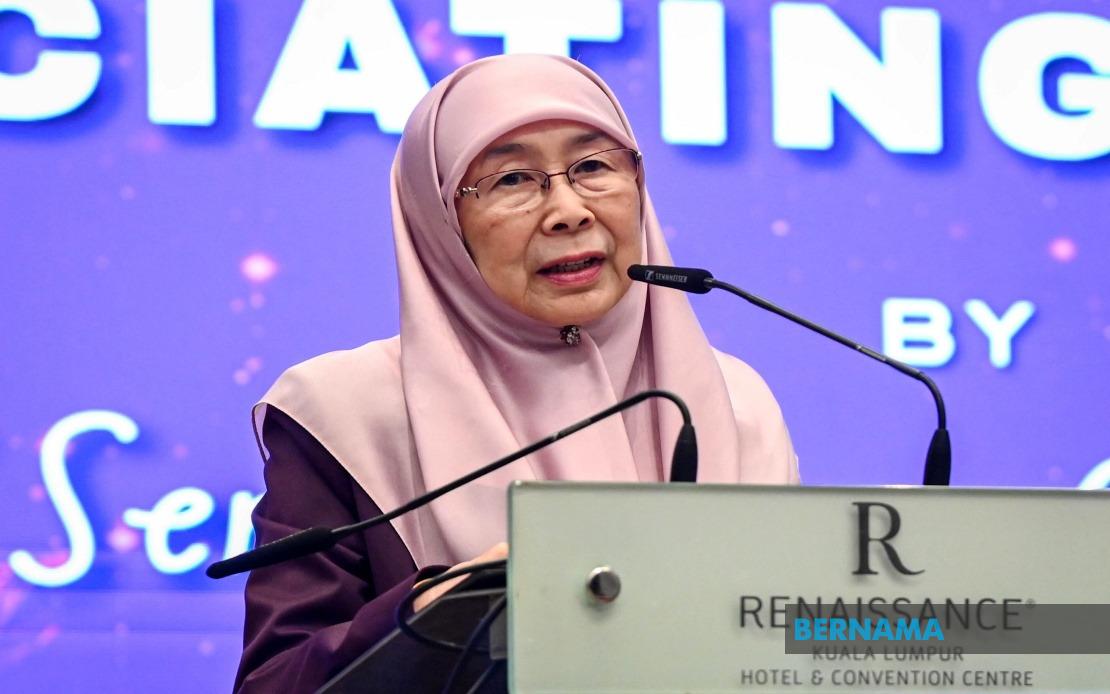
Maternal healthcare in Malaysia must place compassion at the centre of innovation, according to Datuk Seri Dr Wan Azizah Wan Ismail, who underscored that the human element remains irreplaceable even as medical technology advances. Speaking at the launch of the 16th Malaysian Obstetric Anaesthesiology Symposium (MyOASym) 2026 in Kuala Lumpur, the Prime Minister's wife challenged healthcare providers to recognise that excellence extends well beyond the measurable clinical outcomes that traditionally define medical success. Instead, she framed maternal healthcare as fundamentally about honouring the profound moment families experience during pregnancy and childbirth, arguing that dignity, respect and emotional support form an equally vital pillar of quality care.
The emphasis on compassion-guided innovation addresses a growing concern among healthcare professionals and patients alike that technological advancement sometimes overshadows the relational aspects of medicine. Wan Azizah articulated this tension directly, stating that innovation without compassion rings hollow, and that how medical professionals interact with and treat patients fundamentally shapes their experience and outcomes. For Malaysian healthcare, this message carries particular weight as the country modernises its medical infrastructure and adopts cutting-edge treatments. The statement implicitly warns against a purely technocratic approach to maternal care, instead advocating for a balanced model where equipment, expertise and empathy work in tandem.
The complexity of contemporary maternal healthcare in Malaysia and across the region has escalated substantially, driven by shifting demographic patterns and evolving health profiles among pregnant women. Advanced maternal age, rising obesity rates among women of childbearing age, increasingly prevalent complex cardiac conditions, and the ongoing threat of obstetric haemorrhage all present clinicians with scenarios requiring sophisticated medical knowledge and decisive action. These challenges demand not just individual competence but institutional coordination across multiple specialties. Wan Azizah identified this reality as a key driver for transforming how maternal healthcare teams operate, moving away from traditional hierarchical or siloed arrangements towards integrated, collaborative structures where anaesthesiologists, obstetricians, neonatologists and other professionals function as truly cohesive units.
To operationalise this vision, Wan Azizah advocated for the wider adoption of regular multidisciplinary simulation training programmes that bring together professionals from different specialties to rehearse complex scenarios and high-risk situations in controlled environments. Simulation-based training has proven efficacy in healthcare systems globally, allowing teams to identify communication breakdowns, practise technical procedures and develop coordinated response protocols without risk to actual patients. For Malaysia's maternal healthcare system, such programmes represent a strategic investment that bridges the gap between individual competence and team readiness. The emphasis on simulation reflects an understanding that managing crisis situations in labour and delivery requires not just technical skill but practiced synchronisation among multiple professionals, each contributing their expertise in real-time under pressure.
Wan Azizah further highlighted the importance of establishing early warning systems and cultivating workplace cultures that prioritise transparent communication among healthcare teams. Early warning systems, which flag deteriorating maternal or fetal conditions based on defined clinical parameters, have demonstrably reduced maternal mortality and morbidity when systematically implemented and taken seriously by staff at all levels. However, their effectiveness depends entirely on a workplace culture where junior staff feel empowered to voice concerns, where communication flows openly across hierarchical boundaries, and where protocols are respected as matter of patient safety rather than bureaucracy. Her observation that healthcare professionals sometimes work in silos rather than as teams identifies a structural challenge that undermines even well-designed clinical systems. Transforming this culture requires intentional leadership commitment and sustained effort to normalise collaboration and information-sharing.
The pathway forward for young healthcare professionals entering maternal medicine, according to Wan Azizah, requires cultivating both technical mastery and human-centred qualities. She encouraged emerging clinicians to maintain intellectual curiosity, pursue lifelong learning, actively seek mentorship from experienced colleagues, and ask questions without inhibition. Importantly, she positioned empathy and emotional intelligence as technical skills in their own right—capabilities that must be deliberately developed alongside clinical knowledge and procedural competence. This framing challenges the traditional medical education paradigm, which has historically prioritised technical knowledge and sometimes treated soft skills as peripheral. For Malaysian medical schools and training programmes, her message suggests a need for educational reform that integrates compassion and communication training as core components of maternal medicine curricula.
The regional dimension of the MyOASym 2026 symposium reflects Malaysia's positioning as a hub for maternal healthcare excellence in Southeast Asia and beyond. The gathering of healthcare professionals from across Malaysia, Singapore, Hong Kong and Pakistan signals active knowledge exchange and benchmarking with comparable healthcare systems at various stages of development. Singapore's highly efficient healthcare system, Hong Kong's experience managing complex maternal cases in a dense urban environment, and Pakistan's work addressing maternal health challenges in a lower-resource context all contribute valuable perspectives. For Malaysia, hosting such a forum underscores the nation's commitment to advancing maternal healthcare standards while learning from regional and international experience. The symposium also provides a platform for Malaysian specialists to share innovations and practices that have proven effective within the local context.
The timing of these calls for compassion-centred, team-based maternal healthcare aligns with global efforts to reduce maternal mortality and morbidity, areas where significant disparities persist even within middle-income countries. Malaysia has achieved notable progress in maternal health indicators, but gaps remain, particularly in rural areas and among vulnerable populations. Strengthening multidisciplinary collaboration, improving early warning systems, and fostering workplace cultures that prioritise communication and psychological safety offer concrete mechanisms through which maternal outcomes can be further improved. These measures are not costly or technologically demanding relative to their potential impact, making them particularly suitable for wider implementation across the Malaysian healthcare system.
Wan Azizah's advocacy for compassion as a guiding principle in maternal healthcare innovation ultimately reflects a holistic understanding of health that extends beyond disease prevention and treatment to encompass patient dignity, family experience and the relational dimensions of care. This perspective, articulated at the highest levels of Malaysian leadership, sends a clear signal that maternal healthcare reform should not become a race toward technological sophistication at the expense of human connection. For healthcare administrators, policymakers and clinical leaders across Malaysia, the message suggests that investments in team training, communication systems, and workplace culture merit equal priority with investments in medical equipment and facilities. The genuine advancement of maternal healthcare, Wan Azizah's remarks suggest, requires attending to both the technical and human dimensions of care with equal rigour and commitment.

